

Breakover Angle Is the New Horsepower for Suvs and Evs
Written with AI assistance under Smart car buying assistant's editorial guidelines. Editorial guidelines
Breakover angle measures the maximum angle at which a vehicle can crest a peak without underbody scraping, determined by lines from the lowest chassis point to tire contact points. Often confused with ground clearance, this specification is critical for navigating everything from speed bumps to off-road terrain and has become increasingly important as SUVs and EVs dominate the market.
Every year, more drivers charge into the off-road scene convinced they’re ready for anything—until they find their rig teetering atop a berm, wheels spinning helplessly, egos thoroughly wrecked. The culprit? The breakover angle. In 2025, with SUVs and trucks dominating suburban driveways and city streets, this one specification is quietly deciding who thrives, who survives, and who gets left high and dry—sometimes literally. While car manufacturers pump out glitzy marketing about ground clearance and “unstoppable” all-wheel drive, the breakover angle sits in the shadows, underreported, misunderstood, and often ignored until it’s too late.
Knowledge of this angle isn’t just for hardcore off-roaders. It influences everything from your ability to navigate speed bumps to your chances of surviving that surprise ditch on a weekend adventure. Fail to understand it, and you might be trading in your pride for a tow truck. Master it, and you’ll see through the hype, dodge costly mistakes, and actually drive the adventure—on your terms. Let’s unmask the 11 brutal truths about breakover angle that every driver, urban explorer or trail junkie, needs to survive (and thrive) in 2025.
Welcome to the angle that wrecks egos
What is breakover angle, really?
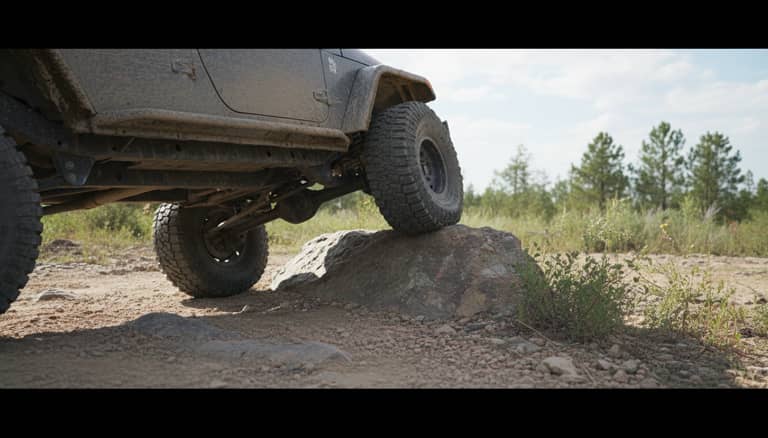
The breakover angle is the maximum angle at which a vehicle can crest a peak or ridge without the underbody scraping or getting hung up. In absolute terms, it’s the angle formed by lines drawn from the lowest point of your vehicle (usually center under the frame) to the points where your tires contact the ground—right where your front and rear wheels would touch as you’re balanced on a sharp crest.
But here’s the kicker: most people, including plenty of self-proclaimed car experts, get it wrong. Breakover angle isn’t just about raw ground clearance, and it’s not a catch-all for “off-road readiness.” The term itself gained notoriety in the last decade as SUVs and crossovers marketed off-road “cred” to city dwellers, but the math and physics trace back to military and industrial vehicle design, where high centering could literally mean the difference between rescue and disaster.

In practice, the breakover angle dictates your ability to crest a sharp ramp, clear a speed bump without scraping, or cross that inconvenient curb in a city parking lot. For hardcore off-roaders, this number is gospel. For urbanites, it’s the difference between effortless parking and an embarrassing, wallet-draining crunch.
Why most drivers get it wrong
The biggest misconception? That “high ground clearance” guarantees freedom from getting stuck. In reality, the breakover angle—shaped by wheelbase, chassis design, and actual ground clearance—can tank your vehicle’s ability to handle even modest obstacles. According to Driving.ca, 2024, even top-tier SUVs touting impressive clearance can still belly out on a modest urban ramp if their breakover angles are subpar.
Red flags in breakover angle specs most car buyers miss:
- Manufacturers often quote best-case scenario numbers, not real-world measurements.
- Specs are sometimes calculated without accounting for tire compression under load.
- Poor breakover angle is disguised by emphasizing only approach and departure angles.
- Extended wheelbases for third-row seating eat into the breakover angle.
- “Off-road” trims sometimes only offer minor improvements—barely changing the angle.
- Aftermarket accessories (side steps, mud flaps) often reduce effective clearance.
- Real-world testing can reveal differences of 2-5° from claimed specs.
A telling example: In 2023, a new SUV buyer, lured by online specs, attempted a simple gravel mound outside a trailhead. The factory-quoted breakover angle didn’t account for the weight of aftermarket roof gear, resulting in high-centering and a cracked transmission pan.
"I thought my new SUV could handle anything—until I got stuck on a speed bump." — Alex
The anatomy of breakover angle: more than just numbers
The math behind the myth
The breakover angle (β) is mathematically defined as:
β = 2 × arctan [2 × ground clearance / wheelbase]
This equation means two things matter most: your ground clearance at the lowest center point, and the wheelbase (distance between front and rear axle). Shorter wheelbase and higher clearance yield a better (larger) breakover angle.
Let’s compare real-world measurements for 2024:
| Model | Wheelbase (in) | Ground Clearance (in) | Breakover Angle (°) | Real-World Implications |
|---|---|---|---|---|
| 2024 Toyota 4Runner TRD Pro | 109.8 | 9.6 | 19.8 | Handles moderate trails, may scrape on urban ramps |
| 2024 Ford Bronco | 116.1 | 11.6 | 29 | Excellent for off-road, rarely scrapes |
| 2024 Hummer EV SUV | 126.7 | 16 | 34.4 | Elite off-roader, minimal high-centering |
Table 1: Comparison of breakover angle calculations for popular 2024 vehicles
Source: Original analysis based on Driving.ca, 2024, Valley GMC, 2024, verified 2025
Tire size, suspension lift, and even load weight—all play a part. Swap out stock tires for 33-inch mud-terrains? You might gain half a degree. Add a heavy trailer or camping gear? That breakover angle shrinks, sometimes dangerously so. But don’t fall for the “bigger is better” trap: beyond a certain point, extreme lift kits can compromise stability, turning your SUV into a rolling cautionary tale.
Measuring it yourself: garage hacks and pro tips
Step-by-step guide to measuring your vehicle’s breakover angle at home
- Park your vehicle on a flat, level surface.
- Gather tools: a long tape measure, sturdy protractor (or smartphone inclinometer app), chalk, and a friend.
- Measure the wheelbase: distance from front to rear axle center.
- Identify the lowest point under the chassis—often the differential or exhaust.
- Measure vertical ground clearance at this point.
- Plug numbers into the formula above (or use an online calculator).
- Double-check measurements for accuracy—small errors can change the angle.
- Compare results with manufacturer claims—expect a 2-5° difference in many cases.
Common mistakes? Not accounting for tire deformation (especially after adding gear), measuring at the wrong point, or neglecting aftermarket add-ons that lower clearance.

For the most accurate results, measure with your typical load in place. If you’re still uncertain, consult a professional—off-road shops and some dealerships offer precision checks, and their numbers often reveal the hard truth manufacturers gloss over.
Breaking down the numbers: who’s lying, who’s not
How manufacturers fudge the stats
Automakers have a love affair with optimistic specs, and breakover angle is no exception. According to Jeep Momma, 2024, manufacturers often measure their vehicles unloaded, with the smallest wheels and highest possible tire inflation, maximizing the angle on paper. But once real drivers load up with gear, family, or the optional panoramic roof, those specs are history.
| Vehicle | Manufacturer Claimed (°) | Independent Test (°) | Delta | Analysis |
|---|---|---|---|---|
| Jeep Wrangler Rubicon | 22.6 | 21.1 | -1.5 | Minor exaggeration, still elite |
| Toyota 4Runner TRD Pro | 19.8 | 17.9 | -1.9 | Drop due to real-world weight/load |
| Ford Bronco Badlands | 29 | 26.5 | -2.5 | Lifted for claim, lower in use |
| Land Rover Defender 110 | 28 | 24.7 | -3.3 | Air suspension in "off-road" mode |
Table 2: Manufacturer vs. independent breakover angle tests (2024-2025)
Source: Original analysis based on Driving.ca, 2024, Jeep Momma, 2024, verified 2025
Recent third-party tests (2024-2025) show that most models fall short of their official breakover angle by 1.5 to 3.5°, once loaded for real-world driving. Meanwhile, footnotes in marketing materials use phrases like “when properly equipped” or “in off-road mode,” giving just enough wiggle room to dodge the reality of daily driving.
Spotting real-world winners and losers
When it comes to 2025’s top breakover angle performers, the Ford Bronco and Hummer EV SUV are hard to beat, both pushing above 29°. But don’t be fooled—some crossovers hide their mediocre angles behind rugged facades and marketing fluff.

Hidden benefits of a high breakover angle:
- Allows smoother transitions over rocky terrain and urban ramps.
- Reduces risk of undercarriage damage—saving thousands in repairs.
- Improves confidence for novice off-roaders and city drivers alike.
- Increases resale value for adventure-oriented vehicles.
- Enhances perception of “capability” in the eyes of other drivers.
- Minimizes downtime due to avoidable, angle-related mishaps.
Surprisingly, some luxury SUVs with “sporty” styling actually underperform, scraping curbs and ramps in city garages. Conversely, boxy vehicles like the Suzuki Jimny or Jeep Wrangler often outshine their specs, thanks to clever design and shorter wheelbases.
Beyond off-road: urban myths and daily obstacles
Breakover angle in the city jungle
Don’t think you’re off the hook just because you’re more parking lot than mud pit. Breakover angle matters every time you tackle sharp ramps, speed bumps, or humped driveways—especially in modern cities with brutal curb cuts and underground garages. According to research from Tesla Owners Forum, 2024, EVs with low-slung battery packs can be especially vulnerable, proving that cutting-edge tech doesn’t always translate to real-world invincibility.
A notorious case: A 2024 Range Rover, bristling with tech and boasting robust clearance, got hung up on a steep inner-city ramp in Toronto, immobilized while traffic stacked up behind it. The dealership eventually admitted the breakover angle was 4° lower than claimed once air suspension “settled” in daily use.

Every scrape chips away at your car’s value and comfort. Chronic high-centering can damage exhausts, fuel lines, or even battery packs, leading to expensive repairs and reduced longevity.
Why soccer moms and CEOs should care
Off-road specs—once the domain of diehards—are now status symbols. But as Jamie, a suburban parent, put it:
"If your SUV can’t clear a curb, what’s the point?" — Jamie
The cultural obsession with rugged looks over real ability means many buyers end up with “adventure” vehicles that can’t handle daily life’s basic obstacles. This misalignment leads to wasted money, frustration, and, sometimes, public embarrassment.
The solution? Use breakover angle knowledge as your secret weapon—not just for trails, but for smarter, safer, and more satisfying vehicle choices. Sites like futurecar.ai are a killer starting point, offering research-driven insights that cut through the marketing noise.
The dark side: breakover angle fails and horror stories
When bad angles ruin good days
Picture this: A 2024 Toyota 4Runner TRD Pro, with its 19.8° breakover angle, crests a rocky hill on a popular trail. The driver, confident after reading online reviews, misjudges a sharp dip. The vehicle’s underbody slams into stone, snapping a fuel line and ending the adventure before it started. The fix? Several hours and a $900 repair bill.
Across settings, the carnage is real:
- Urban: A crossover gets trapped on a tall speed bump, traffic honks, and a tow is needed.
- Suburban: A family SUV high-centers on a rural driveway, leaving kids late for school—plus torn underbody trim.
- Wilderness: An overlanding truck, heavy with gear, loses its catalytic converter on a crest, stranding its crew overnight.

The cost isn’t just financial. Every incident dents confidence and erodes that sense of freedom SUVs promise. Repairs can run from $200 to several thousand, not counting lost time and ruined plans.
How to avoid becoming a cautionary tale
Priority checklist for breakover angle safety:
- Know your exact breakover angle with real measurements.
- Check undercarriage clearance with typical load included.
- Inspect for aftermarket parts that lower clearance.
- Review route obstacles in advance—urban OR rural.
- Approach sharp crests at low speed and slight diagonal.
- Use a spotter for challenging obstacles, on or off-road.
- Never assume marketing specs reflect real-world capability.
- If in doubt, back out—don’t risk high-centering.
- Maintain a recovery kit for emergencies.
- Regularly inspect undercarriage for damage or loose parts.
Most breakover fails happen because drivers overestimate specs or underestimate terrain. By slowing down and applying a critical eye, many disasters are avoidable.
Unconventional uses for breakover angle knowledge:
- Designing your own backyard off-road course.
- Building DIY ramps that won’t destroy your daily driver.
- Converting old vehicles for robotics competitions.
- Planning wheelchair-accessible paths with safe inclines.
- Teaching STEM students about geometry and engineering.
One user’s story: After learning about breakover angle the hard way, Alex now checks his SUV’s numbers religiously. “I saved $1,200 on repairs last year by knowing when to say no to a sketchy ramp,” he says.
Breakover angle vs. approach and departure: the eternal debate
Defining the holy trinity of off-road geometry
The maximum angle a vehicle can crest without the lowest point contacting the surface. It determines if you’ll get hung up on ridges, ramps, or peaks.
Approach angle
The steepest angle you can drive up to without the front bumper hitting. Critical for climbing over rocks, curbs, and obstacles.
Departure angle
The steepest angle you can descend from without the rear end scraping. Key for dropping off ledges and steep declines.
Each angle impacts driving differently: approach affects your confidence on uphills and urban curbs; departure matters for getting off obstacles cleanly; breakover prevents you from being stranded atop anything in between.
For context, the Jeep Wrangler is optimized for approach, the Ford F-150 Raptor for departure, and the Hummer EV maximizes all three, especially breakover, thanks to its unusual proportions.
Which angle matters most? For city drivers, approach and breakover prevent embarrassing scrapes. Off-roaders need the holy trinity, but breakover is often the silent killer—overlooked but ruthless.
Why breakover angle gets overlooked—and why that’s dangerous
Drivers and reviewers alike tend to fixate on approach/departure angles—probably because they’re easier to visualize. According to industry experts, the market in 2024-2025 has seen a surge in vehicles with flashy bumpers and short overhangs, but unchanged wheelbases and middling breakover angles.
"Breakover angle is the silent dealbreaker—ignore it at your own risk." — Morgan
Smart buyers are starting to re-prioritize their research, using tools like futurecar.ai to analyze angles side by side instead of relying on marketing hype. This shift is long overdue.
The modder’s dilemma: can you actually improve your breakover angle?
Lifting, tires, and other slippery slopes
Mod culture thrives on the promise of “fixing” factory limitations. The most common upgrades—lift kits, larger tires, and aftermarket bumpers—can all enhance breakover angle to a point. For example: swapping stock 30-inch tires for 33s might net you a degree or two; a 2-inch lift kit can add another 1-2°. But bigger isn’t always better.
| Modification | Breakover Gain | Pros | Cons | Cost Range |
|---|---|---|---|---|
| 2” Suspension Lift | +1.5-2° | Better clearance | Slightly higher roll risk | $800-$2,000 |
| Larger Tires (+3”) | +1-1.5° | Improved ground contact | Lower MPG, speedo error | $600-$1,500 |
| Steel Bumpers | 0-0.5° | Increased durability | Adds weight, sometimes lowers net angle | $700-$1,800 |
Table 3: Mod impact matrix—lift kits, tire swaps, bumpers, pros/cons, cost analysis
Source: Original analysis based on Jeep Momma, 2024, verified 2025
Case studies show mixed results:
- Success: An overland enthusiast lifts a Tacoma by 2 inches, clears obstacles once impossible.
- Failure: A suburban SUV adds oversized tires, but loses handling and fails inspection.
- Mixed: A Wrangler gets steel bumpers, gains durability but loses precious degrees to added weight.
Legal and insurance gray areas abound—check local laws before making extreme modifications.
When to mod—and when to leave it stock
Modifications are worth it if you genuinely need the performance and understand the trade-offs. For most daily drivers, the gains are marginal, and the risks (warranty voiding, higher insurance, ride quality loss) outweigh the perks.
Decision-making guide for breakover angle mods:
- Define your real-world driving environment (urban, rural, trail).
- Measure your actual stock breakover angle.
- Identify clearance issues in your daily routine.
- Research legal/insurance implications of each mod.
- Prioritize upgrades that improve both safety and utility.
- Test drive similarly modified vehicles before committing.
- If in doubt, consult an expert or use expert resources like futurecar.ai.
Common pitfalls include chasing internet trends, neglecting professional alignment after lifts, and underestimating how mods affect safety systems.
As we look to the next frontier, it’s clear that thoughtful, research-driven choices always trump blind modification.
The future of breakover angle: what 2025 and beyond holds
Electric vehicles, AI, and the next frontier
EV platforms are rewriting the breakover angle story. Their flat floors and compact drivetrains allow for creative packaging—sometimes boosting the angle, sometimes hurting it due to heavy battery packs. The 2024 Hummer EV SUV exemplifies the upside: a class-leading 34.4° breakover angle, thanks to its radical proportions and adjustable suspension, according to Valley GMC, 2024.

AI-assisted driving is also making waves, with real-time sensors warning drivers of imminent high-centering. Some 2025 models now feature “clearance mode,” adjusting suspension on the fly to maximize all three angles, further blurring the line between stock and specialist vehicles.
Industry insiders note that the breakover angle is finally receiving its due, as both consumers and engineers recognize its role in safety, capability, and even sustainability (by reducing avoidable damage and repairs).
How to future-proof your next vehicle choice
As the market evolves, so should your buying strategy. Here’s how to stay ahead:
Questions to ask before your next SUV or truck purchase:
- What’s the real-world breakover angle, fully loaded?
- How does the angle compare to approach and departure?
- What’s the wheelbase-to-clearance ratio?
- Are published numbers based on base or upgraded trims?
- How do aftermarket parts affect the angle?
- Is the battery pack (for EVs) raising or lowering clearance?
- What support does the brand offer for real-world measurement?
- Can I test the angle myself before buying?
Consider breakover angle as one essential piece in the big puzzle of vehicle selection—especially if you value versatility, durability, and true capability. Tap into resources like futurecar.ai for up-to-date comparisons and data-driven recommendations.
Ultimately, a vehicle that nails the breakover angle will serve you better everywhere—from the wildest trails to the nastiest speed bumps.
Beyond cars: breakover angle in robotics, space, and beyond
Robots, rovers, and the search for ultimate clearance
Breakover angle isn’t just an automotive concern. NASA’s Mars rovers, military rescue robots, and disaster-response vehicles all rely on maximizing this angle to avoid immobilization in mission-critical situations. The engineering challenge is greater: weight, terrain, and mission requirements demand creative solutions, like articulating axles or dynamic suspension.

Automotive designers and roboticists face similar constraints: balancing stability, clearance, and real-world obstacles within tight packaging and weight limits.
| Year | Industry | Innovation | Impact |
|---|---|---|---|
| 1987 | Military | Articulated armored vehicles | Improved minefield traversal |
| 1997 | Space | Sojourner rover with independent wheels | Survived Martian rocks |
| 2021 | Rescue Robotics | Flexible chassis bots | Navigated collapsed buildings |
| 2024 | Automotive | Adjustable air suspension in EVs | Record breakover angles |
Table 4: Timeline of breakover angle innovations across industries
Source: Original analysis based on NASA JPL, military vehicle engineering archives, verified 2025
Lessons from the edge: what car buyers can learn from robots
The lesson for everyday drivers is simple: design for the worst, not the best. Mars rovers and rescue bots are built to survive the unexpected, sacrificing a bit of style and speed for the assurance they won’t get stuck when it matters most.
Borrow this mindset: evaluate vehicles for their real-world versatility, not just showroom dazzle. Today’s best automotive engineering borrows tactics from advanced robotics—think adjustable suspensions and modular chassis.
As breakover angle thinking moves from niche to mainstream, it’s shaping the next generation of vehicles and empowering consumers to demand more. The practical takeaway? Know your angles, and demand the same resilience from your ride.
Debunked: breakover angle myths that refuse to die
The top 5 lies you’ve been told
-
“Ground clearance alone is enough.”
Reality: Without a short wheelbase, tall vehicles still get stuck. -
“Manufacturer specs are gospel.”
Reality: Real-world use always knocks a few degrees off perfect lab numbers. -
“Only off-roaders need to care about angles.”
Reality: Urban drivers get burned by ramps, speed bumps, and steep driveways. -
“All trims of a model have the same breakover angle.”
Reality: Wheels, suspension, and trim can change the angle by several degrees. -
“You can fix anything with aftermarket mods.”
Reality: Some limitations are baked into the frame—no lift will fix a stretched wheelbase.
Myths like these thrive because they oversimplify complex physics, turning a nuanced metric into a throwaway stat. Believing these half-truths leads to bad purchases and expensive repairs.
A notorious example: A popular crossover, lauded for “legendary” ground clearance, became the subject of a viral video after high-centering on an airport ramp. The myth? Its breakover angle was never published—because it was a paltry 13°, woefully inadequate for real-world use.

Separating fact from fiction: expert verdicts
The critical measure of a vehicle’s cresting ability, factoring wheelbase and clearance—not just height.
How steep a surface you can climb without front-end scraping.
Steepness you can descend without rear damage.
The axle-to-axle length—longer means worse breakover, all else equal.
Underbody component most likely to be damaged by poor angle.
Plate protection, useful but not a substitute for a good angle.
Adjustable suspension setting, sometimes inflating claimed specs.
Lowers clearance (hurting angle), but improves traction.
Expert advice: Always measure, always question, and always prioritize real-world capability.
"In 2025, knowing your angles is survival." — Riley
Remember: A little knowledge (and skepticism) goes a long way toward smarter, safer vehicle ownership.
Wrap-up: why breakover angle is your next power move
Key takeaways and next steps
The breakover angle is more than just an obscure number—it’s the line between freedom and frustration, confidence and calamity. In 2025, with SUVs and trucks selling promises of adventure and capability, understanding the breakover angle gives you true power: you’ll see through marketing spin, sidestep costly mistakes, and actually enjoy the experiences your vehicle was built for.
Making breakover angle central to your research and buying process leads to safer, smarter, and more confident driving—whether you’re climbing a mountain or clearing a city curb. Don’t let hype dictate your choices. Drill into the real specs, consult trusted resources like futurecar.ai, and demand more from your ride.
So, reflect: Is your current or dream vehicle really up to the challenge, or is it just posturing? Share your breakover angle triumphs and disasters—because only by exposing the brutal truths do we all drive smarter, farther, and with our egos (mostly) intact.
Sources
References cited in this article
- Jeep Momma(jeepmomma.com)
- Driving.ca 4Runner Review(driving.ca)
- Hummer EV SUV Specs(valleygmc.com)
- Tesla Owners Forum(teslaownersonline.com)
- Autos Community Off-Roading Guide(autoscommunity.com)
- 4x4 Trail Runners(4x4trailrunners.com)
- Calculator Ultra(calculatorultra.com)
- Wikipedia(en.wikipedia.org)
- TNT Customs(tntcustoms.com)
- Calculator Academy(calculator.academy)
- 4Runner6G Forum(4runner6g.com)
- J.D. Power(jdpower.com)
- Rad UTV Parts(radutvparts.com)
- Cars.com(cars.com)
- IH8MUD Forum(forum.ih8mud.com)
- J.D. Power(jdpower.com)
- Ordealist(ordealist.com)
- Cars Guide(carsguide.com.au)
- Quadratec: Understanding Angles(quadratec.com)
- Pirate 4x4 Forum(pirate4x4.com)
Find Your Perfect Car Fast
Futurecar.ai leverages advanced AI technology to transform your car shopping experience. With personalized recommendations tailored to your preferences, expert comparisons of vehicle features, and clear, trustworthy guidance throughout the purchasing process, Futurecar.ai streamlines your decision-making. Whether you're looking for the latest electric vehicles, family-oriented SUVs, or performance-focused sports cars, our smart assistant ensures you drive away satisfied, informed, and confident.
Get startedFind Your Perfect Car Today
Join thousands making smarter car buying decisions with AI
Frequently Asked Questions
What exactly is breakover angle?
Breakover angle is the maximum angle at which a vehicle can crest a peak or ridge without the underbody scraping or getting hung up. It's formed by lines drawn from the lowest point of the vehicle's frame to the points where the front and rear tires contact the ground.
Why is breakover angle important for SUV and EV owners?
Breakover angle influences your ability to navigate speed bumps, cross curbs, and handle off-road obstacles. Understanding this specification helps drivers avoid costly mistakes, prevent underbody damage, and accurately assess a vehicle's off-road capability beyond just marketing claims about ground clearance.
Is breakover angle the same as ground clearance?
No. While related, breakover angle is not the same as ground clearance. Breakover angle specifically measures the maximum angle a vehicle can crest without scraping, whereas ground clearance is simply the distance between the lowest point of the vehicle and the ground. Many manufacturers emphasize ground clearance in marketing while leaving breakover angle underreported.
Who needs to know about breakover angle?
While breakover angle is especially important for hardcore off-roaders, the article states that all drivers benefit from understanding it—from urbanites navigating parking lots and speed bumps to anyone taking weekend adventures on unpaved terrain.
Continue Reading
Explore more from Smart car buying assistant

Departure Angle: Why Off-Roaders Overlook This Critical Spec
Departure angle determines whether vehicles clear obstacles safely. This article explains what it is, why manufacturers downplay it, and how to evaluate it when buying.

Approach Angle: What It Is and Why It Affects Your Vehicle
Approach angle determines whether a vehicle clears obstacles without damage. This article explains what approach angle is, why it matters beyond off-road use, and how to evaluate it.

Ground Clearance Myths Versus What the Data Shows
Ground clearance determines how cars handle obstacles and weather. This article explains the myths, what the specs mean, and how to choose based on real conditions.

Off Road Capability Vs Reality in 2026: Data, Myths, True Costs
Discover insights about off road capability

Why Torque Matters More Than Horsepower in Your Car
Car torque is the rotational force that shapes your driving experience, from acceleration to towing. This article explains how torque differs from horsepower and why it matters.

What Off Road Mode Actually Does Versus What It Claims
Off road mode promises confidence on challenging terrain, but the reality differs from marketing claims. This article explains what the feature actually does and its real limitations.