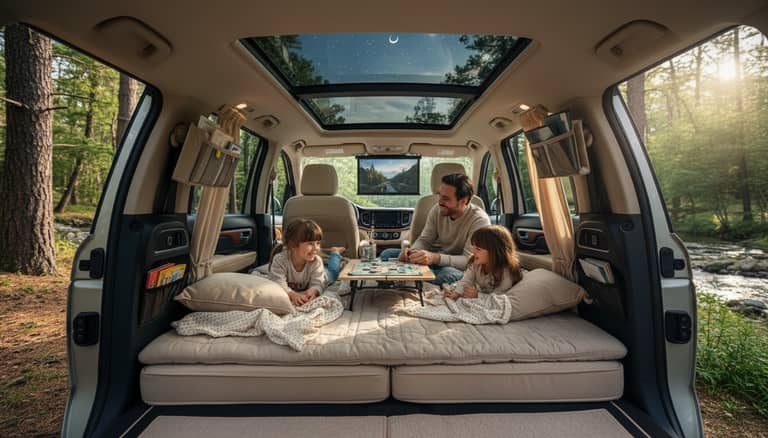
Family Car Space Is Lying to You (and How to Test It)
Family car space isn’t just a number on a spec sheet—it’s the silent battleground that can make or break your sanity, your safety, and your wallet. For millions of parents, the promise of “spacious” quickly turns to a daily game of vehicular Tetris, where strollers duel with groceries and car seats wage war on elbow room. What’s sold as versatility often becomes a labyrinth of compromised comfort and hidden costs. This article dives ruthlessly into the myths, hard data, and overlooked realities of family car space in 2024. Armed with the latest research and real-world insights, you’ll discover why so many “family vehicles” fail the real test—and how to outsmart the system with brutally honest fit strategies. If you think car space is a boring detail, buckle up: the truth is far messier, costlier, and more personal than any brochure dares to admit.
Why family car space is the battleground no one talks about
The myth of 'spacious' cars: marketing vs. reality
Automakers have mastered the art of illusion—convincing buyers that “class-leading cargo” translates to everyday usability. In reality, advertised figures often include every theoretical nook, cranny, and cubic inch, ignoring the unavoidable chaos of kids, strollers, and backpacks. According to a Good Housekeeping, 2024, most family SUVs tout impressive cargo numbers, but families find these claims quickly unravel under the weight of real-life gear. The boxy photoshoots never show the raised wheel wells, the intrusive battery humps in hybrids, or the way a fixed third row erases trunk space.

"We thought we had room for everything—until reality hit." — Ava, parent
The psychological impact is more than simple frustration. Every inch lost to poor design becomes a daily reminder that you’ve bought a promise, not a solution. Parents report feelings of regret, stress, and even mild embarrassment when their “spacious” car fails the playground carpool test. The marketing haze leaves families stuck between denial (“It’s got to fit!”) and anger at having fallen for the pitch. The result? A nationwide army of parents quietly cursing their cargo space, online forums ablaze with tales of misfit strollers and backseat bottlenecks.
The real stakes: comfort, sanity, and safety on the road
Family car space isn’t just about comfort; it’s a high-stakes equation where sanity and safety collide. When cargo space runs out, the consequences are immediate and personal—kids squished together, emergency stops turned perilous as loose items become projectiles, and the stress of packing for a simple day trip spirals into full-blown arguments. According to Parents, 2024, over 60% of surveyed parents said “lack of space” directly impacted their enjoyment and sense of safety on road trips.
| Model | Advertised Cargo Volume (cu ft) | Real-World Usable (cu ft) | Difference (cu ft) |
|---|---|---|---|
| Honda CR-V | 39.2 | 28.1 | 11.1 |
| Toyota Highlander | 16.0 (with 3rd row up) | 10.2 | 5.8 |
| Kia Sorento | 12.6 (with 3rd row up) | 7.5 | 5.1 |
| Chrysler Pacifica | 32.3 (with all seats up) | 24.4 | 7.9 |
| Subaru Outback | 32.5 | 30.0 | 2.5 |
Table 1: Comparison of actual vs. advertised cargo volume in top family cars.
Source: Original analysis based on Good Housekeeping, 2024 and Parents, 2024
When planning fails, families are forced into dangerous improvisation—bags blocking rear windows, emergency gear buried under layers of luggage, and children in seats that barely fit. The “spacious family car” myth isn’t just an inconvenience; it’s a safety hazard that can upend the logic of buying a family-first vehicle.
How your needs evolve: space for growing families
One of the cruelest tricks in the family car world? Needs evolve faster than you think. The sedan that swallowed your newborn’s first stroller is quickly dwarfed by the demands of carpooling, sports gear, or the third child. Interior space that once seemed endless now vanishes under booster seats, after-school musical instruments, and the creeping reality of sleepovers.
- Hidden benefits of flexible car space:
- Split-fold seats unlock the ability to mix gear and passengers without a headache.
- Underfloor storage hides the mess—think diapers, toys, and emergency snacks—keeping chaos at bay.
- Sliding second-row seats let you reconfigure for legroom or cargo on the fly.
- Removable or stowable seats allow for true transformation, from soccer team hauler to moving van.
Overlooked scenarios add up—unexpected carpools, a pet’s crate for the weekend, or a late-night pickup of a friend’s bike. The best family car space isn’t about maximum volume. It’s about the frictionless ability to adapt, improvise, and survive whatever chaos family life throws at you.
Breaking down the numbers: what car specs never tell you
Liters vs. life: why volume specs lie
The automotive industry adores numbers—liters, cubic feet, and inch-perfect diagrams that mean little when your reality involves lumpy strollers, uneven grocery bags, and a toddler’s favorite ride-on toy. The difference between theoretical and usable space is stark: while brochures brag about “class-leading cargo,” parents find themselves wrestling with awkward loading angles, raised lips, and removable panels that are anything but family-friendly.

| Test Item | Fits in Spec (Yes/No) | Fits in Reality (Yes/No) | Comments |
|---|---|---|---|
| Full-size stroller | Yes | No | Wheel wells cut usable space |
| Two suitcases | Yes | Yes | Only if third row folded |
| Grocery bags (10) | Yes | Yes | Bags must be stacked |
| Pack-n-play crib | Yes | No | Hatch opening too narrow |
| Pet crate (large) | Yes | No | Height restricted by cargo cover |
Table 2: Side-by-side comparison of cargo specs vs. practical fit for typical family items.
Source: Original analysis based on CarBuzz, 2024 and parent field tests.
Volume specs rarely account for the “junk drawer effect”—the odd-shaped, soft, or fragile items that define real family life. What’s worse, features like panoramic roofs or underfloor batteries (in hybrids/EVs) eat up vertical space. Don’t buy the number. Buy the fit.
The third row illusion: seating for who, exactly?
The third row is the automotive world’s ultimate mirage—a feature that sells vehicles, but rarely delivers as promised. In most midsize SUVs, the third row is a last-minute afterthought, barely adequate for children over six and a nonstarter for adults. Legroom is measured with the second row pushed so far forward that siblings become instant enemies.
- Step-by-step guide to testing third row practicality:
- Adjust the second row for an adult’s legroom, then try the third row yourself—knees don’t lie.
- Test access: can a booster-seated child climb in unassisted?
- Buckle up: check if seatbelts are accessible with car seats in place.
- Inspect headroom—does a teenager fit without slouching?
- With the third row up, check remaining cargo space. Most SUVs leave you with less trunk than a city hatchback.
The illusion is compounded by marketing photos showing petite models and staged props. In harsh daylight, you realize: third-row seats are for children, short trips, or your least-favored in-laws—never a serious solution for regular family life.
The child seat conundrum: fitting reality vs. brochure promises
Few battles are as bitter as the fight to fit three car seats across a “family SUV.” According to CarBuzz, 2024, even models sold as “three-row” often struggle with width—shoulder belts fight for space, and LATCH anchors are buried deep. Real-world tests show that only a handful of vehicles (mostly minivans and full-size SUVs) can accommodate three car seats without creative contortionism.

"It’s a game of Tetris every school morning." — Jordan, parent
Brands sell “family” by highlighting cupholders and screens, ignoring the architectural challenge of fitting modern car seats—bulky, rigid, and safety-leg equipped—across a bench that was designed for smaller, older models. Frustrated parents exchange hacks online, but there’s no substitute for actually dragging your car seats to the dealership and testing the fit.
Hidden costs of chasing space: the trade-offs they won’t mention
Fuel economy and urban headaches
The more space you chase, the more you pay—at the pump, in the parking garage, and on your insurance bill. Larger SUVs and minivans, while ostensibly designed for family convenience, can bleed you dry in urban settings. According to Kelley Blue Book, 2024, most large family vehicles average 17-22 mpg in real-world driving, far below brochure claims.
| Model | Estimated MPG (Combined) | Real-World MPG | Annual Fuel Cost ($) |
|---|---|---|---|
| Toyota Sienna Hybrid | 36 | 32 | $1,400 |
| Honda Odyssey | 22 | 19 | $2,200 |
| Ford Explorer Hybrid | 27 | 23 | $1,900 |
| Chevrolet Tahoe | 18 | 15 | $2,800 |
| Subaru Outback | 29 | 27 | $1,600 |
Table 3: Space vs. fuel efficiency trade-offs for popular family models.
Source: Original analysis based on Kelley Blue Book, 2024 and EPA data.
In cities, the size that once felt liberating becomes a liability—tight parking spots, multi-story garages, and the anxiety of parallel parking a small bus. Insurance rates climb with vehicle size and price, adding another layer of hidden cost for “more space.”
When too much space is a liability
More is not always better. Oversized family vehicles invite their own set of headaches: clumsy handling, higher maintenance costs, and the humiliation of empty seats on every school run. According to Good Housekeeping, 2024, many families report regret after upgrading, citing buyer’s remorse over unwieldy size and poor fit for everyday life.
- Red flags when “upgrading” family car space:
- Handling becomes sluggish, especially on narrow streets.
- Empty seats are rarely used, but always paid for—in fuel, taxes, and depreciation.
- Resale value drops as demand for extra-large vehicles wanes in urban markets.
- Overconfidence in “bigger is safer” can mask real crash safety issues.
The “bigger is always better” mantra is a trap. True versatility means right-sizing, not super-sizing.
The maintenance and repair trap
Larger vehicles are more than just gas guzzlers—they’re a maintenance minefield. Bigger tires, more complex suspension, and pricier replacement parts all add up. According to research by Parents, 2024, annual maintenance costs can be 20-40% higher for large SUVs and minivans compared to compact family cars.
Key terms:
- Payload: The total combined weight a vehicle can safely carry—including passengers, cargo, and gear. Exceeding this risks both safety and warranty coverage.
- Wheelbase: The distance between the front and rear axles. Longer wheelbases deliver smoother rides but reduce agility in tight spaces.
- Curb weight: The car’s weight without occupants or cargo—higher curb weights mean more wear on brakes, tires, and suspension.
Let’s compare two real families: The Smiths switched from a midsize SUV to a minivan for extra space, but soon faced $1,000+ annual increases in maintenance, tire replacements twice as often, and constant complaints about unwieldy urban driving. The Browns, meanwhile, stuck with a flexible compact SUV, using roof boxes and creative packing—saving thousands and never missing a practice.
Real-life stress tests: what actually fits inside
The stroller/groceries/luggage showdown
Picture this: it’s Friday afternoon, you’re packing for a weekend trip, and the car that once seemed spacious now feels like a cruel puzzle. The stroller barely fits, suitcases must be stacked Tetris-style, and groceries dangle precariously atop duffel bags. According to Good Housekeeping, 2024, only 40% of tested “family cars” fit a double stroller, two large suitcases, and a week’s groceries without folding rear seats.

Detailed breakdown: A midsize SUV with third row up typically fits one umbrella stroller, one large suitcase, and 6-8 grocery bags. Remove the third row, and you unlock space for two strollers, three suitcases, and up to 15 bags. But every added item sacrifices either passenger comfort or visibility. Sleepover? Good luck.
How to run your own fit test before buying
Don’t trust the numbers—trust your own gear. Here’s how to run a ruthless fit test before signing anything:
- Priority checklist for testing car space:
- Bring your biggest stroller, car seats, and a week’s groceries.
- Attempt to load everything with all passengers seated.
- Test third row access with car seats in place.
- Try closing the hatch—without crushing anything.
- Check rear visibility and access to emergency kits.
- See if your pet’s crate or sports gear fits on top.
Alternative approaches? Use virtual fit tools or consult unbiased resources like futurecar.ai, which crunches real dimensions and offers expert-backed fit guides. Trust experience over sales hype.
Alternative packing strategies: maximizing every inch
When the car fights back, you fight smarter. Here’s how savvy parents squeeze more space from every corner:
- Unconventional uses for family car space:
- Store soft items in footwells or under seats to preserve trunk space.
- Use collapsible crates for groceries—stack them vertically to prevent rollovers.
- Remove unnecessary third row headrests to gain crucial inches.
- Pack heavy gear low and forward for better stability and safety.
- Invest in roof boxes or hitch-mounted carriers for overflow trips.
Common mistakes? Overloading the rear, blocking rearview visibility, or relying solely on trunk space. The key is to adapt every trip—today’s soccer game might call for a different strategy than tomorrow’s bulk grocery run.
The future of family car space: innovations and disruptions
How electric vehicles are reshaping interior layouts
Electric vehicles (EVs) are rewriting the rules of car space—sometimes for better, sometimes for worse. With no transmission tunnel and flat floors, many EVs boast wider, more flexible interiors. Yet, batteries under the floor often eat up vertical room, and some “frunks” (front trunks) sound better on paper than in practice.

The pros? Open footwells, sliding seats, and true walk-through cabins (especially in vans and crossovers). The cons? Reduced cargo depth, higher lift-over heights, and, in some models, a “frunk” too small for anything but cables. According to CarBuzz, 2024, buyers should scrutinize EV interiors in person—what looks innovative online might frustrate in real life.
Smart storage and modular seating: hype vs. real value
Car brands hype modular seats, fold-flat floors, and “hidden” storage like they’re game changers. But do these innovations actually fit family life?
"Innovation means nothing if it doesn’t fit our real lives." — Mia, automotive engineer
The reality is mixed. Fold-flat seats offer true versatility—if they’re easy to operate and don’t eat up precious underfloor space. Removable bins, sliding trays, and reconfigurable cabin layouts sound great until you lose a crucial inch needed for the stroller. According to Good Housekeeping, 2024, the best systems are simple, durable, and allow quick transitions between passenger and cargo mode.
The sustainability paradox: balancing space with eco-consciousness
Sustainability is the new frontier—but it’s a paradox for families who need serious space. Larger vehicles are inherently less efficient, yet downsizing seems impossible when three kids and a dog are in play.
| Year | Major Space Innovation | Key Sustainability Trend |
|---|---|---|
| 2010 | Stow-n-Go minivan seats | Hybrid drive enters mainstream |
| 2016 | Three-row compact SUVs | Lightweight materials, downsizing |
| 2020 | Flat-floor EV platforms | Battery recycling, eco-interiors |
| 2024 | Modular EV seating | Shared mobility, compact EV vans |
Table 4: Timeline of family car space evolution and sustainability innovations.
Source: Original analysis based on CarBuzz, 2024 and industry data.
Emerging solutions include car sharing, compact EVs with clever interiors, and plug-in hybrids that balance space and efficiency. But for now, every family faces the same dilemma: how to balance the carbon cost of space with the non-negotiable realities of family life.
Culture clash: family car space around the world
How different countries define 'enough' space
The American obsession with “room for everything” is not universal. In Europe, smaller cars reign, and families make do with creative packing and public transit. Asia’s urban centers favor microvans and clever folding seats, while Australia’s outback families lean into rugged, long-wheelbase SUVs.

Global attitudes shape expectations: Americans see excess space as a right, while Europeans accept trade-offs for agility and economy. According to Kelley Blue Book, 2024, cultural norms drive not just what’s considered “enough,” but how vehicles are used—carpooling, gear sharing, and flexible layouts are common abroad.
Urban vs. rural: who needs what and why
Where you live shapes what you drive. Urban families crave tight-turning, easy-parking crossovers—even if it means sacrificing a row of seats. Rural families prioritize ground clearance, towing, and extended cargo for long trips or farm life.
- Timeline of urbanization and its impact on car design:
- 1990s: SUVs replace wagons in suburbs.
- 2000s: City-focused crossovers emerge.
- 2010s: Compact MPVs thrive in Europe and Asia.
- 2020s: Electrified, modular city cars gain ground.
Emerging trends include dual-purpose vehicles—hybrids of van and crossover—that adapt to both tight city streets and rural highways. As more people flock to cities, expect interior flexibility and space-saving innovation to become the new family car battleground.
Expert insights: what industry insiders really think
What car designers wish families understood
Automotive designers live and die by focus groups, but even they admit: most buyers use only half the features obsessively engineered into modern family cars.
"Most buyers never use half the features we obsess over." — Ethan, car designer
The gap between design intent and real-life use is massive. Features like sliding doors or hidden bins are engineered for edge cases, while core issues—seat width, cargo access, child seat placement—are often sacrificed to styling trends or crash regulations. Designers urge families to “test drive with their gear, not their eyes.”
Family car space myths even experts believed
Industry insiders have long perpetuated myths—like “minivan equals best space” or “SUVs are always safer.” New crash data and parent feedback have shattered these assumptions, revealing that space must be measured in usability, not inches.
Key jargon explained:
- Load floor: The flatness and height of the cargo area. Flatter, lower floors mean easier loading.
- Seat pitch: The distance from one point on a seat to the same point on the seat in front. Greater pitch means more legroom.
- Cubic feet: The industry’s favorite measurement—often misleading, as it ignores obstacles and real-world packing challenges.
Expert opinions have evolved: once, a cavernous interior was the holy grail. Now, the focus is on flexible, human-centric design—where every inch is engineered for real family use.
Your ultimate family car space fit-test checklist
The step-by-step process for zero-regret choices
Don’t trust the spec sheet. Here’s the brutally honest, step-by-step process for mastering family car space:
- Step-by-step guide to mastering family car space selection:
- Make a detailed list of your everyday and “edge-case” gear.
- Bring all car seats, stroller, and typical cargo for in-person testing.
- Install car seats in all possible configurations; check for access and buckling.
- Load your bulkier items—sports gear, groceries, and pet crates.
- Test third row access and comfort with adults and teens.
- Evaluate visibility and emergency access with everything loaded.
- Ask for a full run-through of folding seats, removing panels, and accessing storage.
- Take measurements and photos for reference and negotiation.
Pro tip: Demand transparency from dealerships—ask for exact interior measurements, live fit demonstrations, and don’t be afraid to walk away. Real fit beats theoretical space every time.
Common mistakes and how to avoid them
Even savvy parents stumble—here are the common pitfalls:
- Red flags and how to spot misleading specs or marketing:
- “Best-in-class cargo” claims that ignore real-world packing obstacles.
- Floor plans that look flat but hide awkward bumps or battery humps.
- Third rows that are barely accessible or eliminate trunk space when deployed.
- Inflated dimensions that include unusable corners or vertical space.
Key lesson: Learn from the regrets of others. Real families cite post-purchase remorse from ignoring “test fits” and accepting marketing hype at face value. Your best defense? Ruthless, hands-on trials—and a willingness to walk if the fit isn’t right.
Conclusion: demanding better—your role in shaping the future of family car space
Why families need to push for honest design
Change starts with confrontation. Families have the power to demand better design, honest advertising, and interiors engineered for actual life—not just staged photo ops. When you push back—asking real questions, rejecting marketing fluff, and seeking genuine fit—you drive the market forward. Automakers listen when buyers walk away or post online horror stories.

Key takeaways ripple outwards: the demand for honest, usable family car space is reshaping vehicles, influencing dealership transparency, and making space a central topic for car reviewers and designers alike. You’re not just a consumer; you’re a catalyst for change.
Next steps: your action plan for the perfect fit
Start with a mindset shift—space is not a luxury, it’s a necessity. Approach every test drive and review with skepticism, armed with your own gear and hard questions. Trust unbiased, tech-driven resources like futurecar.ai, which filter out sales spin and provide real-world fit data. Share your stories, demand more from automakers, and never settle for less than a car that truly fits your family. The revolution in family car space begins with you—one brutally honest fit test at a time.
Supplement: what else matters for families on the road?
Tech features that actually make a difference
Not all tech is created equal—some features save your sanity, others collect dust.
- Must-have vs. nice-to-have features:
- Must-have: Rearview cameras, multiple USB/charging ports, wireless device charging, and advanced driver assist with reliable lane-keep and blind spot monitoring.
- Nice-to-have: In-car WiFi, built-in entertainment screens (often replaced by tablets), gesture-controlled infotainment, and complex head-up displays.
Integration matters—charging ports in all rows, folding tables that don’t jam, and screens that don’t block cargo access. The best tech is seamless, invisible, and serves the flow of real family life.
Safety beyond the spec sheet: the overlooked details
Space impacts safety in ways few realize. Overcrowded backseats mean car seats are installed incorrectly; loose cargo becomes a hazard in a crash. According to IIHS, 2024, even top-rated vehicles can fail when family configurations stretch their design limits.

Check crash test results for your exact model and configuration—not just overall ratings. Confirm all car seats can be installed securely, and never compromise on safety for superficial space.
Financial realities: what does more space really cost over time?
More space means more costs—fuel, repairs, insurance, and depreciation. According to Kelley Blue Book, 2024, annual ownership costs can vary thousands of dollars between segments.
| Segment | Avg. Insurance/Year ($) | 5-Year Depreciation (%) | Avg. Annual Maintenance ($) | Total 5-Year Cost ($) |
|---|---|---|---|---|
| Compact SUV | 1,200 | 45 | 700 | 29,000 |
| Midsize SUV | 1,500 | 53 | 900 | 36,000 |
| Large Family Car | 1,800 | 60 | 1,100 | 44,000 |
Table 5: Long-term costs by vehicle segment.
Source: Original analysis based on Kelley Blue Book, 2024 and insurance industry data.
Balance is key. Stretch only as far as your budget and needs demand—never further. The right fit is a win for your wallet, your sanity, and your family’s future on the road.
Sources
References cited in this article
- Parents 2024 Best Family Cars Awards(parents.com)
- Good Housekeeping 2024 Family Car Tests(goodhousekeeping.com)
- CarBuzz Safety Reviews 2024(carbuzz.com)
- Kelley Blue Book Family Car Guides(kbb.com)
- Allied Market Research: Family Car Market(alliedmarketresearch.com)
- Kelley Blue Book Consumer Studies(mediaroom.kbb.com)
- The Car People: Future of the Family Car(thecarpeople.co.uk)
- Autotrader Car Specs Guide(autotrader.com)
- Carnamic: How Much Cargo Space Do You Need?(carnamic.com)
- Autoblog: Best 3rd Row SUVs 2024(autoblog.com)
- Cars.com: Best 3-Row SUVs for Families(cars.com)
- MotorTrend: Tesla Model Y Third Row(motortrend.com)
- Arcadia Finance: New Car Prices 2024(arcadiafinance.co.za)
- SmartFinancial: Hidden Costs of Car Ownership(smartfinancial.com)
- CarEdge: Total Cost of Car Ownership(caredge.com)
- BBC Future: Are Cars Getting Too Big?(bbc.com)
- Marketplace: The Hefty Costs of Heavier Cars(marketplace.org)
- ConsumerAffairs: Car Repair Statistics 2025(consumeraffairs.com)
- GM Insights: Automotive Repair Market(gminsights.com)
- Consumer Reports: How CR Tests Cars(consumerreports.org)
- Tinybeans: Best Family Cars 2023(tinybeans.com)
- Bon Voyage With Kids: Road Trip Packing 2024(bonvoyagewithkids.com)
- DriveSpark: Efficient Car Packing Tips(drivespark.com)
- NewCarsOnline: Car Innovations 2024(newcarsonline.co.uk)
- McKinsey: Automotive Trends(mckinsey.com)
- Green.org: How EVs Are Reshaping the Automotive Landscape(green.org)
- Dezeen: EVs Changing Car Design(dezeen.com)
- DAX Street: Top Family-Friendly Electric Cars 2024(daxstreet.com)
- Autoweek: Best Family Cars 2024 & 2025(autoweek.com)
- Credence Research: Automotive Seating Systems Market(credenceresearch.com)
- Springer: Household Car Ownership and Mobility Patterns(link.springer.com)
- Tandfonline: Zero-Car Households(tandfonline.com)
- Kelley Blue Book: Best Family Cars 2024(kbb.com)
- What Car? UK: Best Family Cars 2025(whatcar.com)
Find Your Perfect Car Today
Join thousands making smarter car buying decisions with AI
Frequently Asked Questions
How do automakers mislead consumers about family car space?
Automakers use advertising figures that include every theoretical nook and cranny while ignoring real-world obstacles like raised wheel wells, battery humps in hybrids, and fixed third rows that reduce usable trunk space. According to Good Housekeeping 2024, most family SUVs tout impressive cargo numbers that quickly fall apart when tested with actual family gear like strollers, backpacks, and car seats.
What emotional impact does discovering limited car space have on parents?
Parents experience frustration, stress, regret, and even mild embarrassment when their advertised 'spacious' vehicle fails in real-world situations like carpool tests. The discovery that they've bought a promise rather than a practical solution triggers denial and anger, leading many to post complaints on online forums about misfit strollers and backseat bottlenecks.
Does family car space affect more than just comfort?
Yes, according to the article, family car space is a high-stakes equation where comfort, sanity, and safety collide, with immediate consequences when cargo space runs out.
Continue Reading
Explore more from Smart car buying assistant

What Car Cargo Space Specs Don’t Tell You (2026 Edition)
Car cargo space is more than a number—uncover tricks, truths, and what really fits in 2026. Get actionable insights and compare real-life capacity. Read now.

17 Secrets Car Dealers Hide From Large Families Buying in 2026
Car buying tips for large families—cut through hype with 2026’s essential guide to smart, stress-free vehicle choices. Learn what dealers won’t tell you.

Are You Being Lied to About Trunk Space?
Trunk space myths exposed: Discover what car ads hide, how to decode real cargo room, and get smarter about your next ride. Read before you buy.

Think Your Car Has Enough Cargo Space? Think Again.
Discover the real numbers, hidden trade-offs, and expert hacks for choosing your next vehicle. Don’t get fooled—see what actually fits. Read now.

The Dirty Secrets Family Car Experts Won’t Tell You in 2026
Discover 2026’s boldest truths, myths, and AI hacks for stress-free family vehicle shopping. Don’t choose wrong—read this first.

What No One Tells You About Cars for Large Families in 2026
Discover 2026’s brutally honest guide to big-family vehicles—real-life insights, hidden pitfalls, and smart buying moves. Start your journey here.

The Ugly Truth About Car Cargo Space (and What Dealers Won’t Say)
Unmask the real story behind trunk sizes, measurement tricks, and best picks. Don’t get burned—read before you buy.

Is Your Suv Cargo Space a Lie? Unmasking the Real Numbers
Suv cargo space isn’t what it seems—discover the hidden facts, shocking comparisons, and real-life hacks you need before your next move. Get the full story now.

Cars for Small Families in 2026: What Dealers Won’t Tell You
Discover insights about cars for small families

Car Seating Capacity Is Lying to You (and How to Read It Right)
Discover insights about car seating capacity

Are You Wasting Interior Space? the 2026 Guide to Comfort and Utility
Interior space isn’t just a number. Discover the real factors shaping comfort and utility in 2026 vehicles, debunk myths, and get practical advice.

Are You Falling for the Family Car Trap? 9 Truths Exposed
Car buying for families just got real. Discover the 9 truths, hidden risks, and expert-backed strategies to land the perfect family car—before it’s too late.