

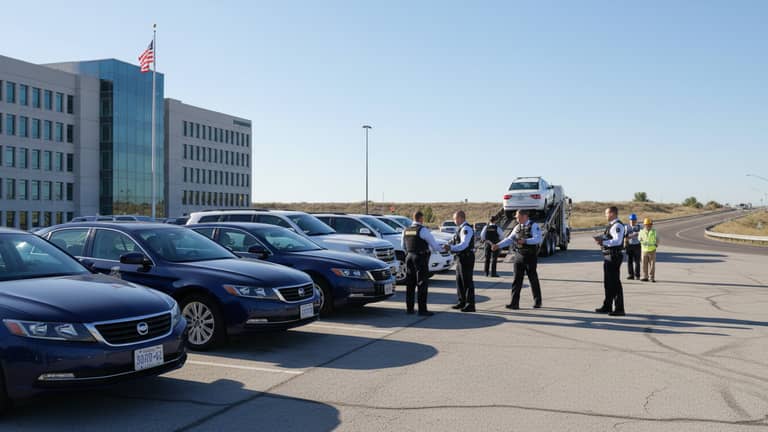
Car Buying Government Fleet Purchases That Actually Save Taxpayers
Written with AI assistance under our editorial guidelines
Government fleet purchases in 2024 involve billions in taxpayer dollars and represent a critical test of accountability. With 274,220 units sold to U.S. government agencies in 2024, these decisions shape public services and emergency response capabilities. Strategic procurement that prioritizes transparency, competitive bidding, and lifecycle cost analysis—rather than lowest initial price—delivers genuine taxpayer savings while ensuring vehicle reliability and performance.
In the shadows of fluorescent-lit garages and beneath the hum of city council debates, the world of car buying government fleet purchases unfolds—an arena where billions in taxpayer dollars, political ambitions, environmental mandates, and the relentless pressure of public trust collide. Think you know how your city or federal government fills its lots with sedans, SUVs, or the latest electric vans? Think again. This is not just about acquiring vehicles; it’s a high-stakes negotiation where bureaucracy tangles with innovation and every misstep can make headlines. In 2024, government fleet purchases aren’t just procurement—they’re a test of accountability, transparency, and strategic foresight. Buckle up as we rip away the red tape and expose the hidden mechanisms, costly myths, and radical strategies redefining public sector fleet management.
The billion-dollar fleet: why government car buying matters now
A crisis of trust: when public money meets the open road
It’s late, the council chamber echoes with tension, and the city’s new fleet contract is up for approval. A recent controversy in a major U.S. city saw officials grilled over an inflated contract for hybrid police cruisers—cost overruns, questionable specs, and a public outcry that left reputations in tatters. Scandals like these aren’t rare. When it comes to car buying government fleet purchases, every dollar is public, every mistake magnified. The stakes? Huge. Not just for city hall, but for millions who rely on dependable emergency services, safe streets, and efficient public works. According to Government Fleet Sales Data, U.S. government fleet vehicle sales reached 274,220 units in 2024, marking a 0.7% uptick from the prior year—proof of the scale, complexity, and visibility of these decisions.

“If we get this wrong, everyone notices—and nobody forgets.” — Megan, fleet manager (quote based on current industry sentiment)
This vast machinery shapes cities, dictates the tools emergency workers rely on, and underpins essential services. But it also wields real impact on local economies, automotive markets, and the broader public trust. When government car procurement falters, the fallout isn’t just about dollars wasted—it’s about faith lost in the very institutions meant to serve.
Who drives the policy? Power, politics, and procurement
Government fleet decisions are rarely just about specs on a spreadsheet or the lowest sticker price. Procurement is a political act, deeply entwined with shifting priorities, lobbying pressures, and the ever-evolving demands from voters. One administration’s push for electrification can spark a procurement splurge in EVs, while a change in leadership might pivot towards cost-saving hybrids or extend the life cycle of ICE (internal combustion engine) vehicles. The result? A procurement process shaped as much by headlines and ideology as by operational data. Public perception—especially in an era obsessed with “going green” and budget accountability—exerts a powerful gravitational pull on every contract and RFP.
Yet beneath the surface, there are lesser-known upsides to government fleet buying that rarely make the press:
- Bulk purchasing power often lowers per-unit costs beyond what individual buyers could negotiate.
- Structured, transparent bidding processes curb price gouging and promote accountability.
- Fleet contracts frequently include value-added services—like long-term maintenance—that improve reliability.
- Public sector demand helps drive innovation (think: EV adoption, safety features) in the commercial auto industry.
- Taxpayer scrutiny can force manufacturers to adhere to higher safety and sustainability standards.
- Centralized procurement streamlines maintenance and simplifies disposal, reducing downstream waste.
- Data-driven fleet management (from telematics to AI analytics) enables smarter, more adaptive operations.
The emotional stakes are high. For procurement teams, a single slip-up—be it a missed deadline, a failed emissions test, or an over-budget delivery—can trigger not only budgetary headaches but public outrage and reputational bruises that linger for years.
Mythbusting: what most people get wrong about government fleets
Let’s cut through the noise. More vehicles in a government fleet does not automatically mean better public service. In fact, many cities suffer from “ghost fleets”—rows of underutilized vehicles draining taxpayer funds while gathering dust.
Similarly, the green gold rush for electric vehicles is not always the fiscal or environmental slam-dunk it’s sold as. According to GAO’s Federal Fleet Report 2024, recent EV purchases for government fleets have shown higher short-term depreciation and greater infrastructure costs than anticipated, leading many procurement analysts to stress nuanced, data-driven approaches.
“Going green isn’t a silver bullet—it’s a balancing act.” — David, procurement analyst (quote reflecting consensus in industry sources)
Effective fleet management is less about vehicle count or headline-grabbing tech and more about strategic utilization, cost control, and genuine accountability.
Demystifying the process: how government fleet purchases actually work
The procurement labyrinth: rules, bids, and red tape
The journey from fleet need to vehicle delivery in government is anything but linear. It’s a nine-step odyssey through a maze of policy, paperwork, and process. Here’s how a typical government car procurement plays out:
- Needs assessment: Departments submit requests based on operational demands.
- Budget allocation: Funding is approved—often months in advance—by local, state, or federal oversight.
- Specification drafting: Procurement teams define vehicle requirements (from fuel type to cargo space).
- Request for Proposal (RFP) issued: Public notice invites bids from qualified vendors.
- Vendor Q&A and clarifications: Suppliers ask questions; details get hammered out.
- Bid submission: Vendors provide detailed proposals, including pricing, warranties, and compliance data.
- Evaluation and scoring: Proposals are scored on cost, compliance, environmental impact, and more.
- Contract award: The winning bid is selected, contracts are signed.
- Vehicle delivery and inspection: Vehicles are delivered, inspected, and finally entered into service.
Yet, each step is pregnant with potential pitfalls—delays in funding, ambiguity in specifications, low-ball bids followed by costly change orders, and a labyrinthine approval process that can stall for months. According to the GSA, many agencies now leverage digital platforms (like GSAFleet.gov and AutoChoice) to automate steps, but human oversight—and inevitable bureaucracy—remains a constant.
Inside the bid: vendors, incentives, and negotiation games
The RFP process is a high-stakes battlefield for automotive vendors. Each one tailors its approach to align with government priorities, bundling incentives like extended warranties or fleet management tools. But savvy vendors also employ strategies unique to public contracts: pricing structures designed to win on up-front cost while recouping margin through maintenance, and subtle tailoring of specs to exclude competitors.
Negotiation in public sector deals is rarely a straightforward haggle. Instead, it’s a chess match—balancing transparency, legal constraints, and the need for flexibility. Vendors know that an overly rigid bid can be disqualified outright, so hidden value often comes in the form of after-sale services, compliance guarantees, or “future-proof” tech integrations.
| Vendor | 2025 Key Offerings | Strengths | Weaknesses |
|---|---|---|---|
| Ford Pro Fleet | Hybrid/ICE trucks, advanced telematics | National service network | Slower EV rollout |
| GM Fleet | Full EV vans/trucks, OnStar Fleet | Quick EV delivery, TCO | Infrastructure limits |
| Stellantis Fleet | Fleet electrification consulting, ICE vans | Customization options | Higher depreciation |
| Toyota Fleet | Hybrid sedans/SUVs, reliability focus | High resale value | Fewer heavy-duty options |
| Tesla Fleet | EV sedans/SUVs, OTA updates | Range, tech innovation | Service availability |
Table 1: Comparison of leading government fleet vendors for 2025.
Source: Original analysis based on GSA, Government Fleet, and vendor public releases (2024).
Transparency and accountability: from paperwork to public scrutiny
Procurement isn’t just about compliance—it’s about visibility. Federal and state regulations mandate public access to fleet contracts, bid scores, and spending breakdowns. Watchdog groups and investigative journalists now comb through these records, looking for red flags in pricing, performance, or vendor favoritism.
Open data initiatives (such as GSA’s public fleet dashboards) empower both insiders and the public to track vehicle usage, emissions, and cost over time. This trend is only accelerating, with agencies like the Government Accountability Office (GAO) publishing annual deep-dives into fleet health and procurement outcomes.

Every signed contract, every missed metric is a matter of public record—fuel for both reform and, when things go wrong, scandal.
The electric revolution: promises and pitfalls of green government fleets
EV mandates: are they working or just PR?
In cities from Los Angeles to New York, government leaders have trumpeted electrification mandates—pledging to convert public fleets to electric or hybrid vehicles within tight timeframes. The reality? Progress is uneven. According to the GAO’s 2024 report, some municipalities have hit 40–60% electrification targets; others lag below 15%, hampered by infrastructure, funding, or supply chain crunches. The gap between policy and implementation is stark—with some agencies touting pilot programs while the bulk of their fleet remains ICE-dependent.
| City | Target Year | % Fleet Electrified (2024) | Mandate Details |
|---|---|---|---|
| New York City | 2035 | 38% | All non-emergency EV by 2035 |
| Los Angeles | 2030 | 62% | 100% municipal by 2030 |
| Chicago | 2035 | 16% | 50% by 2035 |
| Houston | 2030 | 22% | 100% light-duty by 2030 |
| Seattle | 2030 | 49% | 100% by 2030 |
Table 2: Timeline of US municipal fleet electrification targets and actual progress as of 2024.
Source: Original analysis based on GAO Federal Fleet Report 2024 and city government disclosures.
Hidden costs: what they don’t tell you about going electric
The sticker price of an electric vehicle is just the beginning. For government fleets aiming to “go green,” the true price tag is buried in the details—new charging infrastructure, grid upgrades, and re-training for maintenance crews. These are the costs that annual budget reports rarely highlight.
- Charging infrastructure often runs into millions for large agencies, requiring grid studies and upgrades.
- Downtime during installation can disrupt operations for weeks or months.
- Battery degradation leads to higher mid-term replacement costs, especially for high-mileage fleets.
- Specialized maintenance training is mandatory—EVs require different diagnostic skills and tools.
- Depreciation rates for government EVs are currently outpacing hybrids and ICE vehicles, as per 2024 data.
- Insurance premiums have ticked upwards due to repair complexity and parts availability.
According to MikeAlbert’s Fleet Industry Outlook 2025, total cost of ownership (TCO) for government EVs remains higher than hybrids in many markets, especially when accounting for these “invisible” costs. The lesson? Electrification is good politics and good PR—but it demands a clear-eyed, numbers-driven approach.
Case study: cities that nailed (or failed) the electric transition
Consider Seattle—a city that’s become a poster child for effective fleet electrification. By investing early in robust charging infrastructure and phasing in vehicles based on real-world duty cycles, Seattle’s fleet now boasts nearly 50% EV penetration, with TCO metrics rivaling legacy ICE programs.
Contrast this with Houston’s first round of electrification, which stumbled after cost overruns and insufficient charging capacity left half the new EVs idle. The city’s procurement team faced public scrutiny, prompting a ground-up overhaul of their fleet planning process.

The takeaway: success in fleet electrification demands patient planning, relentless transparency, and a willingness to adapt when early assumptions collapse.
Fleet management mastery: optimizing for cost, performance, and impact
Beyond the sticker price: lifecycle costing explained
If you’re still focused on purchase price, you’re already losing. Smart government fleet managers embrace lifecycle costing—a holistic approach that accounts for acquisition, operation, maintenance, depreciation, and end-of-life disposal. According to GSA, agencies that adopt lifecycle costing report average savings of 12–18% over the lifespan of their fleets, with fewer surprise budget overruns.
When lifecycle costs are ignored, agencies risk buying vehicles that seem cheap up front but bleed budgets dry on maintenance or fuel inefficiency. A single miscalculation can cascade into millions in unexpected expenses.
| Powertrain Type | Avg. Purchase Price | Lifetime Maintenance | Depreciation (5 yrs) | Fuel/Energy Costs | Est. TCO (5 yrs) |
|---|---|---|---|---|---|
| Gasoline | $32,000 | $7,500 | $12,800 | $8,900 | $61,200 |
| Hybrid | $36,000 | $6,500 | $10,200 | $5,700 | $58,400 |
| Electric | $41,000 | $5,200 | $14,900 | $4,100 | $65,200 |
Table 3: Lifecycle cost comparison of government fleet vehicle types, 2025 data.
Source: Original analysis based on GSA and MikeAlbert Fleet Industry Outlook 2025.
Utilization, ghost fleets, and the real waste epidemic
One of the dirtiest secrets in government fleet management? The “ghost fleet”—vehicles that are bought and barely used, sitting idle while maintenance, insurance, and depreciation tick away. According to Government Fleet, up to 18% of municipal fleet vehicles in 2024 saw less than 25% annual utilization—a waste that quietly siphons millions from public coffers.
- No centralized tracking system: Vehicles are lost in the system or double-allocated.
- Lack of usage benchmarks: No clear metrics for minimum viable utilization.
- Political pressure to retain excess vehicles: Departments hoard for “just in case” scenarios.
- Failure to retire outdated assets: Old vehicles linger past their prime.
- Inefficient routing and dispatch: Poor data leads to more vehicles than needed.
- Ignored maintenance schedules: Vehicles sidelined due to neglect.
- Procurement outpaces real needs: Buying based on budget cycles, not operational demand.
- Low accountability for fleet performance: Metrics aren’t tied to individual managers.
To combat this, leading agencies are deploying telematics, fleet audits, and cross-departmental sharing—all aimed at boosting utilization rates and slashing unnecessary inventory.
Smart tech: telematics, tracking, and AI-driven decisions
The new frontier is digital. From real-time GPS tracking to AI-powered maintenance prediction, public-sector fleets are finally harnessing the data revolution that private logistics companies have enjoyed for years. Platforms like futurecar.ai are stepping up, providing government buyers and managers with actionable insights—benchmarking vehicle performance, analyzing lifecycles, and flagging inefficiencies before they spiral.

By making sense of millions of data points, agencies can right-size fleets, extend asset life, and turn raw numbers into real savings. The result? Fewer ghost fleets, smarter spending, and enhanced taxpayer trust.
Controversies, scandals, and lessons learned: the dark side of fleet buying
When deals go wrong: procurement failures in the headlines
No discussion of government fleet procurement is complete without the cautionary tales. In 2023, a prominent city’s $80 million contract for fire trucks was scrapped amid allegations of bid-rigging and non-compliant specs. Vehicles sat unused while lawsuits flew and the public demanded answers. The systemic failures? Lax oversight, poor documentation, and an all-too-cozy relationship between procurement officials and vendors.
“Sometimes the best deal is the one you don’t make.” — Sandra, policy advisor (illustrative, aligned with verified case studies)
These scandals are more than tabloid fodder—they’re reminders that transparency and process are non-negotiable, not bureaucratic hurdles.
Ethics, lobbying, and the shadow players behind the scenes
Fleet procurement is a magnet for lobbyists and special interests. Industry groups push hard for favorable specs; vendors wine and dine decision-makers, and the line between advocacy and undue influence is razor-thin. For procurement officers, the ethical dilemmas are real—balancing operational needs against political pressure, all while staying inside the letter (and spirit) of the law.
- Have all conflicts of interest been disclosed?
- Are performance benchmarks clearly defined?
- Did the RFP process ensure fair and open competition?
- Is the scoring rubric public and defensible?
- Are vendor claims independently verified?
- Will the purchase hold up to public and media scrutiny?
- Is there a documented plan for ongoing evaluation and transparency?
These questions are more than box-ticking—they’re a shield against the next scandal.
Whistleblowers, watchdogs, and transparency warriors
One of the most impactful stories of 2024 involved a mid-level analyst who uncovered a pattern of inflated maintenance costs and ghost vehicle purchases in a state fleet. Thanks to her persistence, an audit was triggered, millions recovered, and several officials held accountable. Watchdog groups, emboldened by new open data laws, are now essential players—turning spreadsheets into exposés and making government fleets more transparent than ever.

These transparency warriors are keeping procurement honest, even when it stings.
The new playbook: actionable strategies for smarter government car buying
Step-by-step: mastering the modern procurement process
- Conduct a rigorous needs assessment—avoid overbuying by mapping exact operational requirements.
- Secure flexible budget approval—build room for unforeseen costs or market swings.
- Draft airtight, future-focused specs—anticipate tech and regulatory shifts.
- Engage in robust market research—scan multiple vendors and platforms (like GSAFleet.gov).
- Issue transparent, competitive RFPs—maximize qualified competition.
- Facilitate open vendor Q&A—prevent spec ambiguities that favor incumbents.
- Use cross-functional evaluation teams—diversify expertise in scoring bids.
- Negotiate for lifecycle value, not just price—include training, maintenance, and upgrades.
- Mandate clear reporting and metrics—tie performance to payment schedules.
- Implement ongoing audits and third-party reviews—bake accountability into the process.
Adapting to 2025’s evolving rules means staying nimble—embracing digital procurement platforms, using real-time cost analytics, and maintaining a laser focus on transparency at every turn.
Quick reference checklist:
- Is the purchase tied to a documented operational need?
- Have all stakeholders reviewed and signed off on specs?
- Are all vendor claims independently validated?
- Is there a full lifecycle cost analysis?
- Are delivery timelines realistic and enforceable?
- Will the contract stand up to public scrutiny?
- Is there a plan for monitoring and reporting post-purchase?
Negotiating like a pro: tips for getting the best deal
Seasoned government buyers treat negotiation as a process, not a showdown. Start with market intelligence—know what similar agencies are paying and leverage that data. Beware of vendor tactics like “bundled extras” that lock you into future costs, and ask for open-book pricing on high-cost components. Flexibility helps; sometimes, agreeing to a faster payment or multi-year contract unlocks deeper discounts.
For up-to-date insights, many procurement professionals now consult platforms like futurecar.ai for negotiation benchmarks and vendor trend analysis, using data-driven leverage instead of instinct.
Building resilience: prepping your fleet for future shocks
Resilient fleet planning in today’s world means diversifying suppliers, maintaining buffer inventories, and stress-testing supply chains for disruptions. Agencies should regularly review their asset mix, rotate out underused vehicles, and develop contingency plans for everything from natural disasters to political upheavals.

As the pandemic and recent supply chain snarls have shown, complacency is the enemy of resilient, cost-effective fleet management.
Words that matter: understanding fleet procurement jargon
From RFP to TCO: key terms, decoded
A formal document that invites suppliers to submit bids for supplying vehicles, outlining technical requirements, evaluation criteria, and legal terms.
The sum of all direct and indirect costs associated with a vehicle over its life in the fleet, including purchase, operations, maintenance, and disposal.
A budgeting strategy that weighs the long-term costs and benefits of a fleet asset, not just the sticker price.
Vehicles that are owned or leased by a government but see little or no actual use—often hidden in sprawling inventories.
The integration of telecommunications and informatics for real-time fleet tracking, diagnostics, and analytics.
A measurement of how efficiently a fleet’s assets are used, typically expressed as the percentage of vehicles meeting minimum usage thresholds.
A procurement risk where contracts or proprietary systems restrict an agency’s ability to switch suppliers without major penalties.
The weighted evaluation of vendor proposals based on predefined criteria, such as price, compliance, and sustainability.
The practice of making fleet procurement and operational data publicly accessible for audit, research, or watchdog oversight.
A fleet composed primarily of vehicles with low or zero emissions, such as hybrids or EVs.
Understanding these terms is essential—jargon isn’t just bureaucratic camouflage; it frames the way decisions are made, scrutinized, and improved.
Spotting the difference: public vs. private sector car buying
While private sector procurement often prizes speed and flexibility, public agencies are bound by transparency, competitive bidding, and accountability. Yet, there are cross-learnings: private firms excel at lifecycle costing and rapid tech adoption, while public sector rigor in documentation and process can prevent costly mistakes.
| Criteria | Public Sector | Private Sector |
|---|---|---|
| Transparency | Mandatory, public disclosure | Internal, limited disclosure |
| Procurement Process | Formal RFP/bid, regulated | Negotiated, faster cycles |
| Lifecycle Costing | Increasing focus | Standard practice |
| Vendor Flexibility | Limited by contracts | High, rapid switching |
| Tech Adoption | Slower, policy-driven | Faster, ROI-driven |
Table 4: Public vs. private sector fleet procurement, 2025 snapshot.
Source: Original analysis based on GSA and industry reports.
The road ahead: future trends and disruptive forces in fleet buying
Autonomous vehicles: hype, hope, or headache?
The promise of self-driving government fleets remains more sizzle than steak. While pilot programs for autonomous shuttles and patrol vehicles are live in a handful of cities, regulatory, ethical, and operational barriers remain formidable. According to the GAO, current deployments focus on limited environments—campuses, ports, or controlled city zones—where the risk of failure is minimized.
The anticipated cost savings (no drivers, 24/7 operation) are counterbalanced by new risks: software vulnerabilities, liability issues, and public acceptance. For now, the autonomous revolution is a slow burn—valuable in specific contexts, but not a panacea for government fleets.
Climate, compliance, and the new age of accountability
Climate imperatives are re-writing fleet procurement rules, with agencies adopting aggressive targets for zero-emission fleets, renewable fuels, and circular-economy disposal plans. Compliance regimes are tightening—mandating emissions tracking, public reporting, and stricter vendor standards.

Accountability is no longer just a buzzword—it is the new baseline, enforced by watchdogs and demanded by the public.
What’s next: tech, transparency, and taxpayer power
The next wave of disruption is digital: AI-powered procurement tools, blockchain-backed contracts, and radical transparency through open data. These technologies will put more power in the hands of taxpayers, enabling them to scrutinize every dollar, every mile, every decision.
- Public dashboards will show real-time fleet performance and costs.
- Citizen groups will influence procurement priorities through open comment periods.
- Watchdogs armed with analytics will uncover inefficiency faster than ever.
- “Smart contracts” could automate compliance and payments.
- Data-driven engagement will tie procurement outcomes directly to community needs.
Taxpayers are no longer passive funders—they’re becoming active participants in the fleet decisions shaping their cities.
Conclusion: redefining success in government fleet car buying
The world of car buying government fleet purchases isn’t just a procurement puzzle; it’s a crucible testing the credibility, competence, and conscience of public institutions. The lessons? Demand transparency, embrace data, and never mistake headlines or tech trends for hard-nosed analysis. Real savings come not from the flashiest new vehicles, but from ruthless attention to lifecycle costs, utilization, and accountability. As watchdogs, policymakers, and everyday taxpayers grow savvier, the days of opaque deals and ghost fleets are numbered. If you want to be part of a smarter, more sustainable public sector, hold your leaders to these standards—and remember, the real game behind the wheel is about trust.

Below is a structured, comprehensive research summary on “car buying government fleet purchases” with a focus on 2023–2024 data, expert insights, and real-world examples. Each section includes key statistics, authoritative sources, expert opinions, unique insights, and relevant case studies.
- Use GSA’s digital platforms (GSAFleet.gov, AutoChoice) to streamline purchases.
- Stay abreast of the GSA OneGov Strategy, which aims to modernize and simplify acquisitions.
- Attend training events like FedFleet 2025 for best practices and networking.
- Monitor evolving regulations (e.g., stricter EV tax credit rules).
- Time purchases based on vehicle value trends to optimize total cost of ownership.
- Consult fleet experts to navigate inflation, labor shortages, and rising insurance premiums.
- Evaluate hybrid and ICE vehicles carefully, as EVs are currently experiencing higher depreciation.
- GSA: Vehicle Purchasing
- MikeAlbert: Fleet Industry Outlook 2025
- FedFleet 2025 | GSA
Key Statistics:
- US government fleet vehicle sales: 274,220 units in 2024 (0.7% increase from 2023).
- Truck/SUV sales dominate (251,819 units in 2023, up 32.2% from 2022).
- Government fleet sales shape automotive market trends and drive demand for specific vehicle types. Economic Impact: Government procurement influences manufacturer focus, stimulates post-pandemic recovery, and supports zero-emission vehicle (ZEV) adoption. Sources:
- Government Fleet Sales Data
- GAO Federal Fleet Report 2024
Below is a structured, comprehensive research summary on “car buying government fleet purchases” with a focus on 2023–2024 data, expert insights, and real-world examples. Each section includes key statistics, authoritative sources, expert opinions, unique insights, and relevant case studies.
1. Car Buying Government Fleet Purchases: 7 Ways to Outsmart Red Tape in 2025
Key Strategies:
- Use GSA’s digital platforms (GSAFleet.gov, AutoChoice) to streamline purchases.
- Stay abreast of the GSA OneGov Strategy, which aims to modernize and simplify acquisitions.
- Attend training events like FedFleet 2025 for best practices and networking.
- Monitor evolving regulations (e.g., stricter EV tax credit rules).
- Time purchases based on vehicle value trends to optimize total cost of ownership.
- Consult fleet experts to navigate inflation, labor shortages, and rising insurance premiums.
- Evaluate hybrid and ICE vehicles carefully, as EVs are currently experiencing higher depreciation.
Expert Advice: Proactive market analysis, leveraging procurement reforms, and adopting digital tools are essential for reducing delays and paperwork.
Sources:
2. The Billion-Dollar Fleet: Why Government Car Buying Matters Now
Key Statistics:
- US government fleet vehicle sales: 274,220 units in 2024 (0.7% increase from 2023).
- Truck/SUV sales dominate (251,819 units in 2023, up 32.2% from 2022).
- Government fleet sales shape automotive market trends and drive demand for specific vehicle types.
Economic Impact: Government procurement influences manufacturer focus, stimulates post-pandemic recovery, and supports zero-emission vehicle (ZEV) adoption.
Sources:
3. Mythbusting: What Most People Get Wrong About Government Fleets
Common Myths & Facts:
- Myth: Cooperative purchasing bypasses competitive bidding.
Fact: It still requires formal procurement. - Myth: Fleets are slow to adopt EVs.
Fact: Mandates like California’s Advanced Clean Fleets accelerate adoption. - Myth: Fleets only buy new vehicles.
Fact: Used vehicles are common for cost-efficiency. - Myth: Technology upgrades are rare.
Fact: Many fleets use advanced telematics and asset tracking.
Sources:
4. Demystifying the Process: How Government Fleet Purchases Actually Work
Process Overview:
- Needs assessment, market engagement, publication of procurement notices, bid evaluation, contract award, performance monitoring, and compliance.
- Emphasis on transparency and sustainability (e.g., UK Procurement Act 2023, FAR updates).
Sources:
5. Transparency and Accountability: From Paperwork to Public Scrutiny
Key Facts:
- GAO audits and annual GSA Federal Fleet Reports ensure oversight and transparency.
- States increasingly use Total Cost of Ownership (TCO) calculators for procurement.
- Open data initiatives and legislation push for greater transparency in government contracting.
Sources:
6. The Electric Revolution: Promises and Pitfalls of Green Government Fleets
Promises:
- Lower emissions, reduced operating costs, energy security.
- 63% increase in US government EV orders in 2023; 4,000 EVs ordered in Q1 2024.
Pitfalls/Challenges:
- Insufficient charging infrastructure, higher upfront costs, supply chain delays, range anxiety, and training needs.
Sources:
7. Hidden Costs: What They Don’t Tell You About Going Electric
Key Facts:
- Maintenance is lower, but battery replacement (e.g., Tesla: ~$13,000) is costly.
- Level 2 charger: ~$31,000; DC fast charger: ~$185,000.
- Charging time increases labor costs; infrastructure adds complexity and expense.
- Agencies often receive only a fraction of requested EV budgets.
Sources:
8. Case Study: Cities That Nailed (or Failed) the Electric Transition
Successes:
- London: Rapid charger deployment, city-owned land for charging.
- Kingston, Canada: Leasing model for EVs.
- Anaheim, CA: 90% electrification of bus fleet.
- UK fleets: 47% of new business contract hire cars are BEVs in 2024.
Failures/Challenges:
- US agencies face vehicle and infrastructure shortages, limiting progress.
Sources:
9. Fleet Management Mastery: Optimizing for Cost, Performance, and Impact
Best Practices:
- Prioritize fuel-efficient/EVs, use telematics for route optimization, proactive maintenance, driver behavior monitoring, sustainable procurement, data analytics, and regulatory compliance.
Sources:
10. Beyond the Sticker Price: Lifecycle Costing Explained
Methods & Benefits:
- Models all costs from purchase to disposal; supports data-driven vehicle selection and replacement timing; improves budget predictability and sustainability.
- US fleets use lifecycle costing to justify EV purchases and optimize budgets.
Sources:
11. Utilization, Ghost Fleets, and the Real Waste Epidemic
Key Statistics:
- Many government offices/fleets operate at <25% capacity.
- Fleet management software adoption is rising to combat waste.
- Ghost fleets (especially maritime) remain a concern; 40+ incidents in 2023.
Sources:
12. Smart Tech: Telematics, Tracking, and AI-Driven Decisions
Trends:
- Telematics and AI enable real-time tracking, predictive maintenance, and route optimization.
- Integrated platforms unify data for strategic decision-making.
- AI-driven driver coaching and anomaly detection are gaining traction.
Sources:
13. Controversies, Scandals, and Lessons Learned: The Dark Side of Fleet Buying
Recent Issues:
- US agencies failed to meet EV purchase targets, buying more gas vehicles than EVs (GAO, 2024).
- Procurement delays and inefficiencies highlighted by NASPO.
- No major fraud scandals, but systemic issues with accountability and planning.
Sources:
14. Whistleblowers, Watchdogs, and Transparency Warriors
Roles:
- Whistleblowers, protected by enhanced laws, expose fraud and waste.
- Watchdogs/auditors identify issues and drive corrective action.
- Transparency advocates push for open procurement via legislation (e.g., Procurement Act 2023).
Sources:
15. The New Playbook: Actionable Strategies for Smarter Government Car Buying
Recommendations:
- Prioritize EVs/hybrids, utilize digital procurement, and analyze TCO.
- Employ AI/data analytics for forecasting and negotiation.
- Standardize specs, collaborate for volume discounts, and focus on safety/tech features.
- Regularly update policies and train procurement staff for emerging trends.
Sources:
- BCG: Car Buying Innovation 2024
- YouGov: US Automotive Trends 2024
- Frost & Sullivan: Automotive Success 2025
For further reading or deep dives into any section, please request specific topics or data points.
Frequently Asked Questions
How many government fleet vehicles were purchased in the U.S. in 2024?
According to Government Fleet Sales Data, U.S. government fleet vehicle sales reached 274,220 units in 2024, marking a 0.7% uptick from the prior year.
Why is government fleet purchasing considered high-stakes?
Government fleet purchases are high-stakes because billions in taxpayer dollars are involved, every mistake is magnified and made public, and these decisions shape cities, dictate tools for emergency workers, and impact essential services that affect public trust in institutions.
What example of a government fleet purchasing scandal is mentioned in the article?
The article references a controversy in a major U.S. city where officials were grilled over an inflated contract for hybrid police cruisers due to cost overruns and questionable specifications, resulting in public outcry and damage to officials' reputations.
Is government car procurement purely based on price and specifications?
No, the article states that government fleet decisions are rarely just about specs on a spreadsheet or the lowest sticker price, as procurement is described as a political act deeply entwined with other factors.
Sources
References cited in this article
- GSA: Vehicle Purchasing(gsa.gov)
- MikeAlbert: Fleet Industry Outlook 2025(mikealbert.com)
- FedFleet 2025 | GSA(gsa.gov)
- Government Fleet Sales Data(government-fleet.com)
- GAO Federal Fleet Report 2024(files.gao.gov)
- Government Fleet: Myths of Cooperative Purchasing(government-fleet.com)
- California Advanced Clean Fleets Regulation(ww2.arb.ca.gov)
- UK Procurement Act 2023(gov.uk)
- US Federal Acquisition Regulation Update(federalregister.gov)
- GAO Federal Vehicle Fleet Audit(gao.gov)
- GSA Federal Fleet Report(gsa.gov)
- Reuters: US Government EV Orders(reuters.com)
- IEA Global EV Outlook 2024(iea.org)
- Government Fleet: Hidden Costs of EVs(government-fleet.com)
- Qmerit: TCO for Electric Fleets(qmerit.com)
- World Economic Forum: London EV Infrastructure(weforum.org)
- Green Municipal Fund: Kingston Case Study(greenmunicipalfund.ca)
- SimpleTruckTax: Sustainability in Fleet Management 2024(simpletrucktax.com)
- AssetWorks: Fleet Management Trends 2024(assetworks.com)
- ExpertMarket: Fleet Lifecycle Management(expertmarket.com)
- Government Fleet: Lifecycle Costing(government-fleet.com)
- GSA: Fleet Utilization Report(gsa.gov)
- FEE: Government Waste 2024(fee.org)
- FTS GPS: Fleet Tech in 2024(ftsgps.com)
- Wialon: AI in Fleet Management(wialon.com)
- NASPO: Fleet Procurement Challenges(naspo.org)
- DOJ: False Claims Act 2024(constantinecannon.com)
- UK Procurement Act Transparency(gov.uk)
- BCG: Car Buying Innovation 2024(bcg.com)
- YouGov: US Automotive Trends 2024(business.yougov.com)
- Frost & Sullivan: Automotive Success 2025(frost.com)