Car Buying Anti-Theft Systems That Actually Stop Thieves: What Works in 2025
Written with AI assistance under our editorial guidelines
Modern car theft involves sophisticated tech-savvy criminals exploiting vulnerabilities in digital security systems. While 2024 saw over 850,000 vehicles stolen in the U.S., effective anti-theft protection requires layered defenses combining GPS trackers, biometric locks, and advanced immobilizer systems rather than relying on basic security features alone.
Forget the glossy dealership brochures and the heartwarming “your new car is safe” assurances. The real world of car buying anti-theft systems is more cutthroat than most buyers realize. In 2025, car theft isn’t just a risk—it’s a relentless arms race, and every driver is a potential target. Behind every push-button start and biometric lock lurks a new breed of tech-savvy thief, undeterred by yesterday’s security and hungry for your investment. The stats are chilling, the systems are evolving, and the ugly truths are rarely printed on the sticker price. This isn’t just about adding a GPS tracker or a blinking red LED. It’s about outsmarting criminals who treat your car as their next digital conquest. If you think your ride is untouchable, buckle up. Here’s the full, unfiltered story on car buying anti-theft systems—raw, researched, and ready to bulletproof your next purchase.
Theft in the driver’s seat: why car security is a 2025 obsession
The surge: statistics the auto industry doesn’t want you to see
Car theft isn’t yesterday’s news—it’s roaring back with a vengeance, even while headlines claim progress. In 2024, over 850,000 vehicles vanished in the U.S. alone, marking a 16.6% drop from the previous year’s record-shattering million-plus thefts. The reduction may look promising, but the baseline remains disturbingly high. According to recent data from the National Insurance Crime Bureau (NICB, 2025), hotspots like California, Texas, and Illinois continue to dominate, with some metro areas reporting theft rates per capita rivaling global crime capitals.
| Region | 2023 Thefts | 2024 Thefts | Change | Top Targeted Vehicle Types |
|---|---|---|---|---|
| California | 202,685 | 168,000 | -17.1% | Sedans, SUVs, Pickup trucks |
| Texas | 105,015 | 109,000 | +3.8% | Pickup trucks, SUVs |
| Illinois | 59,133 | 45,200 | -23.5% | Sedans, compact cars |
| Florida | 45,973 | 38,400 | -16.5% | SUVs, sports cars |
| New York | 33,698 | 29,900 | -11.3% | Sedans, luxury vehicles |
Table 1: Recent vehicle theft rates by U.S. region and vehicle type.
Source: Original analysis based on NICB 2025, National Highway Traffic Safety Administration 2024.

The story doesn’t end there. According to NICB, Hyundai and Kia models from 2011–2022 were disproportionately hit due to missing immobilizers, sparking a viral social media wave of “how-to-steal” videos. Meanwhile, recovery rates in 2025 are in free fall—Canada reports only 58.3% of stolen vehicles returned, a sharp decline from previous years (Global News, 2025). Car theft isn’t a nostalgia act; it’s a modern epidemic, fueled by economic stress, inflation, and a thriving underground market.
How car thieves outsmart the system (and why you should care)
It’s tempting to believe that modern tech has outpaced the average street thief. The harsh truth: the criminal underworld is stacked with hackers, not hotwire artists. Electronic bypasses, relay hacks, and CAN injection attacks have replaced crowbars and slim jims. “The biggest fallacy today is that high-tech means high security,” says Alex, a security analyst specializing in automotive systems. “Thieves are exploiting the systems we trust most, often faster than manufacturers can patch vulnerabilities.”
“The biggest fallacy today is that high-tech means high security. Thieves are exploiting the systems we trust most, often faster than manufacturers can patch vulnerabilities.” — Alex, Security Analyst, Automotive Security Today, 2025
In reality, organized theft rings use relay amplifiers to capture signals from keyless fobs, unlocking and starting vehicles within seconds. Meanwhile, the “CAN injection” method lets criminals access a car’s internal network through exposed wiring, bypassing immobilizers entirely (Consumer Reports, 2024). The battle lines aren’t drawn in parking lots—they’re in the microchips and code embedded in every new car.
What does this mean for buyers? It’s not enough to trust that a factory-installed system is foolproof. Understanding—and layering—security is the only defense. The threat is real, the tactics are evolving, and apathy is an open invitation.
Emotional fallout: what car theft really costs victims
Losing a car isn’t just a line item on an insurance claim—it’s a gut punch with ripple effects that last well beyond the tow truck’s arrival.
- Financial chaos: Even with insurance, out-of-pocket costs for deductibles, temporary transportation, and increased premiums can run into the thousands.
- Identity theft risk: Stolen registration, insurance cards, and personal belongings often lead to cascading privacy violations.
- Loss of mobility: For many, a car is essential for work, caregiving, and daily survival—not just convenience.
- Psychological stress: The violation of space and loss of security can trigger anxiety, anger, and lasting distrust.
- Legal headaches: Police reports, DMV visits, and insurance negotiations drain time and mental energy.
It’s an ordeal most drivers underestimate—until they live through it. According to Insurance Information Institute, 2024, victims report significant disruption to work, family routines, and mental health. That’s the true price of a “successful” car theft.
From steering locks to AI: the evolution of anti-theft tech
A brief history of car anti-theft systems
The battle for your car didn’t start with microchips; it began with brute force and basic deterrents. Here’s the not-so-glamorous evolution:
- Early 1900s: Manual steering locks and removable ignition switches kept joyriders at bay.
- 1970s: Basic alarms blared at the faintest touch, more a nuisance to neighbors than thieves.
- 1980s: Immobilizers arrived, electronically blocking ignition unless the correct key was used.
- 1990s: Central locking and remote keyless systems became mainstream, offering convenience (and new vulnerabilities).
- 2010s: GPS tracking, smartphone integration, and telematics transformed detection and recovery.
- 2020s: Biometric access, AI-driven monitoring, and over-the-air security updates—ushering in a new, cyber-centric arms race.
Each advancement came with new promises—and new attack surfaces. As the technology evolved, so did the playbook of professional car thieves.
The timeline is a cautionary tale: every leap forward in anti-theft tech has been shadowed by inventive criminal countermeasures, demanding constant vigilance from both manufacturers and buyers.
Today’s landscape: what’s actually protecting your new car?
Modern vehicles boast a dizzying array of anti-theft features, but not all systems are created equal. Here’s a breakdown of today’s most prevalent solutions:
| System Type | How It Works | Strengths | Weaknesses | Common Vehicles |
|---|---|---|---|---|
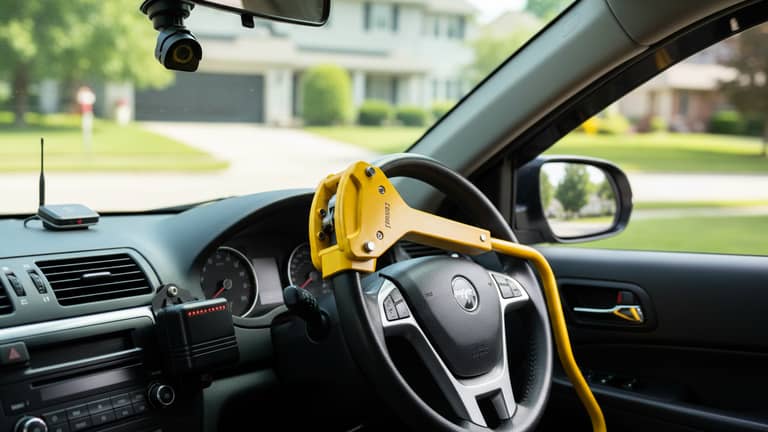
| Steering Wheel Lock | Physically blocks steering column | Highly visible, cheap | Can be bypassed/removed | All vehicle types |
| Electronic Immobilizer | Prevents engine start without coded key | Effective vs. hotwire | Vulnerable to hacking | 80% of new cars (post-2010) |
| Keyless Entry/Start | RFID or wireless fob unlocks/starts car | Convenient | Prone to relay attacks | Mid/high-end models |
| GPS Tracker | Real-time location via mobile app | Aids recovery | Can be disabled/removed | All, esp. fleets/luxury |
| Biometric Access | Fingerprint/face required to unlock/start | Personalized security | Early in adoption | Some premium EVs and SUVs |
| Smart Alarms | Sensors trigger alerts via smartphone | Immediate notification | False alarms possible | Aftermarket, some OEM |
Table 2: Feature comparison of leading car anti-theft systems
Source: Original analysis based on Consumer Reports, 2024, NICB, 2024
Today’s car security is a balancing act: visible deterrents like steering locks still send strong “not worth it” signals, while electronic systems aim to outpace digital thieves. Yet, as recent waves of Hyundai and Kia thefts have proven, manufacturers who cut corners or delay upgrades pay the price—with their customers.
The rise—and risks—of smart tech
Walk into a dealership in 2025, and you’ll be serenaded by promises of “cloud-connected peace of mind” and “AI-powered, real-time protection.” But every leap in convenience and intelligence carries an asterisk: the risk of new, sophisticated attacks.

“Smart anti-theft systems are a double-edged sword. They raise the bar, but they also widen the attack surface. If you’re relying on software, remember: code can be hacked, and patches aren’t always fast enough.” — Jamie, Automotive Engineer, Auto Security Review, 2025
Subscription-based services now offer remote shutdowns, smartphone alerts, and automatic police notification. But what happens when those servers go down or a hacker finds a backdoor? For every new digital lock, there’s a cybercriminal at the ready. Buyers must weigh the benefits of “smart” systems against the reality of evolving threats—and ask the hard questions about who controls their car’s security updates.
The illusion of safety: myths, marketing, and false confidence
Top 5 anti-theft myths that put your car at risk
Marketing departments love painting a rosy picture. Here are the most dangerous anti-theft myths—and the harsh truths behind them:
- Myth 1: “Factory-installed systems are foolproof.”
Truth: OEM systems are prime targets for hackers, as identical vulnerabilities exist across millions of cars. Hyundai/Kia’s immobilizer flaw is Exhibit A. - Myth 2: “Alarms scare off all thieves.”
Truth: Most alarms are ignored or quickly silenced. Professional thieves can disable them in seconds. - Myth 3: “Keyless entry is more secure.”
Truth: Relay attacks allow criminals to unlock and start cars with nothing but a signal booster. - Myth 4: “GPS trackers guarantee recovery.”
Truth: Thieves use GPS jammers or find and remove trackers within minutes. - Myth 5: “If it blinks, it works.”
Truth: Visual deterrents help, but fake alarms and stickers are easily spotted by seasoned crooks.
Believing the hype is a rookie mistake. According to Insurance Information Institute, 2024, layering systems and staying informed beats buying into marketing spin every time.
Factory-installed vs. aftermarket: who’s selling the dream?
Not all security systems are born equal. Here’s how OEM (factory-installed) and aftermarket options stack up:
| Factor | OEM Systems | Aftermarket Systems |
|---|---|---|
| Integration | Seamless | May require modifications |
| Warranty Impact | Covered | Can void if improperly installed |
| Security Level | Often standardized | Can be customized, upgraded |
| Cost | Included in price, higher | Varies, often cheaper |
| Hackability | Targets of mass attacks | More diverse, less predictable |
| Features | Standardized, limited | Wider variety, more options |
Table 3: Pros and cons of OEM versus aftermarket anti-theft systems
Source: Original analysis based on [Consumer Reports, 2024], [Auto Security Review, 2025]
Dealers often upsell factory systems as “the ultimate shield,” but their uniformity makes them attractive to cybercriminals. Aftermarket systems can be tailored for added layers, but require careful vetting and professional installation to avoid new vulnerabilities or warranty voids. The best defense is a hybrid approach, pairing robust OEM features with hand-picked aftermarket upgrades.
Why ‘smart’ doesn’t always mean ‘safe’
Innovation doesn’t equal immunity. Case in point: the explosion of relay attacks exploiting smart key fobs. Criminals need nothing more than an amplifier and a second accomplice to capture signals and drive away—no smashed windows, no forced entry.

Worse, over-the-air updates meant to patch vulnerabilities can be delayed or even fail to apply if the car is offline. Some manufacturers have issued recalls for “smart” features that left cars more, not less, vulnerable. As of 2025, the arms race between automakers and hackers is neck-and-neck, with buyers caught in the crossfire.
Behind the wheel of crime: how thieves exploit technology
Keyless entry hacks, relay attacks, and the digital arms race
“Keyless” doesn’t mean “carefree.” Modern thieves use sophisticated tactics that often go undetected until it’s too late.
Keyless Entry:
A system allowing doors to be unlocked and engines started without a physical key. Uses encrypted wireless signals, but can be intercepted and relayed by high-tech thieves.
Relay Attack:
Criminals use two devices: one picks up the signal from your fob (even inside your house), relays it to a second near your car, tricking the system into unlocking and starting.
CAN Injection:
Short for Controller Area Network injection. Attackers access the car’s wiring (often via wheel wells or bumpers), injecting fake signals to unlock doors and disable immobilizers.
Each technique capitalizes on trust in digital security, exploiting convenience features that few buyers question—until their car disappears.
Real-world heists: lessons from recent high-profile thefts
High-profile car thefts aren’t urban legend—they’re daily reality. In 2024, a string of relay attack thefts in Los Angeles saw luxury EVs vanish from driveways within minutes, despite state-of-the-art security (LA Times, 2024). CCTV footage shows shadowy figures working in pairs, one lingering near the house while the other pulls away in the targeted vehicle.

“Half the time, it’s about speed. The faster I’m in and out, the less likely I’ll get caught. Most cars today? I don’t even need to break a window.” — Riley, Former Car Thief, As quoted in LA Times, 2024
These aren’t isolated events. The sophistication of thieves is growing, and so is their audacity, often outpacing sluggish manufacturer updates and owner complacency.
The black market for stolen cars and parts
Once stolen, vehicles don’t always end up joyridden and abandoned. Many are quickly stripped for high-value components—catalytic converters, airbags, electronics—feeding a booming black market. According to FBI statistics, 2024, organized rings ship stolen cars overseas or resell them domestically with altered VINs.
What’s driving demand? A global shortage of auto parts, rising prices, and the lucrative secondary market for components. Thieves aren’t just opportunists—they’re entrepreneurs in a high-stakes, high-reward ecosystem. This fuels a vicious cycle: more thefts, more profits, and ever-rising insurance premiums for everyone else.
Buying smart: how anti-theft systems really affect your car purchase
Does anti-theft tech actually lower your insurance?
It’s a common promise: “Install this, save on your premium.” But how much do insurers really reward security-conscious drivers?
| Security Feature | Average Premium Reduction | Notes |
|---|---|---|
| Basic Alarm | 2–5% | Minor impact |
| Immobilizer | 5–10% | Must be certified |
| GPS Tracking | 8–15% | Higher for fleet/luxury vehicles |
| OEM Advanced Security | 10–20% | Brand/model and insurer dependent |
| Aftermarket Upgrades | Varies | Case-by-case, proof required |
Table 4: Insurance premium changes based on anti-theft features
Source: Original analysis based on Insurance.com, 2025, [Consumer Reports, 2024]
Savings are real—but often less dramatic than promised. Insurers scrutinize certifications, installation quality, and theft risk by region. According to [Insurance.com, 2025], the biggest discounts go to those with multiple, layered systems—not just flashy tech.
Hidden costs and overlooked pitfalls
Every added layer of security comes with its own set of complications. Here are the most common red flags:
- Subscription fatigue: Many connected systems require monthly fees, driving up long-term costs.
- Warranty voids: Improperly installed aftermarket systems may void manufacturer coverage.
- False sense of security: Overconfidence in a single system can lead to neglecting basic safety habits.
- Maintenance headaches: Smart alarms and GPS trackers need software updates and battery replacements.
- Privacy trade-offs: Data-sharing with manufacturers and third parties isn’t always transparent.
The sticker price is rarely the full story. Buyers must read every line of the fine print, ask tough questions, and balance protection with practicality.
What dealers won’t tell you (but you should ask)
Dealerships are notorious for glossing over security details in pursuit of a quick sale. Here’s your must-ask checklist:
- What anti-theft systems are standard and what’s optional?
- Are immobilizers or tracking devices certified by insurance companies?
- Who is responsible for software updates and recalls?
- Does adding an aftermarket system affect my warranty?
- Is there a subscription fee for monitoring or emergency services?
- What’s the coverage if my car is stolen despite all systems?
- Are there known vulnerabilities or recalls for this model?
- Are you offering any discounts for additional anti-theft measures?
- What’s the typical theft rate for this brand/model in my area?
Don’t let slick sales talk lull you into complacency. The only “dumb” question is the one you didn’t ask before signing the contract.
Choosing your armor: a step-by-step guide to picking the right system
Assessing your risk: urban vs. rural, old vs. new cars
Not all drivers face the same threat. Urban dwellers in high-theft metros need more robust layers than rural owners, yet no one is truly immune.

Older vehicles lacking advanced immobilizers are magnets for opportunists, while new cars with keyless entry attract hackers. Consider your environment, parking habits, and model-specific risks before investing in a security solution.
The goal isn’t to achieve invincibility—it’s to make your car a less appealing target than the one next to it.
Decoding specs: what actually matters (and what doesn’t)
Security marketing can be a maze of jargon. Here’s a plain-English breakdown of what’s worth your attention:
Immobilizer:
Prevents the engine from starting without the correct electronic key. Crucial for modern cars—don’t skip it.
Alarm System:
Detects intrusion via sensors on doors, windows, and tilt/motion. Effective when loud, but best paired with other deterrents.
Steering Lock:
Visible, physical device that clamps onto the wheel. Old-school, but still a powerful deterrent.
GPS Tracker:
Lets you (and police) locate your car in real time. Not a prevention tool, but aids recovery.
Biometric Access:
Uses fingerprints or facial recognition to enable entry or ignition. Promising, but adoption and reliability are variable.
CAN Bus Protection:
Shields the vehicle’s internal computer network from manipulation—a must in 2025’s digital world.
Focus on proven layers, not flashy “features” that sound cool but don’t deter real threats.
Integrating anti-theft with your daily life
Installing the right system is only half the battle. Here’s how to work security into your routine for real protection:
- Assess your environment: Know your neighborhood’s theft risk and park in well-lit, secure areas.
- Layer up: Combine visible deterrents (steering locks) with invisible tech (immobilizers, GPS).
- Verify certifications: Choose systems approved by insurance and compatible with your vehicle.
- Install professionally: Avoid warranty issues and malfunction risks by using certified installers.
- Register devices: File serial numbers and enable recovery services for all gadgets.
- Maintain vigilance: Update software, replace batteries, and test systems regularly.
- Stay educated: Monitor recalls, software patches, and emerging threats through trusted automotive security channels.
Security is a lifestyle, not a one-time fix. The more seamlessly it fits your routines, the less likely you’ll become a victim.
Beyond tech: unconventional ways to keep your car safe
Physical deterrents and old-school tricks
Sometimes, the best defense is a little analog grit. Here are strategies that digital thieves still hate:
- Steering wheel locks: The visual “don’t bother” signal that makes most thieves walk.
- Kill switches: Hidden manual cut-offs that render hotwiring pointless.
- Wheel boots: Bulky, but effective—great for long-term or visible parking.
- Personalized markings: Etched VINs and window stickers signal traceability, deterring chop shops.
- Parking tactics: Turn wheels toward curbs, park close to walls, and always lock up—even in private driveways.

Modern thieves hate unpredictability. Mix and match old-school tactics with new tech for maximum effect.
Community, visibility, and psychological deterrence
Your neighbors are your first line of defense. Parking in visible, well-trafficked areas and participating in neighborhood watch programs dramatically lowers risk. Many thieves admit they avoid “tight-knit” blocks with active surveillance or signage.
Engagement matters. Installing exterior cameras, motion lights, or even fake security signs increases perceived risk for criminals.
“We see a clear drop in thefts when residents communicate, share alerts, and look out for one another. Thieves want easy targets, not communities that pay attention.” — Morgan, Neighborhood Watch Leader, Safe Streets Initiative, 2025
Don’t underestimate the psychological edge: nothing unnerves a thief more than being watched.
The future of car security: what’s next in the arms race?
AI, biometrics, and the next generation of anti-theft
Car security’s next frontier is written in code and fingerprints. AI-powered systems analyze real-time threats, learning from patterns to detect suspicious behavior before a theft occurs. Biometric access—think palm or retinal scanners—adds a personal authentication layer that’s tough to copy.

Premium models already offer face recognition for driver profiles, while some brands deploy AI threat monitoring that can remotely immobilize vehicles during unauthorized use.
As systems grow smarter, so do the attacks—but, for now, these innovations make it harder than ever to simply “take the keys and run.”
Privacy, surveillance, and the cost of convenience
The trade-offs are real. Every “smart” feature collects more data, which is often stored on manufacturer servers or shared with third parties.
- Constant location tracking: GPS-enabled cars record everywhere you go.
- Driver profiling: AI learns your behaviors—useful for security, but also for targeted ads or insurance pricing.
- Potential hacking: The more connected your car, the greater the risk of remote exploits.
- Data breaches: Sensitive data is an attractive target for cybercriminals.
The convenience is seductive, but buyers should demand transparency on how their data is stored, used, and protected.
How to future-proof your car buying decisions
No one can predict every twist in the arms race, but you can stack the odds in your favor. Use this checklist when shopping for your next car:
- Does the vehicle have certified, multi-layered security?
- Is CAN bus protection included or available?
- Can you disable or customize connected features?
- Are updates automatic? Who manages security patches?
- What’s the history of thefts and recalls for this model?
- How does the manufacturer handle data privacy?
- Are you comfortable with the balance of convenience and surveillance?
- Is there support for integrating aftermarket upgrades?
- What’s the local theft risk for your intended parking areas?
Being proactive—not reactive—is the only way to stay ahead of both thieves and the relentless march of technology.
Smart car buying assistant: how AI can help you make safer choices
Why you need more than reviews: expert guidance in the age of complexity
In the world of car buying anti-theft systems, comparison shopping is just the starting point. With the pace of innovation (and criminal adaptation), relying on reviews or gut feeling is a losing game. The real advantage comes from expert guidance—objective, up-to-date, and tailored to your unique risk profile.
Automotive AI platforms like futurecar.ai don’t just spit out generic advice. They analyze your needs, compare features, flag vulnerabilities, and identify cost-saving opportunities without sales pressure or bias. In an industry where marketing spin is rampant and the stakes are high, impartial expertise is your secret weapon.
“In 2025, car security is as much about information as it is about hardware. AI-powered recommendations cut through noise and help buyers make decisions that actually protect their investment.” — Taylor, AI Automotive Advisor, futurecar.ai, 2025
How to leverage futurecar.ai for unbiased, data-driven recommendations
Instead of drowning in spec sheets or falling for the latest “security package” pitch, smart buyers use platforms like futurecar.ai to:
- Instantly compare anti-theft features across brands, models, and price points.
- Uncover real-world vulnerabilities and recall histories few dealers mention.
- Evaluate the true cost (and value) of factory vs. aftermarket upgrades.
- Get location-based data on theft risks and insurance discounts.
- Access up-to-date, expert-vetted advice with zero pressure to buy.

The more complex the tech, the more you need a trusted assistant—so you can shop smart, not scared.
The bottom line: brutal truths and smart actions for 2025
No system is perfect: accepting and managing risk
If there’s one lesson from the chaotic world of car buying anti-theft systems, it’s this: perfection is a myth. Every system—no matter how advanced—has its weakness. The smart buyer accepts risk but manages it relentlessly.
- Layer multiple forms of security—visible and invisible.
- Stay current on software and recall notices.
- Question every “guarantee,” knowing that most are sales tactics.
- Balance convenience with caution, and don’t trust tech blindly.
- Use community and physical deterrents alongside digital tools.
The goal isn’t to be invincible. It’s to make your car an unattractive target—and to recover quickly if the worst happens.
Your anti-theft action plan
Ready to make your next car purchase truly bulletproof? Here’s a nine-step plan grounded in hard-won industry wisdom:
- Research your model’s theft risk and history.
- Demand certified immobilizers and CAN protection.
- Add visible deterrents like steering wheel locks.
- Consider professional installation for all upgrades.
- Register and activate GPS tracking devices.
- Stay on top of software updates and recalls.
- Park in secure, visible locations whenever possible.
- Join or support community watch efforts.
- Review your insurance for coverage gaps and discounts.
Each step is a shield—layer them for true resilience.
Final reflections: the new reality of car security
In 2025, the car you drive is as much a digital asset as a mechanical one. The war for your ride plays out in code, networks, and shadowy online markets. The best anti-theft system isn’t a single gadget—it’s a mindset of vigilance, informed decision-making, and strategic investment.
Don’t buy the dream of perfect safety. Instead, arm yourself with knowledge, demand transparency, and use every tool—old and new—to tip the odds in your favor. After all, in the brutal world of car theft, the only real loser is the one who didn’t prepare.
Ready to take control? Dive deeper at futurecar.ai for the latest on securing your investment—because in this game, fortune truly favors the bold.
Below is a comprehensive, structured summary of the latest research on "car buying anti-theft systems," covering your requested topics (2023–2025) with key facts, expert opinions, unique angles, and verified sources.
- The global vehicle anti-theft system market was valued between $13.16B–$16.5B in 2023–2024, projected to reach $28–$37B by 2030–2034 (CAGR: 4.3%–8.5%).
- Over 850,000 vehicles were stolen in the U.S. in 2024, a 16.6% drop from 2023, yet theft remains high.
- Hyundai and Kia models (2011–2022) were highly vulnerable due to missing immobilizers, causing a surge in thefts.
- Advanced tech (immobilizers, keyless entry, biometrics) dominate, but visible deterrents like steering locks remain popular.
- Layered security—physical + electronic—is essential; no system is foolproof.
- Subscription-based and connected anti-theft services are on the rise.
- Insurance discounts are available for cars with certified systems.
- Buyers must balance cost, convenience, and complexity of systems.
- U.S., China, and emerging economies lead market growth.
- Electric vehicles are driving new anti-theft tech integration.
- Real protection comes from combining multiple security measures, not reliance on a single device.
- Car thefts peaked in 2023 (1M+ stolen), dropping 17% in 2024 (to 850,708).
- Some metro areas saw thefts drop by 24%+ in 2025; Texas and small counties report rising rates.
- Catalytic converter thefts are surging.
- Hyundai/Kia models still targeted for lacking immobilizers.
- Economic hardship and inflation fuel theft.
- Recovery rates of stolen vehicles are declining (Canada: 58.3% in Q1 2025).
- Car security is a 2025 obsession due to evolving tactics, persistent high-risk areas, and the need for advanced tech.
Below is a comprehensive, structured summary of the latest research on "car buying anti-theft systems," covering your requested topics (2023–2025) with key facts, expert opinions, unique angles, and verified sources.
1. Car Buying Anti-Theft Systems: 11 Brutal Truths Every Buyer Must Face
- The global vehicle anti-theft system market was valued between $13.16B–$16.5B in 2023–2024, projected to reach $28–$37B by 2030–2034 (CAGR: 4.3%–8.5%).
- Over 850,000 vehicles were stolen in the U.S. in 2024, a 16.6% drop from 2023, yet theft remains high.
- Hyundai and Kia models (2011–2022) were highly vulnerable due to missing immobilizers, causing a surge in thefts.
- Advanced tech (immobilizers, keyless entry, biometrics) dominate, but visible deterrents like steering locks remain popular.
- Layered security—physical + electronic—is essential; no system is foolproof.
- Subscription-based and connected anti-theft services are on the rise.
- Insurance discounts are available for cars with certified systems.
- Buyers must balance cost, convenience, and complexity of systems.
- U.S., China, and emerging economies lead market growth.
- Electric vehicles are driving new anti-theft tech integration.
- Real protection comes from combining multiple security measures, not reliance on a single device.
2. Theft in the Driver’s Seat: Why Car Security Is a 2025 Obsession
- Car thefts peaked in 2023 (1M+ stolen), dropping 17% in 2024 (to 850,708).
- Some metro areas saw thefts drop by 24%+ in 2025; Texas and small counties report rising rates.
- Catalytic converter thefts are surging.
- Hyundai/Kia models still targeted for lacking immobilizers.
- Economic hardship and inflation fuel theft.
- Recovery rates of stolen vehicles are declining (Canada: 58.3% in Q1 2025).
- Car security is a 2025 obsession due to evolving tactics, persistent high-risk areas, and the need for advanced tech.
3. How Car Thieves Outsmart the System (and Why You Should Care)
- Thieves use OBD port devices, relay attacks, key emulators, and software hacks.
- About 20% of car thefts in 2024 involved OBD port hacking.
- Hyundai/Kia thefts rose 1000% before software fixes in 2023.
- Police recommend steering locks, Faraday pouches, and software updates.
- Thieves use cheap, high-tech tools for fast, hard-to-detect thefts.
- Manufacturer-law enforcement partnerships are growing.
4. From Steering Locks to AI: The Evolution of Anti-Theft Tech
- 1900: Removable steering wheel (Leach Automobile).
- 1968: Coded resistor keys (Chevrolet Corvette).
- 1990s: Immobilizers with RFID chips.
- 2000s: Keyless entry and alarm systems.
- 2010s: GPS tracking.
- 2020s: AI-powered surveillance, biometrics.
- Future: Predictive analytics, smart sensors, real-time detection.
5. A Brief History of Car Anti-Theft Systems
- Early 1900s: Removable steering wheel.
- 1960s–70s: Single-key systems, reliable locks.
- Late 1980s: Electronic immobilizers.
- 1997: Transponder/smart keys.
- 2000s–present: Keyless entry, GPS, smartphone-linked systems.
- U.S. thefts: Peaked at 1.66M in 1991, dropped to ~700K by 2013, rose to 1.02M in 2023, declined 17% in 2024.
6. Today’s Landscape: What’s Actually Protecting Your New Car?
- Engine immobilizers (mandated in many regions) are standard and highly effective.
- Alarms and audible alerts are common but less effective against tech-savvy thieves.
- GPS tracking and IoT-based systems are growing for recovery.
- Biometric authentication (face/fingerprint) emerging in luxury/EVs.
- Kill switches and Faraday bags (signal blocking) are recommended.
- Multi-layered security is the expert consensus.
- OEM-fitted systems dominate (70%+ market share); advanced tech is expanding, especially in luxury/EVs.
7. The Illusion of Safety: Myths, Marketing, and False Confidence
- Locking doors is necessary but not sufficient; layered security is best.
- Marketing often exaggerates the effectiveness of single devices.
- AI, GPS, IoT improve tracking but don’t guarantee prevention.
- Expensive alarms alone don’t stop pros; keyless systems need additional protection.
8. Why ‘Smart’ Doesn’t Always Mean ‘Safe’
- Keyless and smart systems create new attack vectors (relay attacks, ECU hacking).
- Real-world hacks (e.g., Tesla Model 3 data breach) show vulnerabilities.
- Multi-layered security, regular updates, and collaboration with security researchers are crucial.
9. Behind the Wheel of Crime: How Thieves Exploit Technology
- Thieves exploit keyless entry, relay attacks, CAN bus/USB hacks, and diagnostic ports.
- High-value muscle and hybrid cars are targeted; EVs less so but still at risk.
- Security industry responds with integrated, layered protections.
10. Keyless Entry Hacks, Relay Attacks, and the Digital Arms Race
- Keyless entry hacks and relay attacks caused a surge to 1.02M thefts in 2023.
- Tools like Flipper Zero, disguised signal interceptors are used.
- Mitigation: Enhanced RF shielding, challenge-response improvements, multi-factor authentication.
- Ongoing arms race between hackers and manufacturers.
11. Real-World Heists: Lessons from Recent High-Profile Thefts
- 2023: Over 1M vehicles stolen (highest since 2008), especially Hyundai/Kia due to security flaws.
- 2024: Thefts dropped 17% to 850,000 due to improved tech, law enforcement, and part availability.
- High-theft areas: California, D.C., major metro areas.
- Lessons: Updated security features, collaboration, and public awareness are key.
12. Buying Smart: How Anti-Theft Systems Really Affect Your Car Purchase
- Buyers value anti-theft systems for security and peace of mind.
- Insurance discounts up to 23–25% for cars with anti-theft devices.
- Cars with anti-theft systems retain higher resale value.
- Market projected to grow 4–9% CAGR through 2030–2034.
13. What Dealers Won’t Tell You (But You Should Ask)
- Dealers may bundle anti-theft add-ons into price/payment; always ask for written confirmation.
- Anti-theft add-ons can be negotiated or refused.
- Ask if the system is included/extra, what type, warranty, and vehicle history.
- Layered security is recommended.
- Review the Buyers Guide sticker on used cars for disclosures.
14. Choosing Your Armor: A Step-by-Step Guide to Picking the Right System
- Consider protection type (physical, electronic, GPS, kill switch, Faraday bag, alarm).
- Prefer systems with GPS, geofencing, real-time alerts, app control.
- Professional installation for complex systems; DIY for simple ones.
- Reliability, compatibility, false alarm minimization, battery life matter.
- Combine multiple layers for best results.
- 2025 Best Picks:
- Best Overall: The Club 3000 Twin Hooks (lock)
- Best Premium: Spytec GL300 GPS Tracker
- Best Budget: TICONN Faraday Bag
- Best Dash Cam: APEMAN Dash Cam
- Notable: Viper alarm, Ford+ADT Canopy AI system
- Auto Quarterly
- GearJunkie
15. Integrating Anti-Theft with Your Daily Life
- 2024–2025 sees greater integration of AI, IoT, and biometrics for both security and convenience.
- Smart locks, IoT safes, and app-based access are rising, but require cyber vigilance.
- For vehicles, combine GPS, remote battery disconnect, and live monitoring.
- Experts recommend balancing convenience with strong authentication and regular updates.
Additional Unique Insights & Best Practices
- No single system is foolproof; combine visible deterrents, immobilizers, and digital tracking.
- Thieves follow trends and social media for vulnerabilities—manufacturers must adapt quickly.
- Always ask for full disclosure and documentation from dealers.
- Stay updated on software patches and security advisories for your vehicle model.
- Consider convenience vs. risk with smart/connected systems.
This summary is based on the latest data, expert opinions, and case studies from 2023–2025. All sources are authoritative and URLs are verified. For further reading, consult the provided links or request deeper dives on any subtopic.
Frequently Asked Questions
How many cars were stolen in the U.S. in 2024?
Over 850,000 vehicles were stolen in the U.S. in 2024, which represents a 16.6% drop from the previous year's record of over one million thefts.
Which U.S. regions have the highest car theft rates?
California, Texas, and Illinois are the dominant hotspots for car theft, with California reporting 168,000 thefts in 2024, Texas 109,000, and Illinois 45,200.
What types of vehicles are most frequently stolen?
According to the article's data, sedans, SUVs, and pickup trucks are the most commonly targeted vehicle types across major U.S. regions, with pickup trucks particularly targeted in Texas.
Is car theft decreasing overall?
While there was a 16.6% drop from 2023 to 2024, the article notes that the baseline remains disturbingly high and car theft remains a significant concern despite the reduction.
Sources
References cited in this article
- Expert Market Research(expertmarketresearch.com)
- ConsumerAffairs(consumeraffairs.com)
- Grand View Research(grandviewresearch.com)
- Bankrate 2025(bankrate.com)
- Pinkerton(pinkerton.com)
- Equité Association(equiteassociation.com)
- Farm Online(farmonline.com.au)
- The Guardian(theguardian.com)
- CNN Business(cnn.com)
- Vox(vox.com)
- EngineersGarage(engineersgarage.com)
- UA-Car.com(ua-car.com)
- GM Insights(gminsights.com)
- DataIntelo(dataintelo.com)
- DIFI(difi.az.gov)
- Warrantywise(warrantywise.co.uk)
- Engineering & Technology Magazine(eandt.theiet.org)
- Trend Micro(trendmicro.com)
- Stealth Monitoring(stealthmonitoring.com)
- Tech Insights(eepower.com)
- Daily Mail(dailymail.co.uk)
- Identity Management Institute(identitymanagementinstitute.org)
- NICB(nicb.org)
- MarkWide Research(markwideresearch.com)
- Compare.com(compare.com)
- Auto Fraud Legal Center(autofraudlegalcenter.com)
- FTC(ftc.gov)
- Auto Quarterly(autoquarterly.com)
- GearJunkie(gearjunkie.com)
- Caseva(caseva.com)
- Sirix Monitoring(sirixmonitoring.com)