

Public Charging Is Broken—Who Pays the Price As Evs Scale?
Written with AI assistance under our editorial guidelines
As electric vehicle sales surge, public charging infrastructure struggles with unreliability and poor user experience. Real-world drivers face broken chargers, limited availability, and unpredictable service, creating significant stress particularly for those without home charging access. The gap between marketing promises and actual charging experiences reveals that infrastructure expansion alone cannot solve the underlying issues of reliability, maintenance, and equitable access across communities.
Plug in, wait, wander, hope. Public charging isn’t just the backbone of the electric vehicle revolution—it’s the test every EV driver faces, often alone under a flickering streetlight or with a silent prayer at a windswept highway rest stop. Forget the glossy marketing: the real public charging experience is messy, unpredictable, and—if you’re not ready—downright punishing. While the headlines rave about booming EV sales and “infrastructure revolutions,” the stories from the curb are sobering. This isn’t just about kilowatt-hours; it’s about time lost, money spent, nerves frayed, and communities left waiting for the promise of electric freedom. Below, we rip the cover off the hype and dig into the raw realities, surprising upsides, and essential strategies every EV driver must know to survive and thrive in the brave new world of public charging.
The hype versus the harsh reality: why public charging matters
The EV revolution’s public secret
Public charging is pitched as the lifeblood of the EV era—a gleaming symbol of green progress and energy independence. In press releases and ad campaigns, it’s everywhere: rows of shiny chargers, happy drivers, and the promise of a world where “fueling up” is as easy as tapping your phone. But talk to actual drivers, and the narrative fractures. Real-world experience is defined as much by hope as by hassle. Charging stations may dot the city, but finding a working, available one—especially on the fly—quickly exposes the gap between perception and hard reality.

The result? Public charging remains misunderstood by non-EV owners and underestimated by newcomers. As one driver put it:
"Most people think finding a charger is easy—until they try it for real." — Alex, EV owner
The gap isn’t just semantic—it's existential. For those without home charging, public infrastructure is the difference between seamless mobility and recurring anxiety. And even for the well-prepared, relying on public charging is a test of patience, luck, and local knowledge.
Dreams meet the curb: a night at the charger
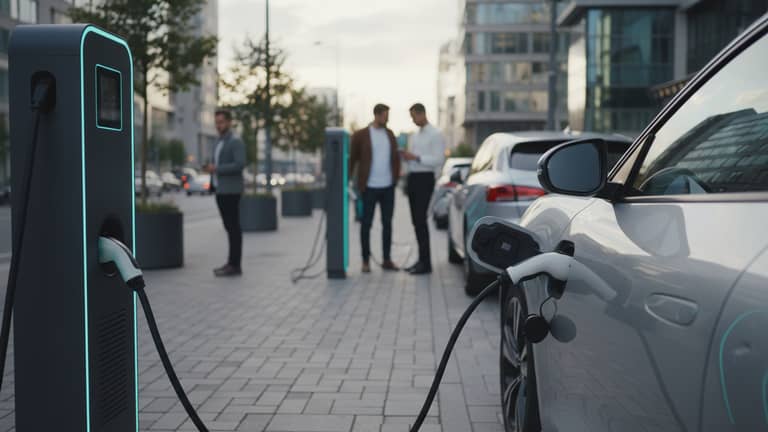
Picture this: It’s 11:13 PM, you’re low on charge, and you weave into a public charging lot lit by the fluorescent glare of convenience store signage. There’s one charger free, but a battered sedan idles in the dedicated spot, and the station’s screen flickers uncertainly. The app says “Available,” but reality says “try again later.” Around you, a silent queue forms—anonymous, tired, quietly tense.
The numbers don’t lie: charger uptime varies dramatically across networks, and reliability is still a coin toss in many regions. According to Green Car Reports, 2024, average uptime across major U.S. networks hovers between 88% and 97%, but your luck may depend on the badge on the box.
| Network | Average uptime (2025, %) | Notable issues |
|---|---|---|
| ChargePoint | 94 | App/payment errors |
| EVgo | 91 | Socket faults |
| Electrify America | 88 | Vandalism, queues |
| Tesla Supercharger | 97 | NACS-only, queues |
Table 1: Average charger uptime by network, 2025. Source: Original analysis based on Green Car Reports, 2024 and Uswitch, 2024
These numbers translate into lived experience: more time waiting, more risk of being stranded, and more emotional swings—from relief to rage—in a single charging session. Your odds improve in major metros, where maintenance is prioritized, but in rural or underserved areas, each “available” charger is a gamble. The bottom line: public charging is a lifeline, but only if the line holds.
Why public charging is more than just ‘fueling’
Public charging isn’t just about electrons or convenience—it’s a public utility, a social barometer, and, increasingly, a cultural touchstone. The presence (or absence) of chargers shapes urban planning, real estate, and commuting patterns. It signals which neighborhoods are prioritized and which are left behind. And for many, public chargers double as social spaces, networking nodes, or impromptu support forums for the EV-curious.
The “invisible infrastructure” of public charging also impacts mental health: drivers report anxiety over range, resentment when ICE vehicles block charging bays, and even camaraderie when sharing tips with strangers at a busy station. Environmentally, every new public charger is both a step toward decarbonization and a test of grid resilience—especially as fast chargers proliferate.
7 hidden benefits of public charging experts won’t tell you:
- Community building: Charging stations become hubs for conversation, advice, and peer support among EV owners.
- Business boost: Local cafes and shops near chargers see increased foot traffic and revenue.
- Grid balancing: Smart public chargers can help stabilize energy demand, supporting renewables.
- Data collection: Charging stations generate data that informs city planning and infrastructure investment.
- Tourism draw: Well-placed chargers attract EV-owning tourists to new destinations.
- Work-life balance: Charging time can double as a productive break—emails, calls, even a quick nap.
- Environmental signaling: Charging infrastructure signals a city’s commitment to sustainability, enhancing its brand.
The anatomy of a public charging experience
Finding a charger: map apps, mirages, and reality
If you think Google Maps, PlugShare, or your car’s dashboard app will lead you straight to a working charger every time, prepare for a reality check. Apps list thousands of chargers, but status updates can lag, and “Available” doesn’t guarantee a working plug or open space. Many drivers describe the frustration of chasing phantom chargers—stations listed online that turn out offline, blocked, or under repair. The search becomes a ritual: open three apps, cross-check, pray.

Step-by-step guide to mastering public charging:
- Scout in advance: Use multiple apps (PlugShare, ChargePoint, vehicle native) to cross-verify charger status.
- Check reviews: User comments often reveal real-time issues—broken plugs, long queues, vandalism.
- Call ahead: If the station is in a business or hotel, phone to confirm access and hours.
- Arrive early: Especially near peak times or busy corridors.
- Inspect the site: Look for blocked bays, maintenance crews, or obvious damage before plugging in.
- Authenticate: Be ready for app logins, RFID cards, or SMS authentication—sometimes all three.
- Monitor charge: Stay close or use your app to track session progress and avoid overstaying fees.
- Stay flexible: If a charger fails, have a backup site in mind.
- Report issues: Log problems in the app to help fellow drivers.
- Charge smart: Top up opportunistically, not just when empty.
Speed traps: what charging speeds really mean
Not all public chargers are created equal. Level 1 chargers (120V) crawl along, adding 3-5 miles per hour—fine for an overnight trickle, useless for a road trip. Level 2 chargers (240V) are common in public lots and add 20-30 miles per hour, good enough for a shopping run. DC fast chargers (50kW+) and “ultra-rapid” stations (150-350kW) promise a caffeine-jolt of electrons—but only if your car supports them, and only if the charger isn’t throttled by grid limits or heat.
| Charger type | Typical power | Example vehicle | Miles added/30 min | Typical real-world scenario |
|---|---|---|---|---|
| Level 1 | 1-2 kW | Nissan Leaf | 2-5 | Apartment/older home |
| Level 2 | 7-22 kW | Chevy Bolt | 10-18 | Mall, parking garage |
| DC Fast | 50-150 kW | VW ID.4 | 80-120 | Highway stop, city lot |
| Ultra-rapid | 150-350 kW | Tesla Model Y | 150-200 | Dedicated charging hubs |
Table 2: Charging speed comparison by charger type and vehicle. Source: Original analysis based on Uswitch, 2024 and Green Car Reports, 2024
Manufacturers love to tout “up to” figures, but in real life, speeds fluctuate. Battery state, temperature, and charger age all affect results. Expect lower rates during high demand or on older equipment—another lesson in public charging’s unpredictability.
Payment puzzles: from free rides to hidden fees
Public charging once meant free electrons—a lost leader to lure early adopters. Now, as networks mature and demand spikes, prices are climbing. According to Uswitch, 2024, the UK saw public charging prices jump 12.5% in 2023-24. Pricing varies wildly: per kWh, per minute, per session, or some arcane hybrid. Some networks still offer “free” charging in retail lots, but these are vanishing fast.
6 red flags to watch out for when using public charging payment systems:
- Non-transparent pricing: Rates aren’t posted clearly at the charger—always check in the app first.
- Idle fees: Some networks slap you with penalties if you linger after charging stops.
- App-only access: No credit card tap? You’re out of luck.
- Network exclusivity: Certain plugs require proprietary apps or RFID cards.
- Currency confusion: International networks may bill in unfamiliar currencies or impose foreign transaction fees.
- Pre-authorization holds: Up to $100 can be frozen on your credit card during charging—watch your balance.
The elephant in the lot: charger downtime and vandalism
Ask any regular user: charger downtime is the invisible enemy. According to Roland Berger EV Charging Index 2024, network reliability is improving, but “infrastructure development is still struggling to match vehicle sales.” Broken screens, software bugs, and vandalism (cut cables, smashed displays) are distressingly common—especially in unsupervised or poorly lit areas.
"Half the time, I’m just hoping the thing works—seriously." — Morgan, rideshare driver
Key terms, defined for the public charging battleground:
The percentage of time a charger is fully operational. High uptime is critical for reliability; top networks boast 95%+, but many hover lower.
Scheduled or unscheduled downtime for repairs or upgrades. Often not communicated to users in real time, leading to wasted trips.
Physical damage or tampering that renders a station unusable—ranging from graffiti to wire theft. Affects reliability, user trust, and repair costs.
Who wins and who loses: the economics of public charging
The true cost breakdown: more than dollars per kWh
Public charging costs are a moving target—shaped by location, speed, network, and even time of day. But the dollars per kWh only tell half the story. According to Uswitch, 2024, average public charging in the UK is now 53p/kWh, while typical home charging is closer to 30p/kWh. In the US, averages hover around $0.35-$0.50/kWh public, versus $0.12-$0.16/kWh at home. Other hidden costs include:
- Time lost: Waiting in line or for slower chargers.
- Detours: Extra miles to reach a station.
- Payment fees: App or network-specific surcharges.
- Opportunity cost: Time spent charging is time not spent elsewhere.
| Charging type | Avg. cost/kWh (2025) | Typical session fee | Idle fee (per min) | Avg. total trip cost (100 mi) |
|---|---|---|---|---|
| Home charging | UK: £0.30; US: $0.14 | £0/$0 | £0/$0 | UK: £6; US: $4 |
| Public regular | UK: £0.53; US: $0.38 | £1/$1 | £0.10/$0.10 | UK: £11.60; US: $7.60 |
| Ultra-fast | UK: £0.70; US: $0.48 | £2/$2 | £0.20/$0.15 | UK: £14; US: $9.60 |
Table 3: Public charging costs vs. home charging, 2025. Source: Original analysis based on Uswitch, 2024 and Green Car Reports, 2024
Suddenly, “fueling up” an EV on long trips costs more—and takes longer—than most new drivers expect.
Follow the money: who profits from public charging?
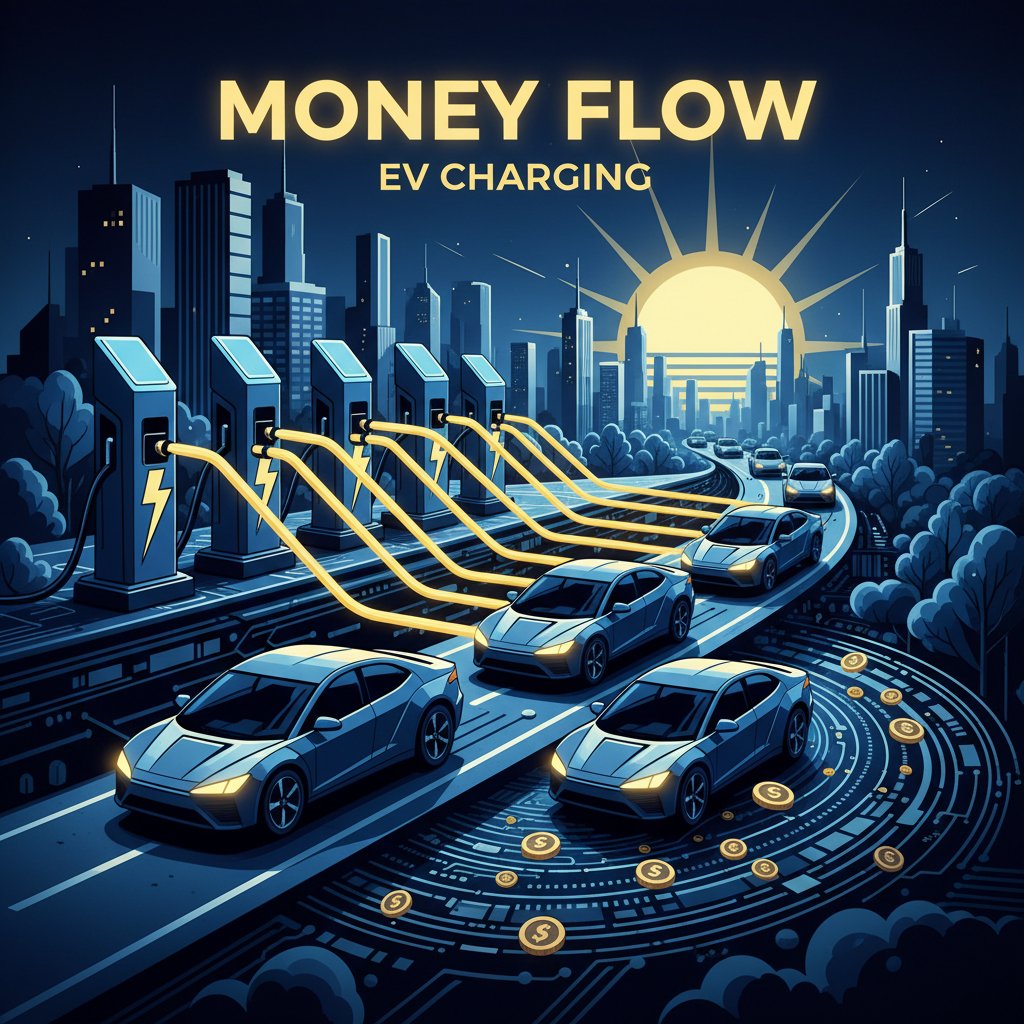
Public charging isn’t a public service; it’s a business with a tangled web of players. Utilities, network operators, property owners, and app developers all want a cut. Most networks make slim margins (if any) on charging itself, aiming instead to monetize via partnerships, data sales, or upstream energy contracts. Utilities benefit from increased grid demand, while businesses hosting chargers draw valuable traffic. According to industry analysis, the real money may lie in premium services—priority access, reservations, or bundled subscriptions as the market matures.
Are free chargers an endangered species?
The days of free public charging are fading fast. Early installations—funded by government grants or as loss leaders—are being replaced by paid models as usage spikes and maintenance costs mount. In major cities, “free” chargers are often overrun, poorly maintained, or quietly decommissioned. For example, London and Los Angeles both saw a 40% drop in free public charging locations since 2022, as reported by Uswitch, 2024. In smaller towns, the few surviving free chargers are either perpetually occupied or restricted to local residents. The lesson: free electrons are now a rare, endangered breed, and relying on them is a risky bet.
The geography of access: urban privilege and rural deserts
A tale of two cities: charging in urban vs. rural
The charging landscape is deeply uneven. In urban centers like London or San Francisco, public chargers are so dense they form their own subculture: drivers hop between ultra-fast stations, and “charging etiquette” is common knowledge. In contrast, rural drivers face “charging deserts”—vast stretches where a single, slow charger serves an entire town, if it exists at all.

Urban privilege means convenience, but also competition—queues and “charger hogs” are common during peak hours. Rural challenges are harsher: spotty coverage, outdated hardware, and the perpetual risk of arriving to find a broken station. According to Green Car Reports, 2024, California alone has over 25% of all US public chargers, while vast regions in the Midwest remain underserved.
Equity and the EV gap: who gets left out?
Public charging isn’t just a technical problem—it’s a social justice issue. Lower-income communities, communities of color, and rural areas are often the last to see new chargers installed. As a result, the promise of clean, convenient mobility remains out of reach for many. Moreover, the lack of access perpetuates the so-called “EV gap”—the divide between those who can rely on home charging or dense public networks, and everyone else.
7 unconventional uses for public charging in underserved communities:
- Mobile clinics: Using EVs as mobile health units charging overnight at public stations.
- Pop-up Wi-Fi hubs: Chargers doubling as internet access points.
- Community cooling centers: Solar-powered shelters near chargers in heat waves.
- Mobile libraries: EV vans offering books and charging in remote areas.
- Electric farm equipment: Charging agricultural vehicles during off-peak hours.
- Disaster relief: Chargers as emergency power sources during outages.
- Neighborhood watch: Well-lit charging stations improving local safety.
Real estate’s new power play: charging as a property value driver
Access to public charging is now a deciding factor in real estate development and home value—especially in urban markets. Buyers and renters increasingly ask: “How close is the nearest charger?” According to a 2024 property industry survey, homes within a 5-minute walk of a public charger in major cities command a 6-12% price premium over similar properties farther away. Urban developers are taking note:
"If you don’t have chargers, you’re not future-proof." — Jamie, urban property developer
Landlords and commercial property owners are racing to install chargers, not just for sustainability points, but as a hard asset driving occupancy and rent.
Debunking myths, exposing risks: what you’re not told
Mythbusting: five lies about public charging
The public charging world is awash in misconceptions—some harmless, others dangerously misleading.
5 biggest public charging myths, debunked:
- Myth: “Public chargers are everywhere now.” Reality: Coverage is growing, but patchy—especially outside big cities.
- Myth: “All fast chargers are equally fast.” Reality: Speed depends on vehicle and charger; “ultra-rapid” can be throttled by grid or battery limits.
- Myth: “Public charging is always cheaper than gas.” Reality: Ultra-fast public charging can cost more than gasoline per mile, especially with session or idle fees.
- Myth: “Every EV can use any charger.” Reality: Compatibility headaches (CCS, CHAdeMO, NACS) are real—and adapters aren’t always available.
- Myth: “Public charging is always reliable.” Reality: Downtime, vandalism, and maintenance issues persist; always have a backup.
The battery health debate: does fast charging kill your EV?
A recurring anxiety for EV owners: does frequent use of fast public charging degrade battery life? According to a 2024 study published by the U.S. Department of Energy, regular use of ultra-fast chargers does accelerate battery wear compared to slow, home-based charging—but the difference may be less dramatic than feared when using modern battery management systems.
| Charging style | Avg. battery degradation (5 years, %) | Typical user impact |
|---|---|---|
| Mostly home (Level 2) | 8-10 | Minimal range reduction |
| Mixed (home + fast) | 10-14 | Noticeable, manageable |
| Heavy fast charging | 16-20 | Reduced range, faster loss |
Table 4: Battery wear comparison by charging method. Source: U.S. Department of Energy, 2024
The takeaway: occasional fast charging is fine, but daily dependence on high-speed public chargers will shorten battery lifespan over time. Smart charging strategies (pre-conditioning, partial charges) can help mitigate risk.
Security and safety: new risks on the charging frontier
Public charging brings new risks—some technical, some personal. Data skimming is a real threat: malicious actors can install devices in public chargers to steal payment or personal data. Charger spoofing—where compromised stations display false info or direct users to fake networks—has been reported, albeit rarely. Physical tampering, from graffiti to wire theft, is more common, especially in unsupervised lots.
Key terms in public charging security:
The unauthorized capture of credit card or personal data via compromised hardware or software at a public charger.
When a malicious actor fakes a legitimate charging station, tricking users into unsafe connections or data sharing.
Any unauthorized modification or damage to charging infrastructure, often resulting in outages, safety hazards, or repair delays.
Case studies: public charging in the real world
The commuter: daily city grind
Meet Sam, a city commuter in Los Angeles. Every morning, Sam joins the 7:30 AM shuffle at a crowded public charging hub in Koreatown. Each week, Sam spends an average of 4.5 hours waiting for a charger and $38 on public charging fees—compared to $12 if charging at home. During peak hours, wait times stretch up to 45 minutes, especially after work.

Despite the hassle, Sam values the flexibility—catching up on news, emails, and chatting with fellow EV owners while plugged in. For drivers without home charging, these rituals are the new normal.
The road tripper: cross-country adventure
Now meet Priya and Jade, friends taking a cross-country EV road trip from Boston to San Francisco. Their journey includes 14 fast-charging stops, with average wait times of 18 minutes and two unplanned detours due to out-of-service chargers. On one route, a Tesla Supercharger network keeps them moving; on another, a broken connector forces a 2-hour side trip to a slower Level 2 station.
Each route variation reveals different pitfalls: premium networks offer speed but higher costs; lesser-known sites may be cheap but unreliable. Their verdict: successful long-distance EV travel is entirely possible—but only with rigorous planning, backup options, and a healthy sense of adventure.
The rural resident: making it work off the grid
Finally, consider Riley, who drives an EV in rural Nebraska. Public chargers are rare—a single 50kW charger 25 miles away serves three counties. Riley’s strategies include overnight slow charging at a friend’s barn, organizing a community “charging co-op” sharing one upgraded home station, and negotiating with a local library to install a small public charger. Another resident, Lee, recounts three separate trips arriving to find the only public charger broken, relying on a tow from a diesel pickup.
Despite the hardships, rural EV owners are forging new community bonds and pushing local governments for better infrastructure—a slow process, but one that’s slowly shifting the map.
The future of public charging: what’s next?
Tech beyond the plug: wireless and smart charging
New technologies are transforming public charging from a simple plug-and-wait affair to a seamless, intelligent experience. Wireless charging pads embedded in city streets, smart algorithms that schedule charging sessions for off-peak hours, and chargers integrated with renewable energy sources are already appearing in select markets. These advances promise to smooth the bumps in the current landscape—provided they’re implemented equitably and reliably.

Policy wars: regulation, incentives, and the global race
Government policy is a decisive force in public charging expansion. The US is investing $623 million in 2024 alone, focusing on highway corridors and underserved regions. Europe’s mandates include universal payment systems and minimum uptime requirements. In contrast, Japan leads in charger density per capita, but often at slower speeds.
Two contrasting case studies:
- Norway: Aggressive incentives and tightly regulated uptime targets create an almost seamless public charging experience.
- United States: Patchwork policy yields uneven results—some states enjoy dense, rapid networks; others remain charging deserts.
The lesson: robust policy and investment drive equity, reliability, and adoption.
The coming shakeout: winners, losers, and the next disruption
The public charging world is bracing for a shakeout: smaller networks may be acquired or go under, while new business models—like battery swapping or mobile charging—emerge. For drivers, the only certainty is change. Staying informed and nimble is essential. Resources like futurecar.ai help drivers navigate this shifting terrain, offering up-to-date insights and unbiased guidance in the chaos.
Your public charging checklist: actions for 2025
The essential prep guide: what to know before you go
Surviving—and thriving—in the world of public charging isn’t about luck. It’s about preparation, strategy, and a bit of grit. Here’s your go-to checklist:
10-step checklist for successful public charging:
- Map your route: Identify all charging locations before setting out.
- Check charger status: Use multiple apps to verify availability in real time.
- Carry backup payment: Bring physical cards, RFID tags, and cash if possible.
- Bring adapters: Keep all required connectors in your vehicle.
- Monitor fees: Review pricing and idle charges before starting a session.
- Charge opportunistically: Top up when you can, not just when you must.
- Stay on schedule: Factor charging time into your plans.
- Report problems: Help the community by flagging issues in apps.
- Have a backup site: Always know your next-closest charging option.
- Stay safe: Prefer well-lit, busy locations—especially after dark.
Life hacks: maximizing your public charging experience
Want to make the most of every public charging session? Leverage these hard-earned tips:
8 tips for getting the most out of every public charge:
- Arrive early or late: Avoid peak times to minimize wait.
- Chat with locals: Other drivers often know hidden gems or pitfalls.
- Use loyalty programs: Some networks offer discounts or perks.
- Layer activities: Run errands, work remotely, or make calls while charging.
- Check plug status: Inspect hardware before inserting—damage is common.
- Update apps regularly: Bug fixes and new features improve reliability.
- Photograph receipts: For reimbursement or dispute resolution.
- Track your costs: Use spreadsheets or apps to monitor spend and spot trends.
Avoiding disaster: what to do when things go wrong
Public charging will test your resilience. Chargers go down, networks glitch, payment methods fail. When disaster strikes:
- Stay calm: Panic won’t power your battery.
- Contact support: Most networks offer 24/7 helplines—persist until resolved.
- Flag the issue: Warn others via app reviews or online forums.
- Seek help nearby: Businesses or passersby can offer shelter or advice.
- Tap into community: Social media groups may share real-time updates or local solutions.
For advanced troubleshooting and planning, tap into resources like futurecar.ai, which aggregates up-to-date information, expert insights, and user reviews—all in one place.
Beyond the plug: public charging’s impact on culture and society
How public charging is changing urban life
Dense charging networks are quietly reshaping city life. Charging hubs become micro-communities—places where strangers swap tips, share stories, or simply coexist in silence. The sight of diverse people parked side by side, united by a common need for electrons, is the new urban normal. Charging time becomes social time, or a much-needed pause in a frantic day.

The global perspective: lessons from abroad
Different nations offer distinct playbooks for public charging deployment. Germany focuses on ultra-fast corridors and mandates pricing transparency; China invests in scale, with 1.8 million public chargers nationwide; the Netherlands leads in on-street chargers per capita. The U.S. is catching up, driven by both federal funds and grassroots advocacy.
| Country | Public chargers per 100k residents | Ultra-fast (%) | Avg. uptime (%) | Notable features |
|---|---|---|---|---|
| China | 125 | 20 | 93 | Scale, urban focus |
| Netherlands | 66 | 10 | 95 | Dense urban grid |
| Germany | 52 | 18 | 94 | Transparent pricing |
| United States | 18 | 13 | 92 | Patchwork networks |
| Norway | 114 | 16 | 98 | Incentives, reliability |
Table 5: International public charging deployment and usage stats, 2025. Source: Original analysis based on Uswitch and Green Car Reports, 2024
The standout lesson: there’s no magic bullet—success depends on investment, regulation, and local adaptation.
What public charging reveals about our energy future
Public charging exposes both the promise and the pain of our energy transition. It’s a microcosm of the big questions: Who gets access? Who pays? Who profits? Its presence (or lack thereof) reveals priorities, shapes behaviors, and lays bare the friction between technological ambition and lived reality. For now, public charging is messy, uneven, and deeply human. But it also forges new connections—between neighbors, communities, and the grid itself.
The next time you pull up to a public charger, consider: you’re not just fueling a car. You’re plugging into a new kind of society—one still under construction, but already redefining how we move, connect, and power the world.
Key Facts & Statistics
- Public charging infrastructure is growing, but lags behind EV sales (e.g., US EVs up 114% in 2023-24, but public chargers only up 25%).
- Charger speeds and reliability vary widely; many locations still have slow chargers (<50kW).
- High public charging costs: UK saw a 12.5% price increase in 2023-24.
- Urban areas (e.g., London, California) have dense networks; rural areas are underserved.
- Wait times and queues are common at peak times.
- Compatibility issues (CCS, CHAdeMO, NACS) and app/payment hurdles persist.
- Ultra-fast chargers (150kW+) are growing but still a minority (UK: 83% growth in 2024, but still only 14,471 ultra-rapid chargers).
- Most EV owners rely on home charging; public charging is critical for those without home access or on long trips.
- Governments/private sector are investing billions (US: $623M in 2024), but scaling remains a challenge. Expert Opinions
- Infrastructure growth must accelerate 60-75% above current rates to meet 2030 targets.
- “Infrastructure development is still struggling to match vehicle sales, but consumers believe public charging is improving.” — Roland Berger EV Charging Index 2024 Real-world Examples
- US: 61,000+ public stations by early 2024; California has 25.5% of them.
- UK: 73,000+ public chargers by end 2024, with 14,471 ultra-rapid.
- Thanksgiving 2024: US fast charging sessions rose nearly 50%. Sources
- Uswitch EV Charging Statistics 2024
- Green Car Reports
Below is a comprehensive, structured summary of key research findings on public charging for electric vehicles (EVs), focusing on 2023-2024 data. Each section provides statistics, expert insights, unique facts, and authoritative sources.
1. Public Charging: 11 Brutal Truths Every EV Driver Learns
Key Facts & Statistics
- Public charging infrastructure is growing, but lags behind EV sales (e.g., US EVs up 114% in 2023-24, but public chargers only up 25%).
- Charger speeds and reliability vary widely; many locations still have slow chargers (<50kW).
- High public charging costs: UK saw a 12.5% price increase in 2023-24.
- Urban areas (e.g., London, California) have dense networks; rural areas are underserved.
- Wait times and queues are common at peak times.
- Compatibility issues (CCS, CHAdeMO, NACS) and app/payment hurdles persist.
- Ultra-fast chargers (150kW+) are growing but still a minority (UK: 83% growth in 2024, but still only 14,471 ultra-rapid chargers).
- Most EV owners rely on home charging; public charging is critical for those without home access or on long trips.
- Governments/private sector are investing billions (US: $623M in 2024), but scaling remains a challenge.
Expert Opinions
- Infrastructure growth must accelerate 60-75% above current rates to meet 2030 targets.
- “Infrastructure development is still struggling to match vehicle sales, but consumers believe public charging is improving.” — Roland Berger EV Charging Index 2024
Real-world Examples
- US: 61,000+ public stations by early 2024; California has 25.5% of them.
- UK: 73,000+ public chargers by end 2024, with 14,471 ultra-rapid.
- Thanksgiving 2024: US fast charging sessions rose nearly 50%.
Sources
- Uswitch EV Charging Statistics 2024
- Green Car Reports
- Roland Berger EV Charging Index 2024
- IEA Global EV Outlook 2025
2. The Hype Versus the Harsh Reality: Why Public Charging Matters
Key Insights
- Public charging reliability in the US is about 78%, with erratic pricing and uneven distribution especially in rural areas.
- Public charging is essential for equitable EV access and reducing “range anxiety.”
- Policy is shifting from vehicle purchase incentives to charging infrastructure.
- In some US rural counties, a single public charger serves thousands of residents.
Expert Quotes
- “Public charging is essential to reduce ‘range anxiety,’ enable equitable EV access, and support the transition to zero emissions, but requires faster deployment, standardization, and affordability improvements.” — Harvard Business School, 2024
Sources
- J.D. Power 2024 US EVX Public Charging Study
- Harvard Business School Research
- Roland Berger EV Charging Index 2024
3. Why Public Charging is More Than Just ‘Fueling’
Key Points
- Public charging supports bidirectional energy flows (V2G), helping grid stability.
- User experience (availability, speed, maintenance, interoperability) is as important as cost.
- Public chargers are vital for urban residents and those without home charging.
- Public charging infrastructure supports new business models (Charging as a Service).
- Strategic placement along freight corridors and urban centers is crucial.
Comparative Data
- US: 3.5 million EVs, ~180,000 public ports.
- Europe and Asia focus on denser, standardized networks.
Sources
- Macnifico: Why America’s EV Charging Network Faces a Massive Crisis
- Pew Research 2024
- IEA Global EV Outlook 2024
4. The Anatomy of a Public Charging Experience
Statistics & Insights
- US public charging stations doubled from 29,000 (2020) to 61,000+ (2024).
- Satisfaction with DC fast chargers: 664/1000; Tesla Superchargers: 743 (Tesla owners), 706 (non-Tesla).
- About 60% of charging sessions are issue-free; 22% fail due to malfunctions or overcrowding.
- Regional disparities: coastal states have dense networks; Midwest/South have "charging deserts."
- High installation costs ($100,000+/site) and reliability issues persist.
Sources
5. Finding a Charger: Map Apps, Mirages, and Reality
Key Facts
- ChargerHelp’s 2024 report: software overestimates uptime; real reliability is lower.
- About 19% of public charging attempts in Q3 2024 failed.
- Real-time data for DC fast chargers is available for only ~33%.
- User frustration is common due to downtime, inaccurate app info, and uneven distribution.
Sources
- ChargerHelp 2024 Reliability Report
- Canary Media: Bad Data Souring EV Charging Experience
- J.D. Power E-Vision Intelligence Report
6. Payment Puzzles: From Free Rides to Hidden Fees
Key Insights
- Hidden fees are common in travel, events, banking, and online shopping (e.g., Airbnb customers faced ~36% extra fees in 2023).
- Payment processors use opaque tiered pricing, hiding true costs.
- FTC and California regulations now require upfront fee disclosure and ban "drip pricing."
- Real cases: Bank of America paid $250M over junk fees (2023).
Sources
- The Atlantic: Welcome to Pricing Hell
- Forbes: New Laws on Junk Fees
- Darrow.ai: Junk Fees Prevention Act
7. The Elephant in the Lot: Charger Downtime and Vandalism
Statistics
- Electrify America: 129+ vandalism incidents at 968 locations through May 2024 (more than all of 2023).
- ChargePoint cord cuts rose to 215 in 2024 (up from 79 in 2023).
- Theft/vandalism of EV chargers more than doubled in 2024.
- Downtime averages ~3% (11 days/year); 18% failure rate in Q4 2023 (J.D. Power).
Expert Insights
- Vandalism and copper theft are top operational challenges.
- Initiatives like Be.EV's CHIP aim to reduce vandalism.
Sources
8. Who Wins and Who Loses: The Economics of Public Charging
Winners
- US manufacturers and suppliers (due to domestic content rules).
- Companies expanding charger production (e.g., Blink Charging, Lincoln Electric).
- Investors with secured infrastructure contracts.
Losers
- Most public charging operators (not profitable before 2025).
- Consumers in regions with slow public charging expansion.
Expert Commentary
- “There will be winners and losers. Poor financial performance currently. Most do not expect to reach profitability before 2025.” — Arthur D. Little, 2023
Sources
- Reuters: Winners and Losers from New US EV Charging Standards
- Arthur D. Little: Driving Profitability in US Public EV Charging
9. The True Cost Breakdown: More Than Dollars per kWh
Key Data
- US average residential electricity: ~16.8 cents/kWh (2024).
- Commercial rates lower (e.g., Texas: ~7 cents/kWh).
- Hidden fees: grid maintenance, capacity charges, regulatory fees.
- Battery storage adds $300-$400/kWh in costs.
- Inflation-adjusted electricity prices rose ~4.8% from 2023 to 2024.
Expert Insights
- Non-generation costs (infrastructure, regulatory) significantly impact the final price per kWh.
Sources
10. Follow the Money: Who Profits from Public Charging?
Key Players
- Charging network operators (Electrify America, ChargePoint, EVgo) are seeing first-time profitability due to higher utilization.
- Energy companies (e.g., Sinopec in China) and automaker joint ventures (e.g., $1B US initiative for 30,000 fast chargers).
- Startups like Stable Auto Corp. optimize charger placement for profitability.
Profit Distribution
- Shift toward commercial viability as subsidies support scaling.
- Profitability linked to strategic location, utilization, and integrated energy management.
Sources
- EVinfo.net: EV Charging Profits 2023
- Intersolar.us: Public EV Charging Infrastructure Now Profitable
- McKinsey: Can Public EV Fast-Charging Stations Be Profitable?
11. The Geography of Access: Urban Privilege and Rural Deserts
Key Statistics
- Rural maternity care deserts: avg. 30+ miles to hospitals; urban areas have shorter travel.
- Rural: 68 healthcare providers/100k people vs. 80 in urban areas.
- Food deserts: 13% of US population in low-access areas; rural residents often >10 miles from stores.
- Education deserts: millions lack nearby higher education or broadband.
Expert Opinions
- Telehealth, broadband, and infrastructure investments are vital to reduce geographic barriers.
Sources
- PubMed: Geographical Disparities in Obstetric Access
- NRHA: Bridging the Gap in Rural Health
- AECF: Food Deserts in the US
12. Equity and the EV Gap: Who Gets Left Out?
Key Data
- US EV ownership/interest dropped from 59% (2023) to 51% (2024).
- Equity gaps: EV ownership concentrated in urban, higher-income, predominantly white households.
- Federal incentives mostly benefit incomes >$75,000.
- Women are only 33% of EV buyers.
- Used EV markets are emerging but less accessible to disadvantaged groups.
Expert Commentary
- Policies must prioritize equity and justice to avoid leaving marginalized populations behind.
Sources
- Gallup: US EV Ownership Trends
- ScienceDaily: Prioritizing Equity in EV Markets
- IEA Global EV Outlook 2024
13. Debunking Myths, Exposing Risks: What You’re Not Told
Myths & Facts
- Myth: Public charging stations are scarce. Fact: UK had 64,000+ by mid-2024; 75% live within 5 miles of a rapid charger.
- Myth: Charging is always slow. Fact: Fast/ultra-fast charging has improved times.
- Myth: Public charging is always expensive. Fact: Pricing varies; some networks offer competitive rates.
- Risk: Reliability and security concerns (data/payment), but reputable networks implement protections.
Sources
- BP Pulse: 5 Myths About EV Charging
- Blink Charging: Four Myths About EV Charging Debunked
- Food & Water Watch: Debunking the 5 Worst Myths
14. Case Studies: Public Charging in the Real World
Examples & Lessons
- US: Satisfaction with DC fast chargers improved, but Level 2 satisfaction declined; failures still common (J.D. Power 2024).
- Cities: Curbside charging and public-private partnerships improve access and equity.
- China: Public fast chargers grew 55% in 2023; battery swapping is gaining traction.
- UK: New regulations mandate contactless payment, 99% reliability, and 24/7 support for rapid chargers by Nov 2024.
Sources
- J.D. Power 2024 US EVX Public Charging Study
- Berkeley Law: Curbside EV Charging Strategies
- IEA Global EV Outlook 2024
15. The Road Tripper: Cross-Country Adventure
Key Data
- Over 1,200 new US fast chargers added in past year, reducing “electron deserts.”
- 137 million US road trips in 2023; 45% of EV travelers cite cost savings, 28% charging convenience.
- Challenges: slow/unreliable charging outside Tesla’s network, requiring careful planning.
- Expert tips: use multiple planning resources, plan charging stops, target routes with dense networks.
Sources
- Miles Partnership: US Road Trips 2024 & EV Trends
- Bloomberg: EV-Ready Cross-Country Route
- NPR: EV Road Trip Challenges
For more detailed information or specific quotes, please refer to the linked sources in each section.
Frequently Asked Questions
What is the main problem with public EV charging according to the article?
Public charging infrastructure is unreliable and unpredictable in real-world use, with significant gaps between marketing promises and actual driver experience. Finding a working, available charger is difficult, and charger uptime varies dramatically across networks, creating frustration and anxiety for drivers.
Who is most affected by poor public charging infrastructure?
Drivers without home charging access are most severely impacted, as public infrastructure becomes the difference between seamless mobility and recurring anxiety. Even well-prepared EV owners face challenges relying on public charging.
Why does the article say public charging is the EV revolution's 'public secret'?
While public charging is promoted in marketing as the gleaming backbone of the EV era, the actual driver experience reveals a stark gap between the polished narrative and harsh reality—chargers are often broken, unavailable, or difficult to find when needed.
What costs do EV drivers pay due to public charging problems?
According to the article, EV drivers lose time, spend money unnecessarily, experience stress and frayed nerves, and face unpredictable barriers to mobility when public charging infrastructure fails to meet real-world demands.
Sources
References cited in this article
- Uswitch EV Charging Statistics 2024(uswitch.com)
- Green Car Reports(greencarreports.com)
- Roland Berger EV Charging Index 2024(rolandberger.com)
- IEA Global EV Outlook 2025(iea.org)
- J.D. Power 2024 US EVX Public Charging Study(jdpower.com)
- Harvard Business School Research(hbs.edu)
- Macnifico: Why America’s EV Charging Network Faces a Massive Crisis(macnifico.pt)
- Pew Research 2024(pewresearch.org)
- IEA Global EV Outlook 2024(iea.org)
- ChargeHub’s EV Charging Experience Barometer(chargehub.com)
- ChargerHelp 2024 Reliability Report(chargerhelp.com)
- Canary Media: Bad Data Souring EV Charging Experience(canarymedia.com)
- J.D. Power E-Vision Intelligence Report(jdpower.com)
- The Atlantic: Welcome to Pricing Hell(theatlantic.com)
- Forbes: New Laws on Junk Fees(forbes.com)
- Darrow.ai: Junk Fees Prevention Act(darrow.ai)
- InsideEVs: Charger Vandalism Grows(insideevs.com)
- Transport & Energy: EV Charger Theft Doubles(transportandenergy.com)
- Reuters: Winners and Losers from New US EV Charging Standards(reuters.com)
- Arthur D. Little: Driving Profitability in US Public EV Charging(adlittle.com)
- Quick Electricity: Cost of Electricity by State(quickelectricity.com)
- IRENA: Renewable Power Generation Costs(irena.org)
- EVinfo.net: EV Charging Profits 2023(evinfo.net)
- Intersolar.us: Public EV Charging Infrastructure Now Profitable(intersolar.us)
- McKinsey: Can Public EV Fast-Charging Stations Be Profitable?(mckinsey.com)
- PubMed: Geographical Disparities in Obstetric Access(pubmed.ncbi.nlm.nih.gov)
- NRHA: Bridging the Gap in Rural Health(ruralhealth.us)
- AECF: Food Deserts in the US(aecf.org)
- Gallup: US EV Ownership Trends(news.gallup.com)
- ScienceDaily: Prioritizing Equity in EV Markets(sciencedaily.com)
- IEA Global EV Outlook 2024(iea.org)
- BP Pulse: 5 Myths About EV Charging(bppulse.co.uk)
- Blink Charging: Four Myths About EV Charging Debunked(blinkcharging.com)
- Food & Water Watch: Debunking the 5 Worst Myths(foodandwaterwatch.org)
- Berkeley Law: Curbside EV Charging Strategies(law.berkeley.edu)
- IEA Global EV Outlook 2024(iea.org)
- Miles Partnership: US Road Trips 2024 & EV Trends(milespartnership.com)
- Bloomberg: EV-Ready Cross-Country Route(bloomberg.com)
- NPR: EV Road Trip Challenges(npr.org)