

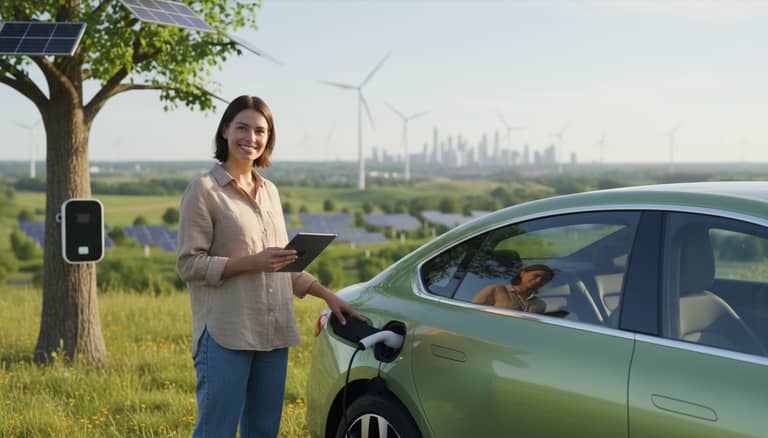
Eco-Friendly Car Purchasing Assistant That Cuts Through Greenwashing
Written with AI assistance under our editorial guidelines
AI-powered car purchasing assistants like futurecar.ai help consumers navigate greenwashing in the automotive industry by providing research-backed guidance on what's genuinely sustainable versus marketing hype. These tools cut through decades of misleading claims about hybrid and electric vehicles, revealing hidden environmental costs like lithium mining while exposing false narratives around zero-emission labels and carbon neutrality pledges.
Think you’re buying a ticket to a greener tomorrow every time you plug in an EV or slap a hybrid badge on your ride? Buckle up. The truth about eco-friendly car purchasing assistants is far messier, more political, and—frankly—more revealing than the glossy ads and influencer unboxings would have you believe. The world is in love with the idea of guilt-free driving, but the road to true sustainability is littered with hidden costs, inconvenient truths, and a marketing machine built to prey on both your eco-anxiety and your wallet. In 2025, artificial intelligence promises to cut through the noise, with services like futurecar.ai offering AI-powered, personalized guidance to help you navigate the chaos. But what’s really green, what’s just greenwashed, and where does the eco-friendly car purchasing assistant fit into this high-stakes game? Let’s peel back the layers, expose the myths, and arm you with real, research-backed insights—so your next car purchase doesn’t just feel good, but actually does good.
Why 'eco-friendly' is more complicated than you think
A brief history of greenwashing in the auto industry
Long before eco-friendly car purchasing assistants became a search trend, the auto industry was already fluent in the language of “green.” In the early 2000s, hybrids like the Toyota Prius landed with marketing campaigns promising salvation from smog and climate doom. But as investigated by The Rock Father Magazine, 2024, much of that messaging glossed over inconvenient realities—like the environmental toll of mining for nickel and lithium, or the fact that “clean diesel” was anything but. Today, the industry’s vocabulary has only become more sophisticated, from “zero-emission” labels slapped on EVs regardless of power grid sources, to “carbon neutral” pledges with timelines that blur accountability.

"Consumers have been sold a fantasy of consequence-free mobility for decades. What’s changed isn’t the marketing—it’s the public’s ability to interrogate those claims, and AI-powered tools are accelerating that."
— Dr. Lena Morrison, Environmental Policy Analyst, EcoMENA, 2024
The lesson? Every “green revolution” in the automotive world has been punctuated by both genuine innovations and powerful smokescreens. The eco-friendly car purchasing assistant’s job is to help you spot the difference—if you know where to look.
The eco-badge paradox: what does ‘green’ even mean?
The modern car lot is a jungle of eco-labels—EV, PHEV, hybrid, low-emission, ultra-low emission, carbon neutral. But what actually qualifies as “eco-friendly”? According to EcoMENA, 2024, definitions shift depending on whether you’re talking about tailpipe emissions, battery sourcing, or full lifecycle analysis.
A vehicle that, over its total lifespan (production, use, and disposal), generates significantly lower greenhouse gas emissions and environmental impact compared to conventional fossil-fuel vehicles.
A car that produces no tailpipe emissions while operating—but may still generate emissions through energy production or battery manufacturing.
A car powered by both a combustion engine and an electric motor, designed to improve efficiency and reduce emissions—but not always as “green” as advertised when battery and fuel sources are factored in.
A comprehensive method of measuring environmental impact across the manufacturing, usage, and end-of-life phases of a vehicle.
The paradox? An “eco-friendly” label might mask a battery built using coal-powered electricity or ignore the impact of rare-earth mining. It’s a shell game, and most buyers don’t know which cup hides the real green.
How automakers play on eco-anxiety
Automakers aren’t just selling cars—they’re selling absolution. Here’s how they exploit your desire to do good:
- Rebranding the ordinary: Slapping “Eco” or “Green” badges on vehicles with marginal improvements just to catch the eco-conscious consumer’s attention.
- Selective emission stats: Focusing on tailpipe emissions while downplaying the environmental costs of manufacturing, battery production, and end-of-life disposal—a trick called “selective reporting” per Saga 2025 Car Buying Trends.
- Obscuring lifecycle impact: Using misleading graphics or figures that highlight best-case scenarios, not the average reality most drivers will experience.
- Incentive hype: Advertising government rebates and incentives while quietly omitting their potential expiration or the fine print about eligibility.
- Up-selling sustainability: Encouraging upgrades to bigger batteries or luxury “eco” trims that may actually increase total resource use.
In sum: Buying green isn’t just about what you drive—it’s about outsmarting a system built to monetize your conscience.
Inside the mind of the eco-conscious car buyer
What motivates a green purchase (and what gets in the way)
For most buyers, the eco-friendly car purchasing journey is a cocktail of hope, guilt, and skepticism. According to ReFab Diaries, 2024, motivations include reducing personal carbon footprints, access to incentives, and the social cachet of owning the latest tech. But obstacles abound: high upfront costs, charging anxiety, and doubts about real-world sustainability.
"Many buyers want sustainability, but the mechanics of actually achieving it—from sourcing to disposal—are overwhelming. The right assistant can help, but only if it cuts through the noise."
— Jamie Rivera, Sustainable Mobility Consultant, ReFab Diaries, 2024
Decision fatigue in a world of endless options
Welcome to the paradox of choice: the more “green” options you have, the harder it gets. Here’s how decision fatigue creeps in:
- Information overload: Between government sites, influencer reviews, and endless specs, most buyers drown before they ever test drive.
- Conflicting data: One source claims a car is a “climate hero,” another exposes hidden emissions—who do you trust?
- Feature confusion: EV, plug-in hybrid, hydrogen—each with pros, cons, and trade-offs most assistants barely explain.
- Financial fog: Incentives, rebates, resale value, and maintenance costs—navigating the true cost is exhausting.
- Fear of making the wrong move: With big money and big ethics at stake, paralysis is common.
The result? Many buyers revert to old habits, making “the green choice” based on superficial factors or marketing spin.
The psychology of sustainable status
Let’s be real: status matters. Driving the latest electric flagship is as much about social signaling as climate stewardship. Research from Saga 2025 Car Buying Trends confirms that “sustainable status” is a key motivator, especially in urban and professional circles. But here’s the catch—chasing status can lead to eco-hypocrisy (think: oversized luxury EV SUVs with massive batteries).

How eco-friendly car purchasing assistants actually work
AI, algorithms, and the promise of personalization
Forget cookie-cutter buying guides and one-size-fits-all reviews. Today’s eco-friendly car purchasing assistants harness AI and machine learning to decode your habits, preferences, and local grid realities. According to a 2024 industry report, these systems match you not just with “greenest on paper,” but with vehicles that truly fit your lifestyle and minimize your environmental impact in your ZIP code.
| Assistant Feature | Traditional Consultant | Generic Review Site | AI Car Buying Assistant (e.g., futurecar.ai) |
|---|---|---|---|
| Personalization Level | Medium | Low | High |
| Real-time Incentive Updates | No | Rarely | Yes |
| Lifecycle Emission Analysis | Sometimes | No | Yes |
| Charging Infrastructure Guidance | No | No | Yes |
| Ownership Cost Projections | Partial | No | Full |
Table 1: Comparing car buying assistant approaches’ depth and relevance.
Source: Original analysis based on Saga 2025 Car Buying Trends, The Rock Father Magazine, 2024.
Comparing top tools—what sets them apart?
Most so-called “green” car comparison tools are little more than filtered spec sheets. Here’s what actually separates the serious eco-friendly car purchasing assistants from the pack:
| Tool/Platform | Personalization | Emission Lifecycle Analysis | Real-Time Incentives | Localized Grid Data | User Reviews Integration |
|---|---|---|---|---|---|
| futurecar.ai | Yes | Yes | Yes | Yes | Yes |
| Generic review site | Limited | No | No | No | Yes |
| Dealership website | No | No | Yes (offers only) | No | No |
Table 2: Key features by car-buying platform.
Source: Original analysis based on futurecar.ai documentation, Saga 2025 Car Buying Trends.
- Integrated lifecycle data: Top assistants include not just tailpipe emissions, but also battery manufacturing, recycling prospects, and even the local energy mix.
- AI-driven comparisons: Instead of just price and features, the best tools optimize for ownership patterns, expected mileage, climate, and future-proofing.
- User experience: Seamless, jargon-free guidance means less info overload and more actionable insight.
- Transparency: Clear disclosure of data sources and assumptions—crucial for trustworthiness.
The futurecar.ai approach: a smarter way to buy green
futurecar.ai stands out by delivering AI-driven, hyper-personalized car recommendations that factor in not just specs, but your actual life. Unlike generic review sites, it provides insights on real-world emissions, total lifetime cost, and the invisible trade-offs that most buyers (and most salespeople) miss. The platform’s expertise helps users sidestep obvious marketing traps and find the vehicle that’s actually sustainable—for their budget, region, and conscience.
Electric vs hybrid vs alternative fuel: the real environmental impact
Lifecycle emissions: what the numbers actually show
Forget the marketing—here’s what real lifecycle analyses reveal, verified by EcoMENA, 2024:
| Vehicle Type | Average CO₂e Emissions (Production + Use + Disposal, tons) | Notes |
|---|---|---|
| Gasoline (Conventional) | 50 | High emissions, mostly during use |
| Hybrid | 40 | Reduced tailpipe, but battery impact |
| Plug-In Hybrid | 38 | Slightly lower depending on grid |
| Electric (Coal Grid) | 35 | Grid emissions significant |
| Electric (Renewable Grid) | 20 | Lowest if grid is clean |
| Hydrogen Fuel Cell | 45 | Depends heavily on hydrogen source |
Table 3: Total lifecycle emissions by powertrain type.
Source: Original analysis based on EcoMENA, 2024, The Rock Father Magazine, 2024.
The kicker? An EV charged on a dirty grid may pollute more than a hybrid burning gasoline in a renewably powered state. The eco-friendly car purchasing assistant’s value is in mapping these nuances for you—not selling a one-size-fits-all dream.
Manufacturing, batteries, and hidden costs
The dirtiest secret in green mobility isn’t at the tailpipe—it’s in the mines and factories. Battery production for EVs and hybrids involves mining metals like lithium and cobalt, often in regions with lax environmental oversight and significant human rights concerns, as highlighted by EcoMENA, 2024. Disposal is another problem; recycling tech is improving, but most used batteries still end up as hazardous waste.

End-of-life and recycling: where eco-dreams die
Here’s how the “green” story often ends:
- Battery waste buildup: Most EV and hybrid batteries outlast the vehicle, but only a fraction are recycled—many are stockpiled or exported.
- Incomplete recycling chains: Lack of global standards means hazardous materials often escape into the environment.
- Second-life logistics: Reusing batteries for grid storage is promising but rarely practiced due to technical and economic hurdles.
The harsh truth? Sustainable driving means planning for a car’s afterlife—not just its birth and daily commute.
Avoiding the traps: myths, mistakes, and marketing games
Common misconceptions about eco-friendly cars
- Myth: “All EVs are clean by default.” Reality: The grid matters. If your electricity is coal-fired, your green ride may be an illusion.
- Myth: “Hybrid batteries last forever.” In truth, battery lifespan varies wildly, and replacement costs—and emissions—can be substantial.
- Myth: “Bigger battery, greener car.” Not always. Oversized batteries can mean higher resource use and waste.
- Myth: “Government incentives will always save you money.” Many rebates are shrinking or expiring in 2025, per Saga 2025 Car Buying Trends.
- Myth: “Old cars are always worse for the environment.” Buying a lightly used eco-car can have a smaller footprint than manufacturing new.
Red flags when choosing your next green ride
- Opaque lifecycle data: If a manufacturer or assistant can’t provide clear, source-backed emissions data, be suspicious.
- One-size-fits-all recommendations: Your region, use case, and local infrastructure matter. Beware assistants that don’t personalize.
- Aggressive upgrade pitches: Bigger batteries, luxury trims, and “performance” packages can undermine sustainability.
- Fine print on incentives: Always check eligibility, expiration, and stacking rules for government or utility rebates.
- Cheap chargers or unverified installers: Poor-quality charging solutions can be dangerous and inefficient.
Debunking range anxiety and charging myths
The auto industry loves to hype “range anxiety”—the fear you’ll be stranded in your EV. But current research shows that:
- The average American drives less than 40 miles per day, well within even modest EV ranges (ReFab Diaries, 2024).
- Public charging networks have grown rapidly, though access remains spotty in rural areas.

The new rules of practical car buying in 2025
Step-by-step guide to using a smart assistant
Here’s how to actually use a modern eco-friendly car purchasing assistant to cut through the hype:
- Define your needs: What’s your daily driving range? Is home charging available? What’s your real budget—upfront and monthly?
- Input your location: Local grid mix, climate, and incentives dramatically change your best options.
- Compare lifecycle emissions: Look for tools that show production, use, and disposal—not just tailpipe.
- Check incentives and deals: Make sure rebates are current and you qualify (futurecar.ai and similar assistants update this in real time).
- Simulate total cost of ownership: Factor in fuel (electricity or gas), maintenance, insurance, and depreciation.
- Request personalized comparisons: Use AI to balance green credentials with practicality—don’t just chase the latest trend.
- Read real-world reviews: Prioritize verified user feedback, especially on reliability, battery degradation, and support.
Checklist: are you really ready for an eco-friendly car?
- Can you charge at home or work? If not, check public infrastructure in your area.
- Is your driving mostly urban, suburban, or rural? Grid and charging matters.
- How long do you plan to keep your vehicle? The longer you keep it, the greener it gets.
- Are you eligible for key incentives? Confirm before you buy.
- Have you compared used eco-friendly cars? Lower manufacturing impact could be the greenest move.
- Do you understand battery warranty and replacement costs? Don’t get blindsided.
- Will your lifestyle actually change? Be honest about how you’ll use the car.
Feature matrix: what matters most for city, suburb, and rural buyers
| Feature | City | Suburb | Rural |
|---|---|---|---|
| Charging Infrastructure | High | Moderate | Limited |
| Grid Decarbonization | Usually higher | Varies | Often lower |
| Range Needed | Low to moderate | Moderate | High |
| Incentive Availability | High | Moderate | Low/Varies |
| Used Eco-Car Access | Broad | Moderate | Narrow |
| Maintenance Support | Plentiful | Decent | Limited |
Table 4: Which features matter most depending on your location.
Source: Original analysis based on EcoMENA, 2024, Saga 2025 Car Buying Trends.
Who wins and who loses in the age of eco-mobility
Societal impacts: from urban renewal to rural challenges
Cities are reimagining themselves around green mobility—dedicated EV lanes, low-emission zones, and expanded public charging. According to EcoMENA, 2024, urban buyers benefit from better infrastructure and incentives. But rural and low-income communities often face a double bind: limited charging, unreliable grid access, and fewer affordable options.

How eco-cars reshape identity and aspiration
Owning an eco-friendly vehicle is a cultural signal—sometimes more about image than impact. As one report notes:
"For many, the car is less about movement and more about meaning. The new status symbol is the logo on your charger cable, not your hood ornament."
— Dr. Raj Patel, Mobility Sociologist, Saga 2025 Car Buying Trends
Are we just shifting the problem? Contrarian takes
- Resource extraction shifts: The lithium and cobalt rush creates new environmental and ethical crises in mining regions.
- Urban-rural divide: Incentive programs and infrastructure often bypass those who need affordable green options most.
- Consumerism in disguise: Upgrading to the latest eco-model every few years undercuts sustainability—sometimes keeping an older, efficient car is greener.
Real stories: the messy truth behind going green
Case study: An urban buyer’s unexpected journey
Meet Sam, a tech worker living in a city flush with charging stations and subsidies. After months with a futurecar.ai-powered assistant, Sam found a used EV that ticked every box—except one. Battery degradation hit sooner than advertised, and the manufacturer’s warranty didn’t apply to second owners. Still, Sam’s total emissions footprint was lower than if they’d bought new, and the cost savings were real.

Case study: Rural realities and the infrastructure gap
In contrast, Lisa, living in a remote town, was lured by government rebates into a plug-in hybrid. But with limited public charging and a coal-heavy grid, her “green” car was often running on gas—and her power came at a higher emissions cost than expected.
"I thought I was making a green choice, but the reality is, the grid and infrastructure just aren’t there yet for everyone. I ended up relying on gasoline more than I wanted."
— Lisa D., Rural Buyer, ReFab Diaries, 2024
From regret to redemption: lessons learned
- Personalization matters: Don’t buy what’s trendy—buy what fits your region and lifestyle.
- Investigate incentives: Rebates can vanish fast, and not all buyers qualify.
- Used can be greener: A low-mileage, used eco-car might have a lower footprint than the shiniest new model.
- Factor in the grid: Know your local power mix—it changes everything.
- Plan for end-of-life: Battery recycling and resale value should be part of your research, not an afterthought.
The road ahead: what’s next for eco-friendly car purchasing
Emerging technologies and policy shifts
Innovation is constant—from solid-state batteries to new recycling methods—but the present reality is complex. According to The Rock Father Magazine, 2024, government incentives are already shrinking, and grid decarbonization is uneven. The eco-friendly car purchasing assistant’s job is to keep you updated—not to promise a utopian leap that isn’t on the map.

How to stay ahead: resources for the savvy buyer
- Government databases: EPA, DOE, and EU Commission sites for up-to-date emissions, incentives, and grid data.
- Independent reviews: Look for fact-checked, real-world user experiences over influencer hype.
- Lifecycle analysis tools: Use platforms (like futurecar.ai) that factor in your actual usage, region, and grid mix.
- Local utility programs: Some utilities offer special rates, rebates, or charging infrastructure support.
- Consumer advocacy groups: Up-to-date guides on battery recycling, warranty loopholes, and real costs.
- Academic journals: For cutting-edge research on battery tech, emissions accounting, and recycling.
Final thoughts: redefining what it means to drive green
Here’s the bitter, brilliant truth: There is no perfect green car—only better choices made in context. The eco-friendly car purchasing assistant is your weapon against greenwashing, confusion, and decision fatigue. But even the smartest AI can’t replace the buyer’s responsibility to dig deeper, question everything, and make peace with trade-offs. True eco-mobility isn’t about chasing the trendiest badge or gadget—it’s about making the smartest, most transparent, and most honest decision for your world and your wallet.
So, before you buy, pause. Ask tougher questions. Demand nuance from your data, clarity from your assistant, and honesty from yourself. The green future is only as real as the choices we make today—and now you’re armed to make them count.
Sources
References cited in this article
- The Rock Father Magazine(therockfather.com)
- EcoMENA(ecomena.org)
- Saga 2025 Car Buying Trends(saga.co.uk)
- ReFab Diaries(refabdiaries.com)
- Sustaining Our World(sustainingourworld.com)
- TopSpeed(topspeed.com)
- Greenly Earth(greenly.earth)
- Protect Earth Foundation(protectearth.foundation)
- Adfree Cities(adfreecities.org.uk)
- Charleston University Blog(blogs.charleston.edu)
- The Sustainable Agency(thesustainableagency.com)
- Green Car Reports(greencarreports.com)
- Spanish Government Traffic Portal(administracion.gob.es)
- Auto Cheat Sheet(autocheatsheet.com)
- EY Mobility Consumer Index(ey.com)
- Rare(rare.org)
- NY Times(nytimes.com)
- Discover Magazine(discovermagazine.com)
- The Guardian(theguardian.com)
- ResearchGate(researchgate.net)
- The Zebra(thezebra.com)
- Auto Cheat Sheet(autocheatsheet.com)
- BestApp.com(bestapp.com)
- EcoAutoDrive(ecoautodrive.com)
- EngineeringMix(engineeringmix.com)
- Motor Finance Online(motorfinanceonline.com)
- NY Times(nytimes.com)
- GreenerCars(greenercars.org)
- AFDC(afdc.energy.gov)
- IEA Global EV Outlook 2024(iea.org)
- Statista(statista.com)
- ACEEE GreenerCars 2024(aceee.org)
- EPA Electric Vehicle Myths(epa.gov)
- Edmunds(edmunds.com)
- FinanceBuzz(financebuzz.com)
- Carbon Brief(carbonbrief.org)
- Zap-Map(zap-map.com)
- NYC Green Rides FAQ(nyc.gov)
- RedFlagDeals(forums.redflagdeals.com)
- Reuters(reuters.com)
Find Your Perfect Car Fast
Futurecar.ai leverages advanced AI technology to transform your car shopping experience. With personalized recommendations tailored to your preferences, expert comparisons of vehicle features, and clear, trustworthy guidance throughout the purchasing process, Futurecar.ai streamlines your decision-making. Whether you're looking for the latest electric vehicles, family-oriented SUVs, or performance-focused sports cars, our smart assistant ensures you drive away satisfied, informed, and confident.
Get startedFind Your Perfect Car Today
Join thousands making smarter car buying decisions with AI
Frequently Asked Questions
What is an eco-friendly car purchasing assistant and how does it help?
An eco-friendly car purchasing assistant is an AI-powered service, like futurecar.ai mentioned in the article, that provides personalized guidance to help consumers navigate the complexity of choosing truly sustainable vehicles while cutting through marketing greenwashing and hidden environmental costs.
What is greenwashing in the automotive industry?
Greenwashing in the auto industry refers to misleading marketing claims about environmental benefits, such as labeling EVs as 'zero-emission' regardless of power grid sources or promoting 'clean diesel' vehicles that are not actually clean, which glosses over inconvenient realities like the environmental toll of mining lithium and nickel.
Why is buying an 'eco-friendly' car more complicated than it seems?
Buying an eco-friendly car is complicated because the industry has a long history of greenwashing with sophisticated marketing language, hidden environmental costs from mining and production are often overlooked, and claims like 'zero-emission' or 'carbon neutral' can blur accountability and mask the true environmental impact of a vehicle.
What example of greenwashing does the article mention from the early 2000s?
The article cites the early 2000s promotion of hybrids like the Toyota Prius as salvation from climate problems, while their marketing campaigns glossed over the environmental toll of mining for nickel and lithium used in their batteries.
Continue Reading
Explore more from Smart car buying assistant

Car Buying Assistant for Eco-Conscious Buyers Who Hate Greenwashing
Discover insights about car buying assistant for eco-conscious buyers

What Eco-Friendly Car Marketing Doesn't Tell You
A car buying assistant reveals the gap between eco-friendly marketing and reality. This article explains the hidden costs and actual environmental impact of green vehicles.

Car Buying Assistants and Eco-Friendly Vehicle Selection
A car buying assistant personalized for eco-friendly options can help navigate green vehicle choices, but faces real limitations.

Car Buying Assistant Eco-Friendly Options, or Just Greenwash?
Discover insights about car buying assistant eco-friendly options

How Green Vehicle Buying Assistants Cut Through Eco-Car Marketing Myths
Green vehicle buying assistant separates fact from marketing claims about eco-friendly cars. The article examines which vehicles actually reduce emissions and which rely on industry myths.
Is Your Eco-Friendly Car As Green As You Think? the Shocking Truth
Unmask green myths, compare choices, and master your next eco-friendly purchase. Discover the real story in 2026.