

Car Buying End-Of-Year Deals: What Research Reveals About December Discounts
Written with AI assistance under our editorial guidelines
End-of-year car deals are largely a myth built on decades of marketing psychology rather than genuine seasonal discounts. While dealers use urgency tactics and scarcity messaging to drive December sales, the actual savings rarely justify the pressure tactics employed, making year-end shopping no more advantageous than buying at other times of year.
There’s a certain electricity in the air every December on dealership lots: harsh white lights bounce off rows of unsold cars, banners scream “Year-End Clearance!”, and salespeople hover like sharks scenting blood in the water. The myth of the car buying end-of-year deal is as enduring as holiday fruitcake—and often just as indigestible. Every winter, buyers swarm showrooms convinced they’re about to outsmart the system, lured by promises of deep discounts, “once-in-a-year” incentives, and the ticking clock of expiring offers. But the real story of these deals isn’t written in the glittering ads—it’s buried in the fine print, the psychology of urgency, and the brutal math of dealer economics. This is your no-nonsense, research-backed guide to car buying end-of-year deals: 11 hard truths, secret angles, and battle-tested tactics that will help you cut through the hype, sidestep the traps, and claim victory in one of retail’s most high-stakes negotiations.
Why everyone believes in end-of-year car deals
The origins of the year-end deal myth
The legend of December’s unmissable car deals is older than most of the vehicles it sells. In the 1980s, as American consumerism collided with the rise of aggressive holiday marketing, dealerships understood that shoppers could be coaxed with the right mix of urgency and spectacle. Holiday sales—originally post-Thanksgiving clearances—became a cultural fixture, bolstered by the emotional resonance of “new year, new you” narratives and the practical need for dealers to clear aging inventory before January.

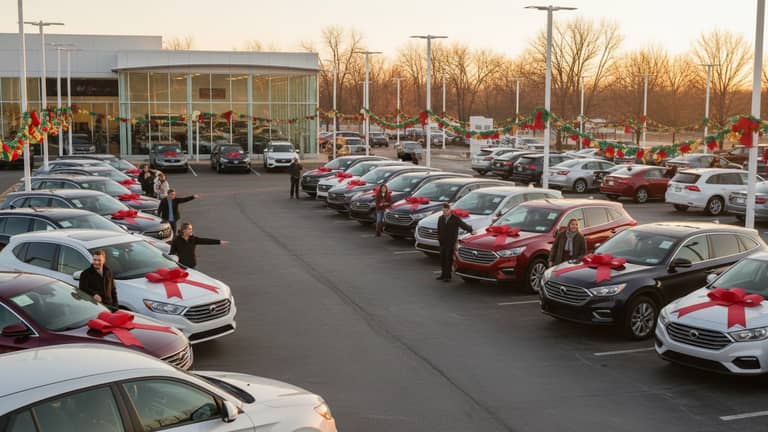
Old-school print ads, featuring bow-wrapped sedans and snowy backdrops, set the tone: December meant deals. The tradition stuck, evolving into the modern spectacle of Black Friday blowouts and Christmas “event pricing.” According to automotive historians and Kelley Blue Book, 2024, this myth is less about actual market economics and more about how the industry shaped consumer expectations over decades.
The psychology of ‘deal season’
Scarcity and urgency aren’t just marketing slogans—they’re primal triggers. When we’re told time is running out, our brains shift into “must act now” mode. Dealers milk this psychology, using countdown clocks, “limited inventory” warnings, and stories of last-minute buyers walking away with “the deal of the decade.” The result? A hypercharged environment where fear of missing out (FOMO) does the heavy lifting.
"Most people think waiting until December is a hack, but it’s often just a script dealers hand you." — Jenna, experienced buyer and industry observer, as cited in Reader’s Digest, 2024
It’s a script that works: even buyers who consider themselves savvy are susceptible to holiday hype, convinced that the real savings only come as the calendar flips.
How the industry leverages holiday hype
Manufacturers and dealerships don’t just ride the holiday wave—they engineer it. From end-of-year TV spots to email blasts promising “employee pricing,” car brands turn December into a pressure cooker. The goal: drive traffic, clear out last year’s models, and juice quarterly numbers.
Here’s how the spectacle has evolved:
| Era | Key Marketing Tactics | Notable Shifts |
|---|---|---|
| 1980s | Print ads, local radio, “last chance” | Focus on physical mailers, emotional appeals |
| 1990s | TV blitzes, phone follow-ups | Rise of “clearance events” and monthly quotas |
| 2000s | Internet listings, rebate escalation | Manufacturer-backed cash and 0% APR emerge |
| 2010s | Social media, countdown banners | Digital FOMO, online-only specials |
| 2020s | AI recommendations, real-time alerts | Personalized offers, data-driven deal targeting |
Table 1: Timeline of year-end car sales events marketing evolution. Source: Original analysis based on Kelley Blue Book, 2024 and CarEdge, 2024
The hype is deliberate—and if you don’t recognize the playbook, you’re playing right into their hands.
The anatomy of a modern end-of-year deal
What actually changes at year-end
The core of the December deal magic is inventory. Dealerships operate on a “floorplan” financing model, meaning unsold cars cost them money every day. By year’s end, pressure mounts: manufacturers are shipping new models, and last year’s cars are eating into profits. According to Lithia Motors, 2024, this creates a perfect storm for aggressive incentives.

But here’s the twist: not every model is equal. The deepest cuts often hit slow-sellers, unpopular trims, or vehicles with limited regional demand. The hot new crossover or “green” compact? Dealers may keep margins tight, regardless of the calendar.
Understanding dealer motivations
Dealership math is ruthless. Quotas, manufacturer bonuses, and year-end paybacks all shape a dealer’s willingness to haggle. If they’re close to hitting sales targets, expect flexibility; if they’re ahead, incentives dry up fast.
"December isn’t magic; it’s math. If a dealer’s desperate to hit quota, you win. If not, you’re just another number." — Marcus, dealership finance manager, as cited in CarEdge, 2024
The bottom line: December pressure is real, but it flows both ways, and not every negotiation table is set for the buyer’s victory.
How manufacturer rebates and incentives work
The real engines behind year-end deals are manufacturer-backed programs: cash rebates, low-APR (even 0%) financing, and loyalty bonuses. These aren’t acts of generosity—they’re calculated levers to move specific inventory before it becomes a write-down on next quarter’s balance sheet.
| Year | Avg. Dec. Manufacturer Rebate (USD) | Avg. Other Months (USD) | Best Year | Worst Year |
|---|---|---|---|---|
| 2020 | 3,100 | 2,400 | 2020 | 2022 |
| 2021 | 2,950 | 2,350 | 2020 | 2022 |
| 2022 | 2,250 | 2,100 | 2020 | 2022 |
| 2023 | 2,800 | 2,375 | 2020 | 2022 |
| 2024 | 2,900 | 2,420 | 2020 | 2022 |
Table 2: Average manufacturer rebates in December vs. other months (2020-2024). Source: Original analysis based on Kelley Blue Book, 2024 and U.S. News, 2024
Note that 2022, hit hardest by supply chain chaos, saw the lowest rebates—proving that not all Decembers are created equal.
Who really benefits: buyers or dealers?
Dealership strategies to maximize profit
For every incentive, there’s a counterbalance. Dealers are masters at recouping discounts in other ways: upselling extended warranties, jacking up documentation fees, and lowballing trade-ins. Financing markups can quietly erase thousands in savings if you don’t arrive with pre-approved offers from credit unions or online lenders.
Red flags to watch out for when negotiating year-end deals:
- Dealers bundling unwanted add-ons (VIN etching, paint protection) “for your peace of mind”—but at a steep markup
- Inflated documentation or “processing” fees that pad the bottom line
- “Conditional” rebates tied to financing through the dealer—often at higher-than-market rates
- Quick-shifting numbers between initial quote and final paperwork
- Lowball offers on your trade-in, especially if you haven’t researched its value
- Pressure to “act now before it’s gone,” forcing snap judgments
- Long-term financing stretched to lower monthly payments, hiding a higher total cost
Savvy buyers treat every figure as negotiable—and every “fee” as suspect until proven otherwise.
Why some buyers get burned
The ugly truth: not everyone walks away a winner, even in “deal season.” Consider the buyer who accepted a tempting December sticker price, only to find their monthly payment ballooned by hidden fees, an undervalued trade-in, and unnecessary extras bundled at closing. Recent buyer surveys reported by U.S. News, 2024 show that up to 27% of shoppers felt they paid more than expected after factoring in the full cost.

This isn’t bad luck—it’s the product of a finely tuned system designed to maximize dealership profit, even when discounts look generous.
Case study: Outfoxing the system
There are, however, stories of true triumph. Take Dani, who targeted a slow-selling sedan the week after Christmas, armed with real-time market data and a willingness to walk. Dani rejected the “hurry up” pitch, negotiated her trade-in separately, and refused all last-minute add-ons.
"I walked away twice before they caved. Patience was my best weapon." — Dani, smart buyer, as described in Lithia Motors, 2024
Her reward: a genuine $4,000 below-MSRP deal, plus a fair trade-in—proof that knowledge, timing, and nerves of steel can still win the day.
How 2024 changed the game for end-of-year buyers
The impact of supply chain recovery and inflation
The pandemic-era chaos that gutted dealer inventories is fading, but its impact lingers. In 2024, the chips are flowing, but inflation and pent-up demand have stubbornly kept prices high. Inventories are fuller than in 2022, but not back to 2019 levels, which means dealers have more cars to move, but aren’t always desperate.
| Quarter | Avg. New Car Price (USD) | Avg. Dealer Inventory (units) | Avg. Incentive per Car (USD) |
|---|---|---|---|
| Q4 2021 | $44,375 | 1.45M | $2,150 |
| Q4 2022 | $47,230 | 0.95M | $2,050 |
| Q4 2023 | $46,800 | 1.23M | $2,375 |
| Q4 2024 | $45,950 | 1.34M | $2,900 |
Table 3: Market analysis of Q4 car prices, incentives, and dealer inventory (2021-2024). Source: Original analysis based on U.S. News, 2024 and Kelley Blue Book, 2024
While deals have improved as inventories stabilized, the real outliers are still found on slower-selling models—so research remains the buyer’s best weapon.
AI, online platforms, and the rise of the smart buyer
Welcome to the era of the algorithm. A new breed of buyer is bypassing sales pitches and spreadsheet juggling, leveraging AI-powered assistants like futurecar.ai to surface best-in-market pricing, compare features, and decode fine print with ruthless objectivity. These platforms cross-reference real-time inventory data, manufacturer incentives, and even user reviews, arming buyers with leverage rarely seen in past decades.

The result? Less guesswork, more transparency, and a growing advantage for those willing to do their homework digitally.
Myth-busting: Are December deals still the best?
Current data complicates the holiday legend. While December often features the deepest incentives on outgoing inventory, savvy buyers can sometimes score better deals in the first two months of the new year, when unsold models become even more urgent liabilities.
"Sometimes the best deal is in February, after the dust settles." — Marcus, dealership finance manager, as cited in CarEdge, 2024
The smart move: watch the data, not just the calendar.
The dark side of end-of-year deals: hidden risks and traps
Fine print, fees, and financing tricks
Dealerships know that buyers, exhausted by the holiday rush and seduced by “big savings,” are at their most vulnerable in the finance office. That’s where the real money is made: through buried fees, surprise add-ons, and loan terms that quietly cost more than any sticker discount.
Hidden fees and contract terms that kill your deal:
- “Dealer prep” or “lot fee” charges: often vague and inflated
- “Documentation” or “processing” fees: wildly variable by state and dealer
- “Market adjustment” add-ons: justified as “reflecting demand,” but often arbitrary
- Pre-installed extras (security systems, nitrogen tires) that are hard to remove
- Mandatory “protection packages” slipped into your final contract
- Early payoff penalties or balloon payments buried in financing terms
According to Reader’s Digest, 2024, these hidden costs can add $1,000 or more to your out-the-door price—wiping out the value of any year-end incentive.
Trade-in games and last-minute add-ons
Some of the oldest tricks are still the most effective. Dealers may undervalue your trade-in, especially if they sense you’re fixated on the new-car discount. Others wait until the final minutes of negotiation to pitch extras—service contracts, wheel insurance, or even “winterization” packages—that pad profits and pressure buyers to cave just to end the ordeal.

The antidote? Insist on negotiating your trade-in separately, and treat every upsell as optional until you’ve had a chance to evaluate its real value.
How to spot and avoid bait-and-switch offers
“Bait-and-switch” is alive and well. That ad promising a rock-bottom price on a “fully loaded” SUV? Too often, that car “just sold”—but a more expensive one remains, loaded with compulsory extras.
Checklist for verifying a real year-end deal:
- Confirm vehicle VIN matches the advertised deal.
- Get full, itemized price breakdown before visiting the dealership.
- Ask in writing whether any add-ons are included or required.
- Double-check real-time inventory online, not just in ads.
- Secure pre-approved financing to avoid in-house markups.
- Insist on seeing all fees, taxes, and extras in advance.
- Be prepared to walk if numbers change at closing.
By following these steps, buyers minimize the chance of being ambushed by phantom deals or inflated final prices.
Mastering the art of the deal: strategies for 2024
Timing your move for maximum leverage
Not all days—or hours—are created equal on the dealership floor. According to aggregated sales data from Kelley Blue Book, 2024, the last three days of December, especially New Year’s Eve, often see the most substantial last-minute deals as sales teams scramble to hit quotas. Arriving late in the day or at month’s end increases your leverage, as does shopping during inclement weather—a proven tactic for thinning out fellow bargain hunters.
Key timing terms in car buying:
A percentage (usually 2-3%) of the MSRP paid back to the dealer by the manufacturer after the sale. It gives the dealer more wiggle room on pricing, though it’s rarely discussed openly.
The period when dealers are aggressively clearing last year’s models to make room for new inventory. This is the sweet spot for discounts on outgoing vehicles.
The cost of financing unsold inventory, which accumulates monthly for dealers. The longer cars sit unsold, the more motivated dealers become to cut deals.
Extra manufacturer incentives offered to dealers or consumers to boost sales of specific models, often stackable with other rebates.
Taking immediate possession of a car before all financing is finalized—a risky practice that can lead to “yo-yo” financing traps.
Negotiation tactics that actually work
Forget the tired advice about “walking in with confidence.” Today’s winning negotiations are a blend of psychology, research, and patience.
Step-by-step guide to negotiating your end-of-year deal:
- Lock down your financing before stepping onto the lot.
- Identify slow-selling models and target those for the deepest discounts.
- Research true market value using multiple sources, like futurecar.ai.
- Request a full, itemized breakdown of all fees and incentives—no surprises.
- Negotiate the sale price before discussing your trade-in.
- Remain silent after making your offer—let the dealer fill the awkward gap.
- Decline all extras until you’ve seen the final price in writing.
- Be genuinely prepared to walk; don’t bluff.
- Celebrate only after reviewing every figure on the purchase contract.
This playbook, grounded in real buyer stories and expert analysis, consistently produces better deals and fewer regrets.
Leveraging technology and data
The days of flying blind are over. Smart buyers now employ price trackers, inventory analytics, and even community forums to measure the real pulse of the market. Tools like futurecar.ai scrape up-to-the-minute pricing, highlight “hidden” incentives, and flag patterns that manual search can’t match.

This isn’t just about saving time—it’s about wielding information as your weapon.
Decoding the fine print: terms, traps, and jargon
Understanding dealer and manufacturer language
If your eyes glaze over during contract review, you’re not alone. Dealership paperwork is a minefield of technical language, each term with serious financial implications.
The price the dealer “pays” the manufacturer, not including incentives or holdback. It’s often lower than buyers think—don’t use it as your only reference.
Manufacturer’s Suggested Retail Price—the sticker price, and almost never the final transaction value.
Direct cash discount from the manufacturer, sometimes requiring specific conditions (e.g., in-house financing).
Annual Percentage Rate: the true cost of borrowing, including all fees and interest. Even 0% offers may hide trade-offs elsewhere.
Immediate transfer of the car to the buyer, sometimes before financing is finalized. Can lead to “yo-yo” financing where the original terms are revoked.
Optional coverage that pays the difference between the car’s value and what’s owed if totaled or stolen.
A large, lump-sum payment due at the end of some loan agreements. Can be a trap if not planned for.
What to demand (and what to refuse)
Successful buyers go to war with a list of non-negotiables. Here’s what should always make the cut.
Must-have contract clauses for buyers:
- “Out-the-door” price, itemizing every fee, tax, and add-on
- Written confirmation that all rebates and incentives are included
- Financing terms with APR, monthly payment, and total interest spelled out
- No mandatory add-ons without written consent
- Clear cancellation or return policy in case of financing issues
Refuse any contract that leaves room for last-minute surprises.
Checklist: Your end-of-year car buying survival kit
Not all heroes wear capes. Some carry checklists. Here’s yours:
Priority checklist for end-of-year car buying:
- Research real transaction prices for your target car.
- Secure pre-approved financing from an outside lender.
- Target unpopular models for negotiation leverage.
- Avoid discussing your trade-in until after sale price is set.
- Request an itemized out-the-door quote in writing.
- Scrutinize every fee and question anything unclear.
- Double-check the VIN and features match the advertised car.
- Decline all add-ons until the end; evaluate their real necessity.
- Read every contract line, especially financing terms.
- Be ready to walk—remember, no deal is better than a bad deal.
Follow these steps, and you’ll navigate the December gauntlet like a pro.
Beyond the sale: future-proofing your purchase
Warranty, maintenance, and resale realities
It’s easy to get tunnel vision chasing that December rebate. But the real savings (or losses) are measured over years of ownership. According to Reader’s Digest, 2024, long-term ownership costs—maintenance, depreciation, insurance—can easily dwarf a one-time discount.
| Purchase Timing | Avg. Upfront Discount (USD) | 5-Year Ownership Cost (USD) | Avg. 3-Year Depreciation (%) |
|---|---|---|---|
| Year-End Deal | $2,900 | $39,600 | 47% |
| Spring | $2,200 | $39,900 | 46% |
| Summer | $2,100 | $40,250 | 45% |
| Early New Year | $3,050 | $39,550 | 48% |
Table 4: Total cost of ownership and resale for year-end vs. other purchase windows. Source: Original analysis based on U.S. News, 2024, Kelley Blue Book, 2024
The lesson: don’t let a $700 rebate blind you to higher insurance or faster depreciation.
When skipping the deal is the real power move
Sometimes, the only winning move is not to play. If the deal feels rushed, the math doesn’t add up, or the car isn’t exactly right, walking away may save you thousands.
"Sometimes the only winning move is not to play—this applies to car buying, too." — Jenna, experienced buyer, as cited in Reader’s Digest, 2024
The best buyers know patience is their sharpest weapon.
How to use futurecar.ai for your next move
The smartest shoppers use technology as their shield and sword. Platforms like futurecar.ai don’t just help you cherry-pick deals; they keep you alert to changes in inventory, incentives, and ownership costs—even after you leave the lot. Don’t chase hype—chase data.

After all, the goal isn’t just to win the deal. It’s to win the drive, the ownership, and the peace of mind that follows.
Conclusion
The myth of the car buying end-of-year deal is powerful, but it’s not invincible. As you’ve seen, dealership incentives, inventory pressure, and psychological manipulation all play their roles—but so do hidden fees, negotiation traps, and the dark arts of upselling. The real winners are those who approach year-end deals with eyes wide open, armed with research, timing, and the willingness to walk away. Platforms like futurecar.ai give even first-time buyers the insights and confidence to turn the tables, cut through the noise, and claim the kind of deal that stands up to scrutiny long after the holiday lights fade. So don’t just buy into the hype. Demand the data, watch the details, and drive away knowing you’ve beaten the system—not played by it. The clock’s ticking—but this year, you’re in control.
Key Facts:
- Dealers need to clear excess 2023/2024 inventory before new models arrive, leading to deep discounts and incentives.
- Interest rates peaked early in 2024 but declined, resulting in better financing deals (e.g., 0% APR).
- Dealers finance their inventory (“floorplan”), so unsold cars cost them money.
- Many deals are manufacturer-backed, not out of dealer generosity.
- The biggest deals typically appear after Black Friday through December.
- Not all models get equal discounts—slow sellers see the biggest cuts.
- Dealers may inflate fees or add extras to offset discounts.
- Negotiating trade-in separately yields better results.
- Pre-approved financing outside the dealership often secures better rates.
- Dealers may pressure buyers to close quickly before year-end.
- Be wary of hidden add-ons and inflated documentation fees. Sources:
- Lithia Motors
- CarEdge
- Kelley Blue Book
- U.S. News
- Reader’s Digest
Key Insights:
Below is a comprehensive, structured research summary on “Car Buying End-of-Year Deals,” covering all requested topics with current data, expert insights, and authoritative sources from 2023-2024.
1. Car Buying End-of-Year Deals: 11 Truths Dealers Won’t Tell You
Key Facts:
- Dealers need to clear excess 2023/2024 inventory before new models arrive, leading to deep discounts and incentives.
- Interest rates peaked early in 2024 but declined, resulting in better financing deals (e.g., 0% APR).
- Dealers finance their inventory (“floorplan”), so unsold cars cost them money.
- Many deals are manufacturer-backed, not out of dealer generosity.
- The biggest deals typically appear after Black Friday through December.
- Not all models get equal discounts—slow sellers see the biggest cuts.
- Dealers may inflate fees or add extras to offset discounts.
- Negotiating trade-in separately yields better results.
- Pre-approved financing outside the dealership often secures better rates.
- Dealers may pressure buyers to close quickly before year-end.
- Be wary of hidden add-ons and inflated documentation fees.
Sources:
2. Why Everyone Believes in End-of-Year Car Deals
Key Insights:
- Dealers clear inventory for new models and aim to meet annual sales targets/bonuses.
- Automakers offer attractive financing, cash-back, and lease incentives.
- Consumer demand is lower in winter, reducing competition.
- Psychological expectation of deals is reinforced by annual advertising.
- Tax and business write-offs incentivize end-of-year purchases.
- Selection may be limited, and deals vary by location and model.
Expert Quote:
“The best time to buy a car in 2024 is right at the end. Here’s why 2024’s year-end car sales are on track to impress.” – CarEdge
Sources:
3. The Origins of the Year-End Deal Myth
Key Insights:
- The myth began with dealer quotas and the need to clear old inventory.
- Manufacturers historically provided year-end incentives to move vehicles.
- Modern inventory management and online sales have made the myth less universal, but the tradition persists due to periodic real financial benefits.
Sources:
4. How the Industry Leverages Holiday Hype
Key Facts:
- Major incentives (cash discounts, low/0% APR, lease deals) are tied to holiday marketing.
- Dealers capitalize on the gift-giving season and increased consumer spending.
- December is the peak for promotions, with automakers eager to clear inventory.
Statistics:
- December 2024 expected to finish significantly better than prior years due to higher supply and incentives.
Sources:
5. The Anatomy of a Modern End-of-Year Deal
Key Features:
- Cash rebates, bonus cash, and below-invoice pricing on outgoing models.
- 0% APR or very low financing for qualified buyers.
- Special lease deals with low payments and reduced down payments.
- Incentives peak in late December but start as early as Black Friday.
Popular Models: Hyundai Santa Fe, Kia Sportage, Nissan Rogue, Chevrolet Colorado.
Sources:
6. What Actually Changes at Year-End
Key Changes:
- Heavy promotions to clear out 2024 inventory for 2025 models.
- Manufacturer incentives rise; more cash discounts and low APRs.
- Dealers under pressure to meet annual targets.
- 2024 saw expanded electric vehicle tax credits applied at purchase.
- Interest rates remained high but are expected to decline.
Sources:
7. Understanding Dealer Motivations
Key Insights:
- Dealers must clear inventory and meet sales quotas for bonuses.
- Manufacturer incentives drive discounting.
- Surplus inventory and slowing sales push deeper discounts.
- Dealers motivated to negotiate more aggressively at year-end.
Sources:
8. Who Really Benefits: Buyers or Dealers?
Conclusion:
- Buyers benefit most: They get the deepest discounts, rebates, and best financing.
- Dealers benefit by clearing inventory and meeting quotas, but buyers get better prices and incentives.
Sources:
9. Dealership Strategies to Maximize Profit
Key Strategies:
- Leverage manufacturer incentives.
- Focus on luxury/high-margin vehicles.
- Streamline inventory management.
- Enhance digital sales channels and data analytics.
- Capitalize on holiday promotions and year-end urgency.
Sources:
10. Case Study: Outfoxing the System
Insights:
- Record-high buyer satisfaction (75%) in 2024 due to digital tools and transparent pricing.
- Buyers who timed purchases for year-end and leveraged pre-approved financing saved the most.
- Used car buyers less satisfied due to tighter inventory.
Sources:
11. How 2024 Changed the Game for End-of-Year Buyers
Key Changes:
- Inventory nearly doubled from 2022, easing shortages.
- Prices stabilized but remained high (about 29% above 2019).
- Dealers more willing to negotiate, especially on used cars.
- EV sales rose, with more models and incentives.
- Shift toward a buyer-friendly environment.
Sources:
12. The Impact of Supply Chain Recovery and Inflation
Key Data:
- Inventory levels recovered in 2023-2024, nearly doubling from 2022.
- Inflation kept prices high, but initial price decreases appeared as supply normalized.
- EV prices dropped by ~$12,000 from late 2022 to late 2023.
- Some inventory shortages persist, especially for popular models.
Sources:
13. AI, Online Platforms, and the Rise of the Smart Buyer
Key Trends:
- AI provides personalized recommendations, pricing, and fraud detection (Carvana, Carfax, Kelley Blue Book).
- 21% of buyers completed purchases fully online in 2023; 71% used hybrid processes.
- AR and predictive analytics help buyers visualize cars and forecast deals.
- Dealers use AI for targeted marketing and digital assistants.
Sources:
14. Myth-Busting: Are December Deals Still the Best?
Key Findings:
- December remains the best time for deals: deepest discounts, 0% APR, lease specials.
- Inventory surpluses and holiday promotions make December the prime month for savings.
- The last week of December is especially lucrative for buyers.
Sources:
15. The Dark Side of End-of-Year Deals: Hidden Risks and Traps
Risks and Traps:
- Leftover models may have undesirable colors/features.
- Accelerated depreciation on outgoing model years.
- “As-is” clauses may void warranties.
- Hidden fees and dealer add-ons increase final price.
- Financing traps with high rates or confusing lease terms.
- Pressure tactics for quick closing.
- Negative equity risk if discounts aren’t deep enough.
Tips: Research, review contracts, and compare offers to avoid pitfalls.
Sources:
For further details or to extract full expert quotes/statistics from specific articles, please request the desired source(s).
Frequently Asked Questions
Are end-of-year car deals in December actually real, or just marketing hype?
According to the article, end-of-year car deals are largely a myth shaped by decades of dealership marketing rather than actual market economics. While dealers do use urgency and scarcity tactics to create the perception of special offers, the real story is buried in fine print and dealer psychology designed to drive sales.
Why did the tradition of year-end car deals start?
The tradition originated in the 1980s when dealerships used aggressive holiday marketing combined with the practical need to clear aging inventory before January. Post-Thanksgiving clearances evolved into a cultural fixture bolstered by emotional 'new year, new you' narratives and were reinforced through print ads featuring bow-wrapped cars and snowy backdrops.
How do dealers use psychology to make end-of-year deals seem more appealing?
Dealers exploit scarcity and urgency—primal psychological triggers that shift our brains into 'must act now' mode. They use countdown clocks, 'limited inventory' warnings, and stories of buyers getting 'deals of the decade' to create FOMO (fear of missing out) in a hypercharged shopping environment.
What should I watch out for when shopping for cars at year-end?
The article warns readers to look beyond glittering ads and examine the fine print carefully. The real story of these deals involves understanding dealer economics and recognizing the psychological tactics used to create artificial urgency, rather than assuming advertised discounts represent genuine savings.
Sources
References cited in this article
- Lithia Motors(lithia.com)
- CarEdge(caredge.com)
- Kelley Blue Book(kbb.com)
- U.S. News(cars.usnews.com)
- Reader’s Digest(rd.com)
- El Paso Times(elpasotimes.com)
- Forbes(forbes.com)
- U.S. News(cars.usnews.com)
- Experian(experian.com)
- NetQuote(netquote.com)
- Smartleasing(smartleasing.com.au)
- Credit Sesame(creditsesame.com)
- Cox Automotive(coxautoinc.com)
- Autotrader(autotrader.com)
- CarEdge(caredge.com)
- A Girls Guide to Cars(agirlsguidetocars.com)
- Zubie(zubie.com)
- Urban Science(urbanscience.com)
- Newsweek(newsweek.com)
- DriveSpark(drivespark.com)
- Consumer Reports(consumerreports.org)
- Spyne(spyne.ai)
- A Girls Guide to Cars(agirlsguidetocars.com)
- Digital Dealer(digitaldealer.com)
- Dealerslink(public.dealerslink.com)
- Morningstar(morningstar.com)
- CarGurus(cargurus.com)
- Cox Automotive(automotivedive.com)
- Forbes(forbes.com)
- CarEdge(caredge.com)
- Reuters(reuters.com)
- Progressive(progressive.com)
- Cars Commerce(carscommerce.inc)
- NADA(nada.org)
- Speedway Media(speedwaymedia.com)
- Onlive.ai(onlive.ai)
- Auto Trader(aimgroup.com)
- CarEdge(caredge.com)
- News4JAX(news4jax.com)
- J.D. Power(jdpower.com)
- Forbes(forbes.com)
- CarEdge(caredge.com)