

Car Buying Autonomous Vehicle Options Smart Drivers Actually Choose
Written with AI assistance under our editorial guidelines
Smart drivers purchasing cars in 2025 largely choose Level 2 autonomy features like adaptive cruise control and lane-centering, which are available on many premium vehicles. However, these systems require constant human vigilance and do not provide true self-driving capability. Level 3 and higher autonomy remain primarily unavailable to average consumers, making hype around fully autonomous vehicles largely fictional marketing.
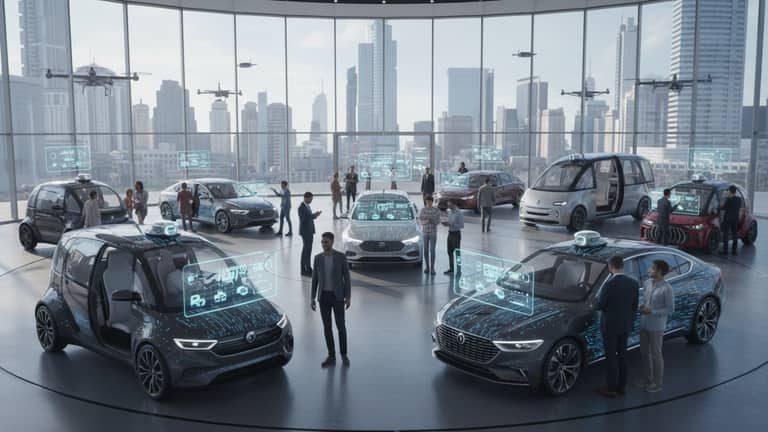
Step onto any glossy dealership floor in 2025, and you’ll be bombarded with promises: “self-driving,” “fully autonomous,” “future-proof.” Every sales pitch is a shot of adrenaline and snake oil, preying on your dreams of hands-free commutes and sci-fi cool. But beneath the shimmering ads and AI-powered dashboards lies a maze of half-truths, regulatory red tape, and real dangers. If you’re even considering car buying autonomous vehicle options this year, know this—the hype is blinding and the stakes are high. In this deep-dive, we’ll rip through the myths, expose the market’s dirty little secrets, and arm you with the unvarnished truth so you can make choices as smart as your next car claims to be. Buckle up: the ride is rough, the facts are raw, and your wallet—and maybe your safety—hang in the balance.
The myth versus the machine: what autonomy really means in 2025
Unpacking the levels of vehicle autonomy
Understanding the reality of car buying autonomous vehicle options starts with a clear-eyed look at what “autonomy” actually means. The Society of Automotive Engineers (SAE) defines six levels, from 0 (no automation) to 5 (full automation), and every sticker, badge, or software update fits somewhere on this spectrum. Level 2, now common in premium vehicles, combines adaptive cruise control and lane-centering but demands constant driver vigilance. Level 3, available on select luxury models, lets the car manage itself under specific conditions, but still requires the driver to be ready to take over at a moment’s notice. Level 4 and 5? Forget about them at your local dealer in 2025—they’re still science fiction for the average consumer.
Where things get thorny is in the language: “self-driving” cars often just mean “driver-assist” in practical terms. According to recent findings from the World Financial Review, 2024, most vehicles with so-called autonomous features require an alert human behind the wheel. The difference between being driven and being the driver is more than just a technicality; it’s a legal and ethical minefield.

Definition list:
Combines adaptive cruise control and lane-centering, but you—the human—remain responsible. The car helps, but doesn’t replace your eyes or reflexes.
The car drives itself under certain conditions (e.g., traffic jams), but expects you to take over instantly if things go sideways. It’s more “chauffeur on-call” than “robotic butler.”
No steering wheel, no pedals, no human needed. The car operates independently in all environments—a fantasy for private buyers in 2025.
Marketing spin versus street reality
Manufacturers throw around terms like “autopilot” and “self-driving” with reckless abandon, blurring the lines between what’s available and what’s promised. The disconnect is calculated: it sells cars, boosts stock prices, and leaves buyers confused about what they’re actually trusting their lives to. As tech analyst Jordan put it, > “Most drivers have no idea what they’re really getting when they buy into autonomy.”
— Tech analyst Jordan, AutoEvolution, 2024
Data from Market.us, 2025 confirms that most “autonomous” vehicles on sale are really advanced driver-assist systems—glorified cruise control and lane-keeping, not true self-driving. The myth is profitable, but the reality is less glamorous.
Myths about buying autonomous vehicles in 2025—debunked:
-
Autonomous cars will let you nap behind the wheel.
Reality: No commercially available car allows unsupervised naps—driver alertness is mandatory, even at Level 3. -
Every new car in 2025 has full self-driving features.
Reality: Most new cars offer Level 2 features at best; Level 3 is limited to luxury segments. -
Autonomy means zero accidents.
Reality: While these systems can reduce some human errors, crashes involving “autopilot” misuse still happen, as reported in current studies. -
Software updates will magically unlock Level 5.
Reality: Hardware limitations and regulatory barriers make such upgrades impossible for most current models. -
Insurance costs will automatically drop.
Reality: In many regions, premiums are higher due to uncertainty about liability and repair costs. -
All roads and cities are ready for autonomy.
Reality: Infrastructure is patchwork at best; many features are geofenced and unreliable outside major metro areas. -
“Self-driving” means you’re off the legal hook.
Reality: Drivers remain liable in almost every jurisdiction.
Why 'self-driving' is still a loaded term
The phrase “self-driving” is a linguistic landmine, tossed around by marketers, misunderstood by buyers, and tiptoed around by regulators and insurers. Legally, most regions treat even the most advanced systems as driver-assist, not true autonomy. If your “self-driving” car crashes, you— not the manufacturer—are likely on the hook, especially if you weren’t attentive. According to the World Financial Review, 2024, regulatory definitions lag behind technological claims, creating massive gray zones for liability, insurance claims, and criminal negligence.
The confusion extends to insurance policies and law enforcement. Many policies exclude claims if autonomous features were improperly used, leaving buyers in a precarious spot. Until the legal system catches up, “self-driving” is more promise than policy—and more risk than reward for unsuspecting owners.

Who’s actually buying autonomous vehicles—and why
Early adopters, risk-takers, and the curious
The 2025 autonomous vehicle owner isn’t the stereotype you think. Forget the silver-haired retirees or Silicon Valley millionaires; today’s buyers are often young, urban, and hungry for the next big thing. According to sales and registration data analyzed by Market.us, 2025, the average autonomous vehicle buyer skews under 45, with a strong presence in tech-centric cities.
Surveys show that many buyers are early adopters—people who thrive on novelty, accept risk, and want bragging rights for owning tomorrow’s tech today. As Maya, a self-professed tech enthusiast, put it:
"I wanted a car that felt like the future, not a museum piece."
— Maya, Early Adopter, Market.us, 2025

What motivates the jump to autonomy?
Why do these buyers take the plunge? For some, it’s the exhaustion of soul-crushing commutes. For others, physical limitations or disabilities make traditional driving a chore—or an impossibility. Tech curiosity and status are big drivers. According to a 2025 survey by Market.us, these are the top reasons buyers cite for choosing autonomous vehicles:
| Reason | Percentage (%) |
|---|---|
| Commute fatigue/convenience | 39 |
| Tech enthusiasm/status | 31 |
| Accessibility/disability | 13 |
| Safety perception | 9 |
| Environmental concerns | 5 |
| Other | 3 |
Table 1: Survey data—top reasons for choosing an autonomous vehicle in 2025
Source: Market.us, 2025
Barriers and fears holding buyers back
Despite the hype, most shoppers still hesitate. Cost is the biggest barrier—autonomous features can add tens of thousands to the price tag, and insurance is anything but straightforward. Many fear reliance on unproven tech or worry about hacking and privacy. According to recent polls, skepticism remains high: only about 30% of consumers say they fully trust autonomous systems as of 2025.
The most common buyer fears:
- System failures leading to accidents or injuries
- Sky-high repair and maintenance costs
- Loss of control and driving enjoyment
- Cybersecurity risks—cars as targets for hackers
- Confusing software updates and tech support nightmares
- Unclear insurance policies and potential claim denials
The 2025 lineup: what’s actually on the market now
Mainstream options: what you can actually buy (and drive)
So, which car buying autonomous vehicle options are really available in 2025? The answer: a small but growing cadre of big-brand and upstart models, almost all limited to Level 2 or Level 3 autonomy. The usual suspects—Tesla, Mercedes-Benz, Audi—lead the showrooms, but the list isn’t as long or as wild as marketing would have you believe.
| Model | Autonomy Level | Key Features | Price Range | Availability |
|---|---|---|---|---|
| Tesla Model S/X | 2.5-3 | “Full Self-Driving” (Beta) | $90k-$120k | Global (limited) |
| Mercedes S-Class EQS | 3 | Drive Pilot (Level 3) | $110k-$130k | Select EU/US Cities |
| Audi A8 | 3 | Traffic Jam Pilot | $100k+ | EU, select US states |
| Waymo One (Ride-Hail) | 4 (geofenced) | Driverless in specific areas | N/A | Select US cities |
| NIO ET7 | 2.5 | NIO Pilot | $70k-$85k | China |
Table 2: 2025 autonomous vehicle model comparison matrix
Source: Original analysis based on World Financial Review, 2024, AutoEvolution, 2024

Underdogs and disruptors: who’s challenging the giants?
Beyond the titans, disruptors are nipping at their heels—Chinese startups, Silicon Valley stealth projects, and European upstarts. Brands like XPeng and NIO in China, as well as European dark horses, experiment with unique features and lower price points. Mobility innovator Alex notes:
"Sometimes the garage-built solution is light-years ahead."
— Alex, Mobility Innovator, World Financial Review, 2024
Are these underdog options worth the risk? For tech-savvy buyers with a tolerance for bugs and growing pains, maybe. But support networks are thin, resale uncertain, and after-sales service patchy at best. For most, sticking with established brands is the safer (if less sexy) bet.
What’s (still) vaporware: promises to ignore
Amid the fever-dream promises are plenty of vehicles and features that are all sizzle, no steak. Watch out for:
- “Full self-driving” that’s just glorified lane-keeping
- “OTA upgrade will unlock Level 5 soon” pitches
- “No steering wheel needed” but with a legal disclaimer
- “Robotaxi ready” on vehicles with no regulatory approval
- “AI safety that never fails” claims
- “Self-parking anywhere” with fine print restrictions
- “Universal compatibility” with public roads—utter fiction
Cutting through the chaos: how to actually choose your autonomous vehicle
Define your must-haves versus nice-to-haves
Selecting from the many car buying autonomous vehicle options demands ruthless self-awareness. Prioritize features that fit your daily grind and local laws—don’t get seduced by vaporware or “coming soon” teasers. Consider future-proofing: is the system upgradeable, or will it become obsolete with the next regulation or patch?
- Clarify your daily driving scenarios
- Research local regulations on autonomous use
- Decide which features you can’t live without
- Assess upgradeability and support
- Compare warranty and after-sales terms
- Check insurance rates for each model
- Evaluate real-world customer reviews
- Plan for resale: will your choice hold value?
Test-driving the future: what to look for beyond the hype
A real-world test drive is your only shield against marketing BS. Insist on testing all autonomous features—adaptive cruise, lane-centering, hands-off alertness—on public roads, not just the dealer’s parking lot. Don’t be distracted by flashy demos; subtle software bugs or poor handover signals can be the difference between a smooth ride and a disaster.

Dealers will choreograph demonstrations to perfection. Your job is to dig deeper: ask about real-world failures, support protocols, and how the car behaves in oddball situations. If a feature can’t be tested, it’s not real—at least not for you.
The overlooked costs (and savings) of going autonomous
Autonomy isn’t just a sticker price—it’s a web of hidden costs: pricey software “subscriptions,” steep insurance, and specialized maintenance. According to recent market data, many buyers are blindsided by recurring fees for advanced features and high repair bills for sensor damage.
| Ownership Element | Autonomous Vehicle | Traditional Vehicle |
|---|---|---|
| Purchase price | +30-60% | Baseline |
| Insurance | +10-25% | Lower, more stable |
| Maintenance/Repairs | Higher (sensors) | Lower |
| Software subscriptions | $1000-$3000/year | Rare |
| Resale value | Uncertain | Predictable |
Table 3: Cost breakdown—autonomous vs. traditional vehicle ownership in 2025
Source: Original analysis based on Market.us, 2025
Hidden benefits of autonomous vehicle ownership:
- Reduced accident rates in certain scenarios (but not zero risk)
- Less driver fatigue on long commutes
- Potential for lower long-term repair costs (fewer fender benders)
- Enhanced accessibility for elderly or disabled users
- Real-time software updates can improve safety over time
- More efficient routing saves time and fuel
- Hands-free moments for productivity (in limited, legal circumstances)
The legal and ethical minefield: what every buyer must know
Where you can (and can’t) use autonomous features legally
Car buying autonomous vehicle options are only as useful as the law lets them be. Most countries and states allow limited autonomous features—geofenced in specific areas, banned outright in others. For example, Germany permits Level 3 driving on select highways, while several US states restrict or completely ban unsupervised operation.
Key legal terms:
The specific environments and situations where an autonomous system is approved to function—often limited to mapped highways or urban corridors.
Technology that ensures the human driver is attentive, often using cameras or sensors.
Who takes the fall if something goes wrong? In 2025, it’s almost always the human, not the carmaker.
Changing laws are a wild card. New rules can render features illegal or kill resale value overnight. As legal expert studies reveal, always verify with local authorities—or risk buying an expensive paperweight.
Insurance roulette: what’s covered and what’s not
Buying autonomous doesn’t mean automatic insurance savings. Insurers are struggling to price policies for vehicles whose risk profiles change with every software update. Exclusions for improper use of autonomous features are common, and claims can be denied if you’re found inattentive—even if the system claims it’s “self-driving.”

Many policies hide behind the fine print, and real-world claims show that navigating an insurance payout after a crash can be a bureaucratic nightmare. Always read the exclusions, understand your own liability, and don’t trust vague assurances from salespeople.
Ethics, privacy, and the price of convenience
Every mile you drive in an autonomous vehicle generates mountains of data—where you go, when, and how you behave behind the wheel. Who owns this data? Often, it’s the manufacturer or a third-party service, not you. That data is a goldmine for insurers, marketers, and sometimes even law enforcement.
There’s a deeper cost to all this convenience: surveillance creep, loss of privacy, and new forms of digital profiling. Privacy advocate Sam put it bluntly:
"Convenience always comes at a cost—sometimes it’s your freedom."
— Sam, Privacy Advocate, World Financial Review, 2024
Living with your choice: real-world stories and lessons learned
Case studies: victories and horror stories
Not every autonomous vehicle story is a victory lap. Take James, who raves about his Mercedes EQS’s stress-free highway drives—until an unplanned software update disabled a key feature for weeks, stranding him with basic cruise control. Then there’s Priya, whose startup brand vehicle suffered a sensor failure; it took two months and endless calls before a fix arrived.
The lesson: even the flashiest tech is only as good as its weakest link—be it software, hardware, or customer support.

The maintenance and support reality check
Your relationship with your autonomous ride doesn’t end at purchase. Expect frequent software updates, sometimes introduced without warning. Support can be a black box—especially with lesser-known brands. Transparency from dealerships and manufacturers is often lacking; recalls and software glitches can leave you stranded with few answers.
- Document every update and interaction with support
- Push for transparency—demand to see service bulletins
- Don’t ignore minor glitches; report them early
- Keep records of all maintenance and repairs
- Join online owner communities for troubleshooting tips
- If a feature fails, escalate quickly—don’t accept vague promises
Community and culture: how autonomous cars are changing the roads
The autonomous revolution is birthing strange new customs. Parking lots are filled with cars that park themselves, but also with drivers unsure whether to trust the tech. Early adopters swap tips and hacks on digital forums, and some have even banded together to influence local regulations.
Unconventional uses for autonomous vehicles in 2025:
- Mobile workspaces for remote professionals
- On-demand shuttles for elderly or disabled groups
- “Third spaces” for meetings, video calls, or naps (legally parked, of course)
- Community ride-pooling for school runs
- Delivery bots for groceries and parcels
- Data-gathering for urban planning (whether you like it or not)
Beyond the wheel: cultural and societal impacts
The promise and peril of hands-free living
Autonomy is reshuffling the way we work, play, and connect. Families eat breakfast while the car inches through traffic; remote workers Zoom from the back seat. The freedom can be intoxicating—but so is the loss of agency, as the car silently decides the route and pace.

Jobs, cities, and the new mobility divide
The rise of autonomous vehicles is already reshaping economies. While some driving jobs are disappearing, new roles in tech support, data analysis, and urban mobility planning are emerging. Cities are grappling with new traffic patterns and demands for smart infrastructure. Yet not everyone benefits equally; the cost barrier for the latest tech risks widening the mobility divide.
| Year | Key Milestone |
|---|---|
| 2015 | Major automakers introduce Level 2 ADAS |
| 2018 | First public road tests of Level 3 systems |
| 2020 | Surge in autonomous ride-hailing pilots |
| 2023 | Regulatory approval for Level 3 in select cities |
| 2025 | Limited Level 4 services (geofenced) and mass-market Level 2/3 |
Table 4: Timeline of key milestones in autonomous vehicle adoption (2015-2025)
Source: Original analysis based on World Financial Review, 2024, AutoEvolution, 2024
The psychological catch: are we losing control?
Autonomous vehicles force us to wrestle with trust—not just in machines, but in our own willingness to give up control. Many owners report initial anxiety, a sense of helplessness as the car fends for itself. Psychologist Dana observes:
"It’s not just about tech. It’s about what we’re willing to hand over."
— Dana, Psychologist, AutoEvolution, 2024
The question is no longer when the tech will arrive, but whether we’re ready to accept its consequences.
How to beat the system: insider tips for smart buying in 2025
Questions to grill your dealer (and yourself)
Don’t fall for the sales pitch. Here’s your priority checklist:
- Which autonomy level is this car certified for, and in which regions?
- What features are included versus “future upgrades”?
- What is the real cost of software subscriptions and updates?
- How does the warranty cover autonomous hardware and software?
- What driver-monitoring systems are included?
- Is there clear documentation on insurance requirements?
- How frequently do updates disrupt features?
- Who owns and accesses my driving data?
- What’s the process for post-sale support, recalls, and bug fixes?
- How has this model performed in real-world crash and reliability statistics?
Deal-hunting and incentives: what’s legit, what’s a trap
Manufacturers dangle incentives to move autonomous models, but not all deals are what they seem. True incentives—tax credits, guaranteed buybacks, bundled service—can be valuable. But beware of “free software upgrades” with hidden fees, misleading loyalty programs, or early-adopter pricing that vanishes on the next model refresh.
Red flags to watch when shopping for autonomous vehicles:
- “Lifetime” features that require annual renewals
- Price cuts tied to restrictive financing
- Exclusion of key features in base models
- Opaque trade-in policies for older tech
- Non-transferable warranties
- Fine print locking you into data-sharing agreements
- Loopholes excluding autonomous use from insurance
- Overpromised “self-driving” with no regulatory approval
The role of AI car advisors and unbiased resources
Amid the chaos, AI-driven platforms like futurecar.ai surface as lifelines for overwhelmed buyers. These systems aggregate verified data, compare real-world experiences, and cut through marketing noise. Combining unbiased tech analysis with community-driven reviews, tools like these empower you to cross-reference claims and make sense of the shifting landscape—without getting lost in the weeds.

The road ahead: what your choice means for the future
How your decision shapes the market (and society)
Every purchase is a vote—a signal to automakers, lawmakers, and tech giants about what matters. Widespread adoption accelerates policy and infrastructure upgrades, while critical buyers slow the rush and demand better safety and privacy. The ripple effects touch everything from urban planning to environmental standards; your choice today nudges the entire market tomorrow.
Preparing for what’s next: upgrades, recalls, and the next big thing
Stay ahead of the curve, not behind it:
- Register for manufacturer updates and recalls
- Monitor regulatory changes in your area
- Keep your system’s firmware up to date
- Document all service and support interactions
- Join owner forums for early warnings on issues
- Evaluate third-party upgrade paths carefully
- Plan for resale before your tech becomes obsolete
Final verdict: should you buy an autonomous vehicle in 2025?
Here’s the harsh truth: car buying autonomous vehicle options in 2025 offer revolutionary promise and real pitfalls. The upsides—improved safety, convenience, and accessibility—are undercut by legal gray zones, hidden costs, and trust issues. Don’t buy the hype; buy the reality that fits your life, your risk tolerance, and your local laws. For some, now is the right time. For many, patience is the better part of wisdom.

Conclusion
The self-driving revolution isn’t a fairy tale—it’s a gritty, high-stakes reality unfolding on the streets and in your wallet right now. As you consider car buying autonomous vehicle options, remember: true autonomy is still emerging, the fine print is lethal, and your best weapon is relentless curiosity and skepticism. Lean into tools like futurecar.ai, demand transparency, and never let marketing hype overshadow hard evidence. The road ahead is uncertain, but with the right knowledge, you can navigate it on your own terms—hands on the wheel, eyes wide open.
Key Facts & Statistics:
- Full Level 5 autonomy is not commercially available; most vehicles offer Level 2 or Level 3 semi-autonomous features only.
- Advanced driver-assistance systems (ADAS) like adaptive cruise control and lane-centering are common but require driver attention.
- Regulatory, safety, and infrastructure challenges persist.
- High costs and complex technology limit availability to premium models.
- Market size projected at $428 billion globally by 2025.
- Consumer trust and acceptance remain mixed; skepticism about reliability and safety is high.
- Market leaders: Tesla, Mercedes, Waymo, but underdogs and disruptors (e.g., Chinese firms, startups) are gaining ground.
- Autonomous ride-hailing and delivery services are expanding but limited to select cities.
- Market is growing rapidly but faces technical, regulatory, and economic hurdles before mainstream adoption. Sources:
- World Financial Review
- AutoEvolution
- Market.us Statistics
Key Insights:
- “Autonomy” in 2025 is best described as delegated autonomy—AI systems act within human-designed frameworks and require human oversight.
- Full machine independence is a myth; collaboration between humans and machines is essential.
- Advances in AI, machine learning, and 5G enable real-time adaptation, but human collaboration remains critical.
- The narrative is shifting from machines as independent agents to tools augmenting human decision-making.
Below is a structured, comprehensive research summary for your article on “car buying autonomous vehicle options” in 2025, addressing each key topic with recent data, expert insights, authoritative sources, and real-world examples.
1. Car Buying Autonomous Vehicle Options: 9 Brutal Truths for 2025
Key Facts & Statistics:
- Full Level 5 autonomy is not commercially available; most vehicles offer Level 2 or Level 3 semi-autonomous features only.
- Advanced driver-assistance systems (ADAS) like adaptive cruise control and lane-centering are common but require driver attention.
- Regulatory, safety, and infrastructure challenges persist.
- High costs and complex technology limit availability to premium models.
- Market size projected at $428 billion globally by 2025.
- Consumer trust and acceptance remain mixed; skepticism about reliability and safety is high.
- Market leaders: Tesla, Mercedes, Waymo, but underdogs and disruptors (e.g., Chinese firms, startups) are gaining ground.
- Autonomous ride-hailing and delivery services are expanding but limited to select cities.
- Market is growing rapidly but faces technical, regulatory, and economic hurdles before mainstream adoption.
Sources:
2. The Myth Versus the Machine: What Autonomy Really Means in 2025
Key Insights:
- “Autonomy” in 2025 is best described as delegated autonomy—AI systems act within human-designed frameworks and require human oversight.
- Full machine independence is a myth; collaboration between humans and machines is essential.
- Advances in AI, machine learning, and 5G enable real-time adaptation, but human collaboration remains critical.
- The narrative is shifting from machines as independent agents to tools augmenting human decision-making.
Expert Opinion:
“It is and stays a puppet with many puppeteers. Recognizing this truth cuts through the hype and redirects our attention to what really matters: the human decisions and power structures shaping these systems.” — Springer
Additional Reading:
3. Who’s Actually Buying Autonomous Vehicles—and Why
Key Statistics:
- Personal consumers held over 42% of the autonomous vehicle market share in 2023.
- Commercial fleet operators (e.g., Uber, BYD) are major buyers for cost and efficiency.
- Technology/automotive companies and governments are investing for innovation and mobility.
- Motivations: safety, convenience, accessibility, cost savings, and regulatory support.
Sources:
4. Early Adopters, Risk-Takers, and the Curious
Key Insights:
- Early adopters are tech-savvy, risk-tolerant, higher-income, and well-educated.
- North America leads adoption due to supportive regulations and consumer base.
- Sales of AVs rose significantly in 2023 and are projected to continue increasing.
- Mainstream buyers remain cautious, requiring more convincing.
Sources:
5. What Motivates the Jump to Autonomy?
Motivations:
- Enhanced safety, reduction of human error.
- Convenience and time-saving.
- Environmental benefits (especially with electric AVs).
- Trust in ADAS and desire for innovative mobility.
- Regulatory progress and increased vehicle availability.
Sources:
6. Barriers and Fears Holding Buyers Back
Key Barriers:
- Safety concerns and lack of trust: Fear of self-driving cars rose to 68% in 2023; trust dropped to 9%.
- Regulatory and legal uncertainty.
- Infrastructure challenges.
- Economic factors and unclear convenience/cost benefits.
- Most potential buyers haven’t experienced AVs firsthand.
Sources:
7. The 2025 Lineup: What’s Actually on the Market Now
Market Data:
- Projected market size: $428 billion globally by 2025.
- Fleet size: ~33,570 AVs worldwide; sales: ~10.67 million units in 2025.
- Most vehicles are Level 2 or Level 3 (conditional automation).
- Leading models: Tesla Full Self-Driving, GM Cruise, Mercedes EQ series, BMW, Honda, Pony AI, Motional, AutoX.
- Features: ADAS, conditional automation, subscription-based updates, electric powertrains.
Sources:
8. Underdogs and Disruptors: Who’s Challenging the Giants?
Key Players:
- Chinese disruptors: WeRide, Baidu, AutoX, Pony AI.
- Startups: 1,162 startups globally, focusing on niche and cost-effective solutions.
- Tesla’s Cybercab robotaxi and other new entrants are challenging incumbents.
- Market remains dynamic with major pivots (e.g., GM’s Cruise shutdown).
Sources:
9. Cutting Through the Chaos: How to Actually Choose Your Autonomous Vehicle
Expert Advice:
- Prioritize Level 3 or higher for hands-off driving.
- Evaluate safety, AI integration, and manufacturer reputation.
- Consider regulatory environment and geographic restrictions.
- Assess use case: passenger, delivery, or robotaxi.
- Review safety data and software reliability.
- Consider cost, maintenance, and user experience.
Sources:
10. Define Your Must-Haves Versus Nice-to-Haves
Must-Haves:
- ADAS (adaptive cruise, lane-keep, pedestrian detection).
- High-resolution sensors (LiDAR, radar, cameras).
- Regulatory compliance and safety certifications.
- Robust cybersecurity and redundancy in critical systems.
Nice-to-Haves:
- Full Level 4+ autonomy (in select markets).
- Robotaxi service compatibility.
- Personalized AI assistants and advanced user features.
- Multi-terrain adaptability and full EV integration.
Sources:
11. The Overlooked Costs (and Savings) of Going Autonomous
Costs:
- High initial technology costs: sensors/AI ($50,000–$100,000 per vehicle).
- Infrastructure upgrades and cybersecurity.
- Insurance and regulatory compliance.
- Maintenance for advanced hardware/software.
Savings:
- Reduced labor costs (no human drivers).
- Lower insurance premiums (improved safety).
- Reduced fuel consumption and maintenance (optimized driving).
- Long-term fleet costs projected to be half of traditional vehicles by 2030-2040.
Sources:
12. The Legal and Ethical Minefield: What Every Buyer Must Know
Key Issues:
- Liability and insurance complexities.
- Data privacy and security.
- Ethical programming dilemmas (e.g., accident decision-making).
- Regulatory uncertainty and evolving standards.
- New licensing/testing requirements may apply.
Sources:
13. Where You Can (and Can’t) Use Autonomous Features Legally
Key Facts:
- No U.S. state outright bans AVs, but laws vary widely.
- California is updating comprehensive AV regulations (public comment through June 2025).
- NHTSA rolling out federal AV regulatory framework to unify standards.
- Level 4 AVs targeted for deployment in at least 40 U.S. locations by 2025.
- Internationally, Germany, Switzerland, Japan, China have specific laws for certain autonomy levels.
Sources:
14. Ethics, Privacy, and the Price of Convenience
Key Points:
- AVs collect extensive data on passengers, raising privacy and hacking risks.
- Ethical responsibility includes data security, transparency, and user control.
- Personalized services increase convenience but also surveillance.
- Regulatory frameworks are critical to balance innovation with privacy and ethics.
Sources:
15. Living with Your Choice: Real-World Stories and Lessons Learned
Key Lessons:
- Safety and trust are growing gradually as hands-off features become more mainstream.
- Level 3 AVs are available in limited markets and specific conditions.
- Full autonomy remains in pilot phases (robotaxi services in select cities).
- Early adopters report convenience and improved mobility, especially for those with disabilities.
- Insurance, liability, and regulatory frameworks are evolving with increased AV use.
- Industry is shifting focus to incremental improvements and specialized applications (e.g., off-road, logistics).
Examples:
- Waymo operates 800+ robotaxis in California and Phoenix, collecting fares.
- Mercedes Drive Pilot available in Germany, California, and Nevada for limited use cases.
- Autonomous trucking companies (TuSimple, Kodiak) are running real-world deliveries.
Sources:
Additional Authoritative Resources
- McKinsey: The future of autonomous vehicles
- Gartner: Hype Cycle for Connected, Electric and Autonomous Vehicles, 2024
- IDTechEx: AV Market Report
This research summary is suitable for structuring an in-depth, up-to-date article on autonomous vehicle options for buyers in 2025. For each section, you can expand with specific quotes, data, and real-world case studies as needed.
Frequently Asked Questions
What are the different levels of vehicle autonomy in 2025?
The Society of Automotive Engineers (SAE) defines six levels of autonomy from 0 (no automation) to 5 (full automation). Level 2, common in premium vehicles, includes adaptive cruise control and lane-centering but requires constant driver vigilance. Level 3, available on select luxury models, allows the car to manage itself under specific conditions but still requires the driver to be ready to take over. Levels 4 and 5 are not yet available to average consumers in 2025.
What's the difference between 'self-driving' and 'driver-assist' cars?
According to the World Financial Review 2024, most vehicles marketed as 'self-driving' actually function as 'driver-assist' and require an alert human behind the wheel. The difference between being driven and being the driver is a legal and ethical distinction, not just marketing language.
Why should buyers be skeptical of autonomy claims from dealerships?
The article warns that dealership pitch language like 'self-driving,' 'fully autonomous,' and 'future-proof' often contains half-truths and hype. Understanding what autonomy levels actually do—versus sales promises—is critical for making informed decisions about your safety and wallet.
Sources
References cited in this article
- World Financial Review(worldfinancialreview.com)
- AutoEvolution(autoevolution.com)
- Market.us Statistics(news.market.us)
- Springer(link.springer.com)
- Forbes CES 2025(forbes.com)
- Edge.org: The Myth of AI(edge.org)
- GM Insights(gminsights.com)
- Allied Market Research(alliedmarketresearch.com)
- TandFOnline: Early Adopters(tandfonline.com)
- Springer Transportation(link.springer.com)
- Future Market Insights(futuremarketinsights.com)
- Brookings(brookings.edu)
- Arthur D. Little(adlittle.com)
- AAA Foundation(autovision-news.com)
- NextMSC(nextmsc.com)
- StartUs Insights(startus-insights.com)
- IoT World Today(iotworldtoday.com)
- IDTechEx(idtechex.com)
- Kelley Blue Book(kbb.com)
- MotorTrend Ride AI(motortrend.com)
- U.S. News Cars(cars.usnews.com)
- MotorWatt(motorwatt.com)
- Economics Observatory(economicsobservatory.com)
- ITS Deployment Evaluation(itskrs.its.dot.gov)
- Holon Law(holonlaw.com)
- Norton Rose Fulbright(nortonrosefulbright.com)
- PMC(pmc.ncbi.nlm.nih.gov)
- CNBC(cnbc.com)
- Wikipedia(en.wikipedia.org)
- Springer Ethics(link.springer.com)
- Several.com(several.com)
- IndikaAI(indikaai.com)
- Wikipedia: Self-driving car(en.wikipedia.org)
- GreenCars(greencars.com)
- S&P Global Mobility(spglobal.com)
- McKinsey: The future of autonomous vehicles(mckinsey.com)
- Gartner: Hype Cycle for Connected, Electric and Autonomous Vehicles, 2024(gartner.com)