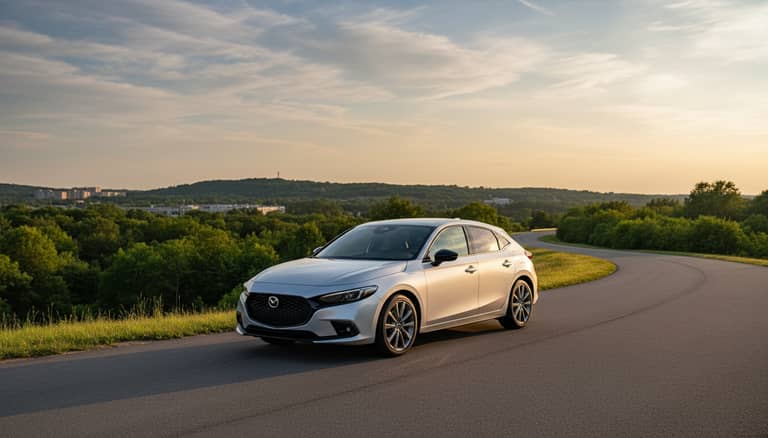
Best Entry-Level Cars 2026 That Save You Money Long After Buying
Entry-level cars in 2025 now offer advanced features like touchscreen infotainment, adaptive cruise control, and wireless Apple CarPlay at affordable prices, making them genuine value propositions rather than bare-bones compromises. These vehicles provide first-time buyers independence while delivering technology previously reserved for luxury vehicles, thanks to post-pandemic market competition and evolving consumer demands.
When the world tells you that low price means low standards, it’s time to rewrite the playbook. The best entry-level cars in 2025 aren’t just cheap rides for the desperate—they’re engines of freedom, status-levelers, and sometimes, Trojan horses packed with more tech than you’ll find in last year’s BMW. Whether you’re a first-time buyer, a commuter dodging downtown chaos, or someone out to score value without selling your soul, you deserve more than dealer double-talk and tired cliches. This isn’t a soft-focus fantasy about “affordable dreams.” It’s the truth: the smartest, real-world picks, the pitfalls they won’t warn you about, and the hard evidence you need to make your first (or next) car a true win. Let’s smash the myths, crunch the numbers, and reveal the insider secrets the industry doesn’t want you Googling. Welcome to the no-BS guide to the best entry-level cars of 2025—where your money, your independence, and your future hit the road.
Why entry-level cars still matter in 2025
The shifting definition of 'entry-level'
Once upon a time, “entry-level” was code for “bare-bones.” Wind-down windows, zero frills, and engines that begged for mercy at highway speeds. Post-pandemic economics and cutthroat competition have roasted that stereotype. Now, entry-level means compact sedans with touchscreen infotainment, advanced driver assistance, and style bold enough to park next to a luxury coupe without shame. According to recent data from Car and Driver, 2024, entry-level cars in 2025 routinely deliver features—like adaptive cruise control and wireless Apple CarPlay—that were luxury-only just a few years ago.

"Entry-level doesn’t mean basic anymore—it’s about access." — Jordan
The new baseline isn’t just about austerity; it’s about democratization. Young buyers, urban professionals, and savvy veterans alike demand more for less, and automakers are scrambling to deliver. The result? A new era of affordable cars where “starter vehicle” isn’t a consolation prize—it’s leverage.
The cultural impact of your first car
That first set of keys isn’t just a means of transport—it’s a rite of passage, a slice of independence you can actually touch. For Gen Z and Millennials, owning your first car means breaking free from the algorithmic grip of rideshare apps, wrestling back control from parental carpools, and making your own luck in a gig economy that never sleeps. Entry-level doesn’t mean “settling”; it means claiming autonomy on your own terms, with all the anxiety and adrenaline that comes with it.
But the emotional stakes aren’t just for kids. For anyone priced out of the luxury arms race, the best entry-level cars offer a shot at pride and progress—rolling proof that practicality and style can coexist. There’s a reason Instagram feeds fill up with #FirstCar posts: the symbolism is real.
Hidden benefits of entry-level cars experts won't tell you:
- Lower insurance premiums: Insurers know you aren’t piloting a supercar, so your rates often start lower.
- Easier to park and maneuver: Small footprint, big advantage in crowded cities or college campuses.
- Better resale stability: Affordable models hold value better, especially in uncertain economies (according to U.S. News, 2025).
- Simpler tech, fewer distractions: No labyrinth of settings, just what you need to drive and connect.
- Lower running costs: Parts, fuel, and repairs generally undercut their premium siblings.
Rideshare and subscription: disrupting the starter car?
The “ownership is dead” crowd isn’t totally wrong. In major cities, the rise of Uber, Lyft, and car subscription services has changed how we weigh the value of buying a car outright. Instead of sinking money into a depreciating asset, some opt for monthly fees with zero long-term commitment—flexible, sure, but is it cost-effective?
| Option | Upfront Cost | Monthly Payment | Flexibility | Total Year 1 Cost* | Ownership/Equity | Mileage Limits |
|---|---|---|---|---|---|---|
| Own (purchase) | $2,000 down + fees | $330 (finance) | Low (hard to exit) | ~$6,960 | Yes | None |
| Lease | $1,500 down | $270 | Medium | ~$4,740 | No | Usually 10-12k |
| Subscription | $0 | $550 | High | ~$6,600 | No | Often unlimited |
| Rideshare (Uber/Lyft)* | $0 | Pay-as-you-go | Highest | $8,000+ | No | N/A |
*Table 1: Comparison of total cost and flexibility between owning, leasing, and subscribing to an entry-level car.
Source: Original analysis based on U.S. News, 2025, Car and Driver, 2024
The verdict? If you drive more than a few times a week or need real flexibility, owning still wins for most. Subscription and rideshare models appeal to nomads, city-dwellers, and commitment-phobes—but can quickly morph from convenience to financial drain if you’re not careful.
Busting the biggest myths about cheap cars
Myth #1: Entry-level means unsafe
Forget the urban legends. Today’s entry-level cars refuse to play the “cheap and dangerous” stereotype. Thanks to fierce regulatory standards and a very public shaming of poor crash-test performers, basic models now come loaded with features that would have been luxury-only five years ago. According to J.D. Power 2023 Car Ratings, every car on this year’s best list boasts multiple airbags, advanced seatbelt tech, and electronic stability control—plus a growing suite of driver-assist features.

| Model | NHTSA Safety Rating | IIHS Top Safety Pick | Driver Assist Standard? |
|---|---|---|---|
| Honda Civic | 5 stars | Yes | Yes |
| Toyota Corolla | 5 stars | Yes | Yes |
| Mazda3 | 5 stars | Yes | Yes |
| Hyundai Elantra | 4 stars | Yes | Yes |
| Kia Soul | 4 stars | No | Yes |
| Subaru Impreza | 5 stars | Yes | Yes |
Table 2: Safety ratings of top entry-level cars, 2025
Source: Original analysis based on J.D. Power, 2023, NHTSA
That means lane-keeping assist, forward collision warning, and automated emergency braking aren’t extras—they’re expected. If you’re still picturing “cheap” as a four-wheeled coffin, it’s time to wake up.
Myth #2: Low price, high maintenance
The “you get what you pay for” narrative crumbles under scrutiny. Several of 2025’s most affordable cars also top lists for reliability and low running costs. According to U.S. News, 2025, the Honda Civic, Toyota Corolla, and Mazda3 are not only budget-friendly up front, but consistently rank for longevity and minimal repairs. The irony? Some premium models are notorious for expensive quirks and breakdowns.
"Some of the cheapest cars are actually the toughest on the road." — Alex
In fact, research from J.D. Power, 2023 shows entry-level models often beat mid-range and luxury cars for lower annual service bills and parts availability. Simpler engineering means fewer things to go wrong—an unsexy, real-world advantage no one brags about on Instagram.
Myth #3: You have to compromise on tech
Think you’ll be stuck with an AM/FM radio and no power windows? Think again. Automakers are shamelessly raiding their own parts bins, stuffing base models with infotainment and safety tech once reserved for the high-dollar crowd. Even the entry-level trims of the Hyundai Elantra and Volkswagen Jetta now come with 8+-inch touchscreens and standard smartphone integration.
Surprisingly high-end features in entry-level cars:
- Wireless Apple CarPlay & Android Auto: Standard on many models, making seamless phone connection the norm.
- Adaptive cruise control: Once a luxury, now a baseline in several sub-$23k cars.
- Heated seats and steering wheels: Not just for premium trims—available in Honda Civic and Mazda3 lower trims.
- Blind-spot monitoring: Standard or optional on most top picks.
- Remote start and keyless entry: No more fumbling for keys.
Entry-level doesn’t mean analog anymore. The tech gap is narrower than ever, and in some cases, base models get more frequent updates than their luxury siblings.
How to spot a real deal: 2025’s best entry-level cars ranked
What actually makes a car 'the best' for beginners?
Before you chase rebates or slick ads, focus on what matters: total cost, safety, reliability, resale, and tech. According to Car and Driver, 2024, these are the non-negotiables when ranking the best entry-level cars for real-world buyers—not influencers or fleet managers.
Priority checklist for first-time car buyers:
- Safety first: 5-star NHTSA or IIHS Top Safety Pick status is your baseline.
- All-in price: Beware hidden fees—compare real drive-away costs.
- Reliability track record: Look for models with low repair rates and wide parts availability.
- Resale strength: Some cars lose value faster than a phone battery—choose wisely.
- Tech & comfort: Must-have features include smartphone integration, Bluetooth, and backup camera.
2025’s top 11: Our raw, no-hype picks
The following rankings are based on a blend of expert reviews, owner feedback, real-world reliability data, and comprehensive cost analysis. Only models with verified safety and reliability credentials made the cut, with bonus points for tech, efficiency, and driver satisfaction.
| Rank | Model | Base Price (USD) | NHTSA/IIHS Safety | MPG (Combined) | Standout Features | Reliability Score |
|---|---|---|---|---|---|---|
| 1 | Honda Civic | $23,000 | 5 stars/Top Pick | 36 | Class-leading tech, resale, comfort | 9.6/10 |
| 2 | Hyundai Elantra | $21,850 | 4 stars/Top Pick | 35 | Warranty, wireless CarPlay, bold styling | 8.9/10 |
| 3 | Toyota Corolla | $22,500 | 5 stars/Top Pick | 34 | Bulletproof reliability, hybrid option | 9.7/10 |
| 4 | Mazda3 | $23,500 | 5 stars/Top Pick | 32 | Premium cabin, sharp handling | 8.7/10 |
| 5 | Kia Soul | $20,190 | 4 stars/No | 31 | Versatility, tech, unique design | 8.5/10 |
| 6 | Volkswagen Jetta | $21,435 | 5 stars/No | 33 | Euro style, turbo engine | 8.3/10 |
| 7 | Subaru Impreza | $23,500 | 5 stars/Top Pick | 31 | AWD, safety tech | 8.8/10 |
| 8 | Nissan Sentra | $20,900 | 4 stars/No | 33 | Value, safety kit | 8.0/10 |
| 9 | Ford Maverick (pickup) | $24,995 | 5 stars/No | 26 | Utility, hybrid option, pickup capability | 8.2/10 |
| 10 | Audi A3 (luxury) | $36,000 | 5 stars/Top Pick | 31 | Entry-luxury, performance tech | 8.9/10 |
| 11 | BMW 2 Series Gran Coupe | $38,000 | 5 stars/Top Pick | 29 | Performance luxury, high-end features | 9.0/10 |
Table 3: Feature comparison matrix of 2025’s best entry-level cars
Source: Original analysis based on U.S. News, 2025, Car and Driver, 2024, J.D. Power, 2023
The top spots are no surprise—Honda Civic, Toyota Corolla, and Hyundai Elantra have earned their legends. But the real shockers? The Ford Maverick disrupts everything with a hybrid pickup option under $25k, and the Mazda3’s interior feels more “boutique hotel” than “starter car.” If you value tech and style as much as reliability, these are your front-runners.
The surprising losers: models to skip
Don’t get fooled by flashy ads or rock-bottom sticker prices. Some entry-level cars crumble in the real world—underpowered, clunky, or shockingly expensive to repair. According to owner reviews and repair data from J.D. Power, 2023, models like the Mitsubishi Mirage and Chevy Spark lag in safety, ride quality, and reliability. These “bargains” might save you a thousand up front, only to drain your wallet and patience later.

Beyond sticker price: the hidden costs no one warns you about
What dealers won’t spell out
Buying an entry-level car means more than the number on the windshield. Hidden costs lurk everywhere: destination charges, documentation fees, taxes, insurance “gotchas,” and pricey add-ons you never wanted. According to recent analysis by U.S. News, 2025, these extras can add $1,200–$2,500 to your final bill, even on base models.
| Cost Component | Example Value (USD) | Typical Range | Applies To |
|---|---|---|---|
| Destination Fee | $1,095 | $900 – $1,500 | All new cars |
| Documentation Fee | $350 | $100 – $600 | All new cars |
| State Tax/Title | $1,200 | Varies by state | All new/used |
| Insurance (annual) | $1,700 | $1,200 – $2,500 | New drivers |
| Add-ons (paint, etc.) | $500 | $0 – $3,000 | Optional |
Table 4: Real-world total cost of ownership breakdown for top picks
Source: Original analysis based on U.S. News, 2025
Your best defense? Demand a full “out the door” quote and compare real numbers, not advertising fantasies.
Depreciation: the silent killer of value
The ugly truth: most cars lose 20-30% of their value the moment you drive off the lot. Entry-level models generally fare better, especially icons like the Civic and Corolla, which retain 60%+ of their value after three years. According to Car and Driver, 2024, the worst offenders (ultra-cheap, fleet-heavy models) can lose half their value in the first year alone.

If you plan to upgrade in a few years, pick a model with a cult following—think Civic, Corolla, or Subaru—as they weather the depreciation storm much better.
Unexpected budget busters
You scored a killer deal, but now reality bites: surprise repairs, mandatory tech subscriptions, rising fuel costs. Even the best entry-level cars aren’t immune to hidden budget traps.
Red flags to watch out for before signing:
- “Mandatory” dealer add-ons: Nitrogen in tires, overpriced window etching, or “protection plans” with little actual value.
- Subscription-based features: Some automakers now lock heated seats, remote start, or navigation behind monthly fees—ask before you buy.
- Inflated insurance rates: Certain entry-level models with high theft or accident rates can spike premiums.
- Expensive out-of-warranty repairs: If a deal sounds too good, check the cost of replacement parts first.
- Aggressive financing offers: Low monthly payments often hide sky-high interest rates or balloon payments.
Savvy buyers use tools like futurecar.ai to break down total ownership costs and avoid nasty surprises.
Who should (and shouldn’t) buy an entry-level car in 2025?
Self-assessment: is an entry-level car right for you?
The best entry-level cars offer freedom, but they aren’t for everyone. Ask yourself: Does your lifestyle, daily commute, and budget align with what these vehicles deliver? Are you chasing image over function, or is reliability your top priority?
Step-by-step guide to making the right choice:
- Assess your real needs: Is your commute mostly city, suburban, or highway?
- Crunch the numbers: Calculate your true total cost, not just the sticker price.
- Test drive multiple contenders: Comfort, visibility, and ergonomics matter more than specs on paper.
- Review reliability and resale data: Consult J.D. Power and owner forums.
- Run insurance quotes before buying: Premiums can destroy your budget if you’re not careful.
If you’re planning frequent road trips, need significant cargo space, or crave performance, you might outgrow an entry-level car fast.
Urban vs. rural: different needs, different winners
City dwellers crave compact size, tight turning circles, and legendary fuel economy. Rural drivers need ground clearance, weather capability, and durability over potholes and dirt roads. That’s why the Honda Civic and Nissan Sentra dominate city sales, while the Subaru Impreza and Ford Maverick win rural hearts with all-wheel-drive and cargo-hauling cred.

There’s no universal winner—match your terrain and lifestyle to the model’s strengths.
When it’s smarter to buy used or certified pre-owned
A new car loses value the second it leaves the lot. If you’re willing to sacrifice “that new car smell” for hundreds (or thousands) in savings, consider certified pre-owned (CPO). According to U.S. News, 2025, CPOs offer extended warranties, rigorous inspections, and less depreciation shock.
"Sometimes the savviest move is a barely used car with the warranty still fresh." — Sam
That way, you get all the advantages—tech, safety, reliability—at a price that leaves room for gas money and a few road trips.
Inside the buying process: outsmarting the system
How to negotiate without getting hustled
Dealers are trained in psychological warfare: anchoring, scarcity tactics, and “good cop/bad cop” routines. Counterattack with data, calm persistence, and a willingness to walk. Bring your own financing offer, get quotes in writing, and don’t be afraid of silence—it’s your strongest weapon.
Timeline of the entry-level car buying process:
- Online research: Compare models and prices at home.
- Request quotes: Get offers from multiple dealers.
- Test drive: Focus on real-world usability, not just sales pitches.
- Negotiate final price: Include ALL fees—walk if the deal isn’t transparent.
- Sign paperwork: Double-check all terms, especially loan rates and warranties.
Online vs. in-person: the digital car buying revolution
The pandemic pushed car buying online, and there’s no going back. Services like futurecar.ai empower buyers with instant side-by-side comparisons, unbiased reviews, and real-world cost breakdowns. The result? Less manipulation, more clarity, and the confidence to say “no” to the old-school runaround.

Digital-first research levels the playing field. In a market built on confusion, knowledge is your edge.
Paperwork, financing, and the moment you almost missed
You’ve picked your winner, but the last mile is where traps lie. Finance managers may push add-ons, inflate interest rates, or gloss over early-payment penalties. Your best defense: read every clause, ask for a complete breakdown, and never sign anything you don’t fully understand.
Key terms every buyer needs to know:
Manufacturer’s Suggested Retail Price—the official “list price” before negotiation.
“Out-the-Door” Price—your actual, total price with all taxes and fees included.
Annual Percentage Rate—your real cost of borrowing, not just the loan interest rate.
Certified Pre-Owned—a used car certified by the manufacturer with warranty coverage.
How much your car will be worth at the end of a lease or ownership period.
Real stories: first-time buyers and their unexpected lessons
Case study: the best $20,000 I ever spent
Jordan, a 27-year-old graphic designer, went into the process dreaming of a flashy ride—but ended up in a Honda Civic. The result? Zero regrets, durable daily driving, and a healthy resale value that let them upgrade three years later. The lesson: sometimes “sensible” is the boldest play of all.
"I thought I wanted flashy. Turns out, I needed reliable." — Jordan
Case study: regrets, missteps, and what I wish I knew
Not everyone escapes unscathed. Alex, a recent graduate, jumped at a too-good-to-be-true subcompact deal, only to discover sky-high insurance, a rough ride, and $2,000 in repairs after 18 months. The takeaway: patience pays, and research beats impulse every time.

Unexpected perks and fresh regrets
Even the best entry-level cars come with surprises—good and bad. Many owners discover new uses for their cars or quirks that only reveal themselves after months on the road.
Unconventional uses for entry-level cars:
- Mobile workspace: With fold-flat seats and Wi-Fi, your car doubles as a work pod.
- Mini moving van: Don’t underestimate the cargo space—perfect for dorm moves or small business runs.
- Gig economy platform: Ride-share, delivery, or mobile services all work with the right compact.
- Escape pod: Weekend getaways and micro-adventures become affordable realities.
- Community connector: Carpool apps and social rides make your wheels a networking tool.
The future of entry-level cars: what’s next?
Electric dreams: are EVs finally affordable for first-timers?
EVs are storming the affordability barricade, but most still start well above $30,000—even with incentives. Models like the Nissan Leaf and Chevrolet Bolt have narrowed the gap, but range, charging access, and up-front cost still favor efficient gas models for entry-level buyers.
| Model | Starting Price (USD) | Range (mi) | Key Features | Total Cost (Year 1) |
|---|---|---|---|---|
| Nissan Leaf | $29,235 | 149 | Simple, reliable | $7,500* |
| Chevrolet Bolt EUV | $28,795 | 247 | DC fast charging | $8,000* |
| Hyundai Elantra (gas) | $21,850 | 450 | Top safety, tech | $6,000* |
| Honda Civic (gas) | $23,000 | 420 | Tech, resale | $6,300* |
Table 5: Entry-level EVs vs. gas cars—features and costs
Source: Original analysis based on U.S. News, 2025, Car and Driver, 2024
Total cost includes insurance, fuel/charging, maintenance, and fees.
For now, EVs are a bold choice for city dwellers with short commutes and easy charging—but for most, the best entry-level cars are still gas or hybrid.
Tech, autonomy, and the new definition of value
The line between entry-level and luxury blurs more every year. Automatic lane keeping, adaptive cruise, voice assistants, and cloud-based navigation are now expected, not optional. The defining value of an entry-level car has shifted from “basic mobility” to “mobility-plus”—efficiency, connectivity, and safety in one package.

If you’re buying in 2025, demand more than just four wheels and a steering wheel.
Will we even own cars in 2030?
Ownership, subscription, mobility—all are converging as cities transform and technology evolves. The question isn’t “Will you buy a car?” but “How will you access mobility?” For now, real ownership means control, resale value, and independence, but subscription models and digital platforms are rewriting the script.
Key terms:
You pay, you own—responsible for maintenance, can sell at any time.
Monthly payment for use of a car, insurance, and maintenance included—no long-term commitment, but no equity.
A catch-all for services (rideshare, micro-leasing, car clubs) that let you move without owning anything.
According to experts, the future is about having options—and the best entry-level cars are your entry ticket to that evolving landscape.
Entry-level, but not entry-minded: how to win the car game in 2025
Key takeaways: smarter choices, fewer regrets
The best entry-level cars in 2025 aren’t about “making do”—they’re smart, stylish, and packed with real value. If you cut through the hype, challenge the myths, and do your homework, you can land a car that fits your life, your budget, and your ambitions.
Your 2025 entry-level car buyer’s action plan:
- Know your real needs—don’t buy for someone else’s Instagram.
- Research the true total cost—fees, insurance, fuel, and repairs add up.
- Test drive, compare, and negotiate—never accept the first offer.
- Use digital tools like futurecar.ai to gain an unfair advantage.
- Stay skeptical—if a deal sounds too good, there’s always a catch.
Where to go next: resources and tools
Buying your first (or next) car isn’t just a transaction—it’s a statement. Lean on digital resources like futurecar.ai for expert-vetted data, side-by-side comparisons, and real-world cost breakdowns. The best entry-level cars are only as smart as the buyer behind the wheel.

Because in 2025, entry-level is just the beginning. When you’re ready to win the car game, you know where to start.
Sources
References cited in this article
- U.S. News: Best Cars for the Money 2025(cars.usnews.com)
- How-To Geek: Best Entry-Level Luxury Cars 2025(howtogeek.com)
- J.D. Power 2023 Car Ratings(jdpower.com)
- Car and Driver: 10Best Cars 2024(caranddriver.com)
- Cars.com Industry Insights Q1 2025(investor.cars.com)
- Investopedia: Market Trends 2025(investopedia.com)
- Cox Automotive Forecast(coxautoinc.com)
- Pedal Commander: Car Reliability Myths(pedalcommander.com)
- CarEdge: 2025 Safety vs Reliability(caredge.com)
- Consumer Reports: Car Reliability FAQ(consumerreports.org)
- Cars.com 2025 Affordability Report(cars.com)
- TopSpeed: Most Reliable Entry-Level SUVs(topspeed.com)
- J.D. Power: Most Reliable Brands 2025(howtogeek.com)
- Carwow: Best First Cars 2025(carwow.co.uk)
- CarGurus: Best Cars for Beginners(cargurus.com)
- Car and Driver: Best Cars for Teens 2025(caranddriver.com)
- U.S. News: Best Small Cars 2025(cars.usnews.com)
- Car and Driver: 2025 Editors' Choice(caranddriver.com)
- EpicVIN: Cars to Avoid 2025(issuewire.com)
- DAX Street: 10 Worst Cars 2025(daxstreet.com)
- Insurify: Car Maintenance Costs 2025(insurify.com)
- USA Today: Car Ownership Costs(usatoday.com)
- AAA 2025 Report(caredge.com)
- MotorTrend: Cheapest Cars 2025(motortrend.com)
- The Car Connection: Cheapest New Cars 2025(thecarconnection.com)
- Ipsos: Entry Segment Report(ipsos.com)
- Carexamer: Should You Buy an Entry-Level Car?(carexamer.com)
- Parkers: Best City Cars 2025(parkers.co.uk)
- GOBankingRates: Cars for Rural Areas(gobankingrates.com)
- CarEdge: New vs Used 2025(caredge.com)
- U.S. News: Pros and Cons of CPO Cars(cars.usnews.com)
- VEHQ: Tips for First-Time Buyers 2025(vehq.com)
- CarEdge: How to Buy a Car in 2025(caredge.com)
- Bankrate: How the Car Buying Process Has Changed(bankrate.com)
- CarEdge: Least Negotiable Cars 2025(caredge.com)
- GOBankingRates: Negotiation Tips 2025(gobankingrates.com)
- U.S. News: How to Negotiate the Best Price(cars.usnews.com)
Find Your Perfect Car Today
Join thousands making smarter car buying decisions with AI
Frequently Asked Questions
What features do entry-level cars in 2025 typically include?
According to the article, entry-level cars in 2025 now routinely include touchscreen infotainment, advanced driver assistance systems, adaptive cruise control, and wireless Apple CarPlay—features that were previously only found in luxury vehicles.
How has the definition of 'entry-level' changed?
The article explains that entry-level cars have shifted from bare-bones vehicles with wind-down windows and minimal features to compact sedans with modern technology and bold styling that can compete in appearance with luxury vehicles.
Why does the article say entry-level cars still matter in 2025?
The article frames entry-level cars as more than just cheap transportation—they represent democratization of features, independence for first-time buyers, and a way to break free from rideshare dependency and gain control in the gig economy.
What is the main purpose of this article?
The article describes itself as a no-BS guide to finding the best entry-level cars of 2025, providing real-world picks, revealing pitfalls, and offering hard evidence to help buyers make smart purchasing decisions without dealer double-talk.
Continue Reading
Explore more from Smart car buying assistant

Best Cars Under 20000 in 2026: Smart Buys Vs Costly Traps
Discover insights about best cars under 20000

11 Cars Under $20k No One Talks About (but Should)
If you think “cars under 20000” means settling for junk on wheels, you’ve been fed a lie. The world of affordable cars in 2025 is nothing like it was even five

The Real Story Behind Cars Under $25,000: Smart Picks or Hidden Traps?
Discover the untold truths, top picks, and expert buying hacks for 2026. Make a smarter, bolder purchase—don’t fall for industry myths.

11 Used Car Deals Under $20k You Won’t Believe in 2026
In a world where car prices have soared beyond reason and “cheap” is often code for “trouble,” the quest for the best used cars under 20000 isn’t just about

Would You Trust a $15,000 Car? Here’s What No One Tells You
Discover the real winners, hidden risks, and expert secrets to owning a head-turning ride for less. Don’t settle—outsmart the market today.

11 Cars Under $30k That’ll Blow Up Your Expectations
Discover 2026’s most underrated deals, real-world reviews, brutal truths, and expert tips to hack your next car purchase. Read before you buy.

17 Brutal Truths About Cars Under $30k Nobody Tells You
Cars under 30000 just got complicated. Uncover the real costs, hidden gems, and hard truths the industry won't share. Buy smarter—start reading now.

Would You Trust a $5k Car in 2026? Here’s the Truth.
Discover the real 2026 market, hidden gems, shocking risks, and smarter ways to win—plus expert tips for buyers. Outsmart the system now.

Best Cars Under 40000 in 2026: Where Real Value Beats the Badge
Discover insights about best cars under 40000

Would You Trust a $10,000 Car? Read This Before Buying
Discover the 11 brutal truths, insider hacks, and hidden dangers for buying a cheap car in 2026. Don’t get burned—read this first.

Best Cars Under 25000 in 2026 That Dealers Hope You Skip
Discover insights about best cars under 25000

Are First-Time Car Buyers Being Set Up to Fail in 2026?
Let’s skip the sugarcoating: buying your first car in 2025 can feel like walking blindfolded into a high-stakes casino, except the odds are stacked against you